
 E-Paper



What happens when your work goes viral without you?
How do you maneuver a space where appropriation puts your work in the spotlight?

 Prefer HTon Google


Ask Laksh Puri.
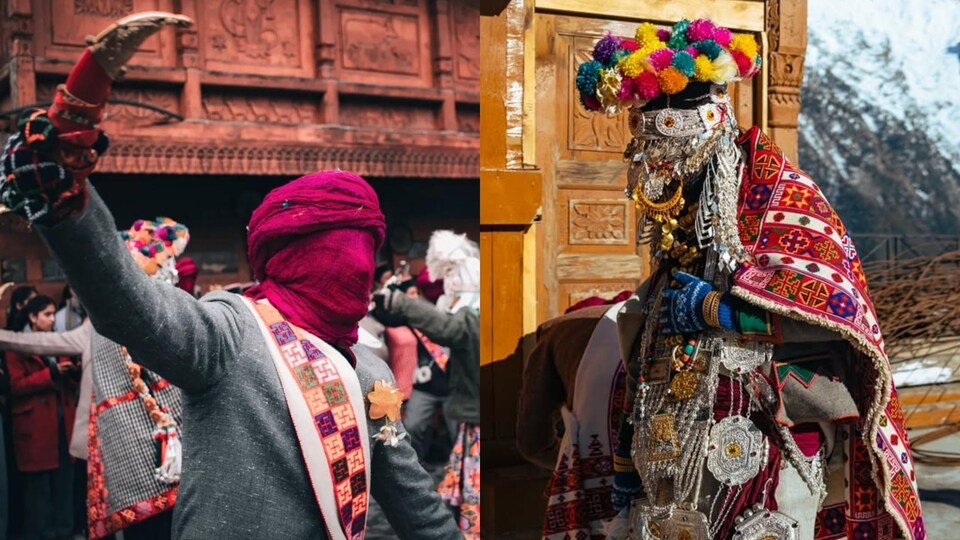
If you'd never heard of the Raulane festival celebrated in Himachal Pradesh's Kalpa, chances are you've still scrolled past a set of incredibly immersive images of brightly veiled figures, wrapped to their crowns in jewellery and drapes, swinging in emotion. A group effort between adventure travel photographer Laksh Puri and his close-knit community, these photos date back to March, having only now, several months later, caught the internet's passing fancy and obsession.
But these aren't the first set of 'viral' images you're hearing about. Neither will they be the last. Laksh — who is very grateful to his real and virtual community, asserting his authorship over the frames on his behalf — sadly happens to be the exception and not the norm when it comes to the repetitive cycle of 'content' going viral, sans the creator.
Laksh right now, is in the midst of navigating the kind of exposure and chatter most artists only yearn for. But it's quite hard to ignore that what sparked this in the first place was uncredited, faceless appropriation. Photography is art, and the only way art grows, is by reaching people — but how does one maneuver lines as blurred as these? And how does it feel to be vindicated of the burden of letting everyone know that these vortex-like moments that your vision and lens captured are really yours, even if for a hot minute.
"As artists, virality is not what we set out looking for," says Laksh; “It's just about having your work authenticated. Our job is to portray the art, do our storytelling. These photos are now everywhere, but how they got there isn't very nice, is it?”
As photographers, where else but the internet are Laksh and others like him, supposed to put out their work? He says it best, "Yahi hamari dukaan hai, digital." But the 'going viral' experience, especially in this context, seems to be lugging its own baggage. Speaking about himself and his community of lens artists, Laksh says, “We're well known in our field. Everybody has been around for years. So going viral has never been the motivation. We are posting almost everyday. It's not even about the money. Even if it's not coming in, we're still setting out to explore, to capture. This is what we do best.”
Real talk, appropriation is just a fancier word for theft. “This is digital chori. Hamara kaam hi hamari rooh hai, this is our work. My photographs define me. This is our motivation. And when things like this happen, it breaks our hearts. If you really want to appreciate our work, talk about us, acknowledge us. Artists need to be recognised in a better way, to let them know that their work has value. They'll know to keep continuing with their efforts, to put out good work. If anything, this is proof that a single photo is enough for storytelling and can impact so many people.”
Quite evidently, the internet is very much a democracy. So much so, that exercising autocracy over someone else's little piece of it is not only doable, but a repetitive, self-fulfilling cycle. At a time then when almost every little part of us is up there on the 'gram or Cloud, is authorship even a real concept anymore?


