
 E-Paper



'Sometimes the story is clear. Sometimes I invent it': Says Sumant Jayakrishnan
While his sets often feel dreamlike or delicate, everything is planned to the millimetre.

 Prefer HTon Google


Walk into a theatre, a fashion show, or an art installation, and before a single word is spoken or a model steps out, the space speaks to you. It holds a mood, a pulse, a kind of poetry. This is scenography — the art of shaping a world, not just decorating it. Few in India have defined that art quite like Sumant Jayakrishnan. From the theatrical flair of India Couture Week to the many sets and studios in Delhi where fabric, light, and imagination collide, Sumant continues to shape how India sees spectacle.
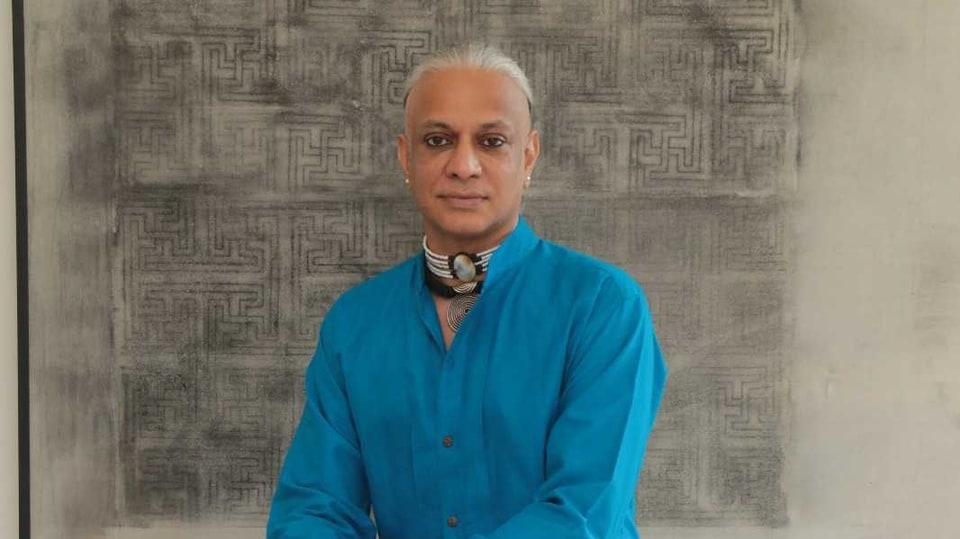
Known for his maximalist, immersive style, his creative footprint began in 1993 with The Normal Heart, directed by Barry John at Delhi’s Kamani Auditorium. Fresh out of NID and looking for a thesis project, Sumant found himself unexpectedly responsible for the set. “It was enthralling,” he recalls. Fluorescent paints, UV lighting, shifting scenes — even the transitions were theatrical. “That was my first sense of how design itself could be performance.”
For him, scenography is never just about surface. It’s about translating story into mood, structure, texture, and light. Every project begins the same way: with listening. He asks collaborators to share a list of their “favourite things” — architecture, jewellery, landscapes, memories, literature, rituals. “At the end of it, I don’t just know what they love. I know what they don’t,” he says. That becomes the starting point, not just for moodboards and drawings, but for the emotional architecture of a space.
Sumant’s worlds may feel ephemeral, even dreamlike, but the planning is anything but. “It may look fluid or chaotic, but it has to be engineered down to the millimetre,” he explains. His designs must be precise enough for carpenters, production teams, and fabricators to bring them to life, without losing the poetry.
His materials of choice are often delicate: thread, ribbon, mirrors, paper, lace. But in his hands, they hold strength and meaning. For Rohit Bal’s couture show, he used fabric and paper. For Manish Malhotra, the set reflected layered textures.
At Isha Jajodia’s Rose Room, lace became the central motif. “I like materials that feel fragile but behave with structure when lit right,” he says. The intention, regardless of medium — theatre, fashion, or installation — remains the same. “Sometimes the story is obvious. Sometimes it’s hidden and has to be discovered. And sometimes, I have to invent it.”
Personal Style
Sumant’s personal style mirrors the layered, intuitive quality of his work. “It’s eclectic. Different aspects of myself come through,” he says. Sarongs, kurtas, kimono-style silhouettes, and textured textiles form his wardrobe. A thin line of kajal frames his large, expressive eyes — a detail he calls both intentional and instinctive. “Eyes are how I communicate. Kajal gives them focus.” A bindi is another signature. “It helps me centre myself. It draws energy to the third eye, and maybe helps others see me more clearly too,” he adds.


