
 E-Paper



World Elephant Day: Check out these elephant reserves in India
It's World Elephant Day day! From Jim Corbett National Park (Uttarakhand) to Periyar National Park (Kerala), plan a visit to an elephant reserve in India soon.

 Prefer HTon Google


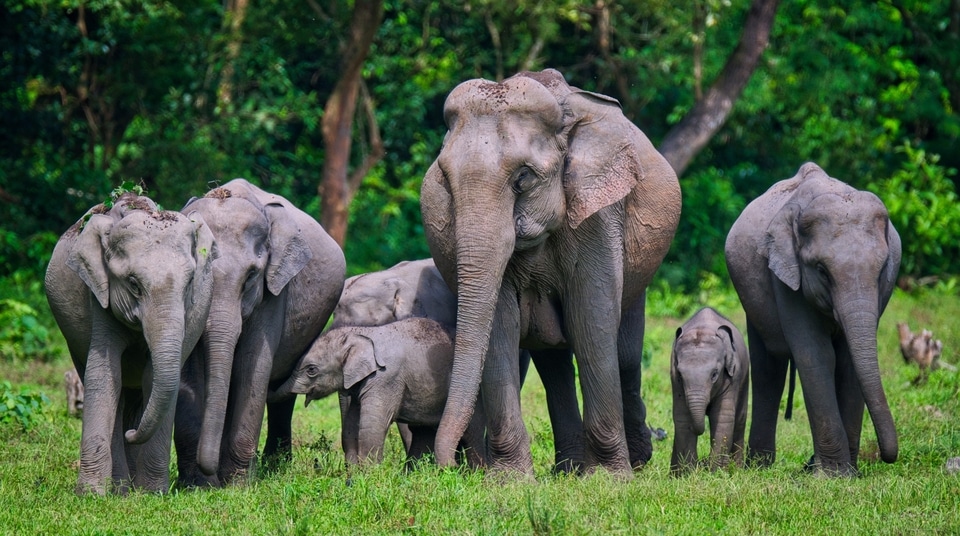
Elephants, known as the mega-gardeners of the forest, are majestic creatures. August 12 is celebrated as World Elephant Day is dedicated to the preservation and protection of these mammals. In India, 33 elephant reserves have been established in 14 states that are major elephant habitats to promote conservation. These reserves also overlap with tiger reserves, wildlife sanctuaries, and reserved forests, reports PIB. These areas are under protection with the Wild Life (Protection) Act, 1972, Indian Forest Act, 1927 and other local State Acts. These elephant habitats focus on elephant conservation and help to reduce animal-human conflict.
Tamil Nadu see rise in elephant population
Earlier this month, an elephant census was released which showed there has been a rise in the elephant population. This three-day census was conducted across Kerala, Karnataka, Tamil Nadu and Andhra Pradesh in May.
The elephant population in Tamil Nadu has increased by 100. In 2023, there were 2,971 mammals, and 2024 saw a spike with the total number of wild elephants reaching 3,063. The census was conducted across 26 forest divisions, by 2,178 forest personnel, including forest watchers, guards, rangers and wildlife NGO volunteers.
It was also found that the Sathyamangalam forest division has the highest number of elephants with a total number of 372, followed by the Coimbatore forest division with 336 elephants.

Maharashtra petitions for first elephant reserve
Soon, the state will may have a own reserve for elephants, which will further help the conservation efforts of these pachyderms. The Maharashtra government is awaiting a nod from the Centre. The Nawegaon-Nagzira Tiger Reserve, located in the state’s eastern Vidarbha region wants to declare over 1,400 sqkm in the Gondia and Gadchiroli districts as an elephant reserve. This is due to these giant mammals from Chhattisgarh and Odisha were spotted crossing borders in 2021. They’ve since returned in 2022, which prompted the 2023 petition. According to a Down To Earth report, a small population have been moving around in this region.
Here are four elephant reserves that you can visit in India:
Periyar National Park, Kerala
With boat tours, jeep safaris and bus tours, along with guided hikes and Nature trails, the Periyar National Park is a paradise for elephant lovers. The Mullaperiyar Dam, created in 1895, forms the Periyar Lake, is artificially formed and spreads across 26 sqkm. The tiger and elephant reserve is part of the World Heritage site Western Ghats under UNESCO. The entire protected area is 925 sq km, out of which 305 sq km was declared as the Periyar National Park in 1982. Visitors can also spot Bengal tigers, Indian bison, sambar and barking deer, leopards, and more.
Best time to visit: September to June
Closest airport: Madurai Airport (domestic); Cochin International Airport
Closest railway station: Kottayam Railway Station
Cost: INR 400
Park timings: 6am to 7pm

Jim Corbett National Park, Uttarakhand
The only national park in India to allow overnight stays for visitors, the Jim Corbett National Park also gives elephant safaris to those interested. Here, four people can ride one of these majestic creatures through the jungles and enjoy two tranquil hours in Nature. If you are looking for a more traditional jungle adventure, you can go on gysy (jeep) safari too, which can take around 3-4 hours. Along with the elephants, the other animals you might spot here are tigers, leopards, chital deers, hogg deers, langur and wild pigs.
Best time to visit: October to June
Closest airport: Patanagar Airport (domestic); Indira Gandhi International Airport, New Delhi
Closest railway station: Ramnagar railway station
Cost: INR 3,350.00 for jeep safari; INR 6,000 for elephant safari
Park timings: 5.30am to 6pm
Dalma Wildlife Sanctuary, Madhya Pradesh
There are around 32 elephant reserves in India and the first one created, in 2001, was the Singhbhum Elephant Reserve. They are critical habitats with a focus on elephant conservation and help reduce human-animal conflict. The Dalma Wildlife Sanctuary is situated around the Dalma Hills and covers around 195 sq km. A herd of wild elephants live here and during the summer months can be spotted gathered around the reserve’s watering holes. Other animals that live here are the pangolin, sloth bear, Indian grey wolf, giant squirrels, along with peacocks and monkeys
Best time to visit: March to May
Closest airport: Birsa Munda Airport, Ranchi (domestic and international)
Closest railway station: Balasore Railway Colony Station
Cost: INR 2,800 for jeep; INR 600 for safari
Park timings: 6am to 5pm
Manas National Park, Assam
Acting as a base for a tiger and elephant reserve, the Manas National Park is situated at the foothills of the Himalayas. It was declared a national park in 1990 and became a UNESCO World Heritage Site in 1988. They established the elephant reserve in 2003. The park shares a border with Bhutan’s Royal Manas National Park. While it is not possible to cover the entire 850 sq km, visitors can take a three-hour jeep safari or an elephant safari that lasts an hour. Several endangered species and rare wildlife like the red panda, golden langur, pygmy hog, Assam roofed top turtle and hispid hare live in its jungles.
Best time to visit: October to April; closed from June to September
Closest airport: Lokpriya Gopinath Bordoloi International Airport, Guwahati
Closest railway station: Barpeta Road railway station
Cost: INR 1,400 to 4,500
Park timings: 6am to 5pm
Interesting fun facts about elephants
- Elephants are the only mammals that cannot jump.
- An elephant is pregnant for an average of 22 months.
- At its birth, a calf can weigh around 90-113kg at birth.
- An adult elephant consumes about 100 kg of food and 100 litres of water every day.
- Their trunk acts as a nose, a hand, an extra foot, a signalling device and a tool for gathering food, siphoning water, digging and more.
- The ivory tusks are actually massive teeth that protrude beyond their mouths and are made up of dentine, a dense, bony tissue, that elephants use to dig, carry things, and strip barks of trees to eat, and for defence.
- Don’t let the size of elephants fool you, they can swim and use their trunk to breathe, like a snorkel, underwater.
- While their trumpet sounds are the most popular sound, elephants purr like cats to communicate. Asian elephants growls, squeaks, and snorts, too.


