
 E-Paper



2 firms, Gujarat institute to scale up Covaxin production
Two of the manufacturers are Hester Biosciences, an animal healthcare company, and OmniBRx, a biotech company.

 Prefer HTon Google


To ramp up the manufacturing of Covaxin, Bharat Biotech will transfer technology to two Ahmedabad-based companies and a state-run biotechnology research institute in Gandhinagar. A statement to this effect released by the department of biotechnology (under the Union ministry of science & technology) on Saturday informed that “technology transfer agreements have been finalised with all manufacturers”.
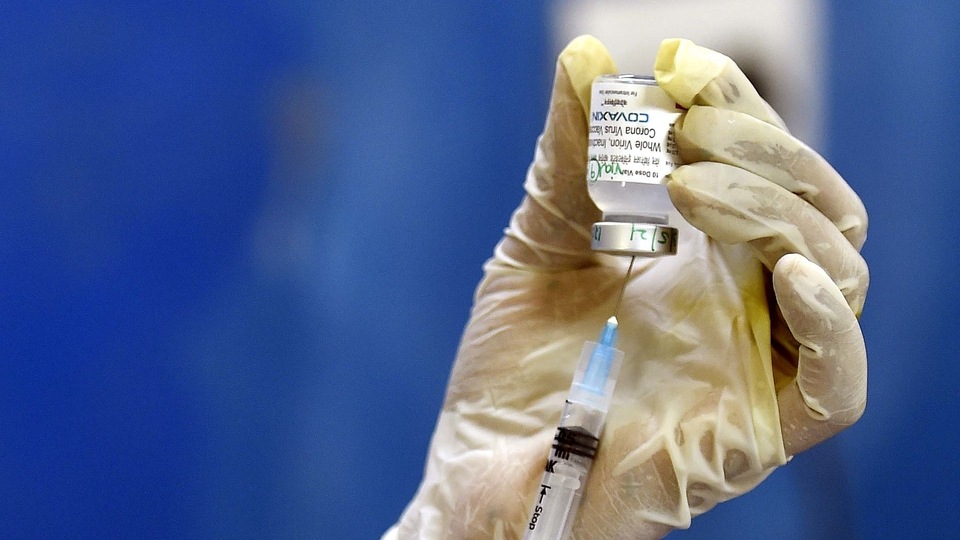
Two of the manufacturers are Hester Biosciences, an animal healthcare company, and OmniBRx, a biotech company. The third, Gujarat Biotechnology Research Centre, is an institute under the state’s department of science and technology. Together, they are likely to add a production capacity of 20 million doses per month.
The Centre had last month announced financial support to Bharat Biotech as well as three public sector undertakings to increase vaccine production to 100 million doses per month by September. A grant of ₹65 crore was given to Bharat Biotech’s new Bangalore facility to repurpose it for vaccine production. Another ₹65 crore was given to PSU Haffkine Biopharmaceutical Corporation in Mumbai to manufacture 20 million doses a month, ₹60 crore to Indian Immunologicals Limited-Hyderabad, and ₹30 crore to Bharat Immunologicals and Biologicals Limited in Bulandshahr to produce up to 15 million doses a month.
Last week, top government advisor, Dr V K Paul of NITI Aayog, had said that the Centre and Bharat Biotech are willing to invite other companies to produce the vaccine. This was amid growing calls from experts to transfer the technology of the indigenously developed vaccine, the rights to which are jointly owned by Indian Council of Medical Research.
But Paul insisted that Saturday’s announcement wasn’t influenced by the growing clamour for technology transfer even though some people have tried to make that connection. “Complex technologies cannot be transferred like this. It takes about 70 to 75 days for the vaccine to be manufactured. Bharat Biotech along with the government have transferred technology to the three PSUs. This is the outcome of those efforts,” Paul said at a health ministry briefing on Saturday.
He added, “We have been trying to do this and we will keep assessing where else it can be manufactured, including other private players. This is not a vaccine that can be made in any laboratory. It deals with live virus and can only be done at Bio-Safety Level 3 labs so that it is not released in public.”
India will need one and a half billion vaccine doses to inoculate its adult population. For this, it will have to rapidly enhance supply even as the second wave of the pandemic rages.


