
 E-Paper



2008 Malegaon blast: After acquittal on benefit of doubt, look back at charges against Pragya Thakur, others
Court says the overall evidence doesn't inspire confidence to prove a case against the accused and that they deserve the benefit of doubt

 Prefer HTon Google


A special National Investigation Agency (NIA) court on Thursday acquitted all the seven accused, including former Bharatiya Janata Party (BJP) MP Pragya Singh Thakur and Lt Col Prasad Purohit, in the September 2008 Malegaon blast case in which six persons were killed and nearly 100 were injured.
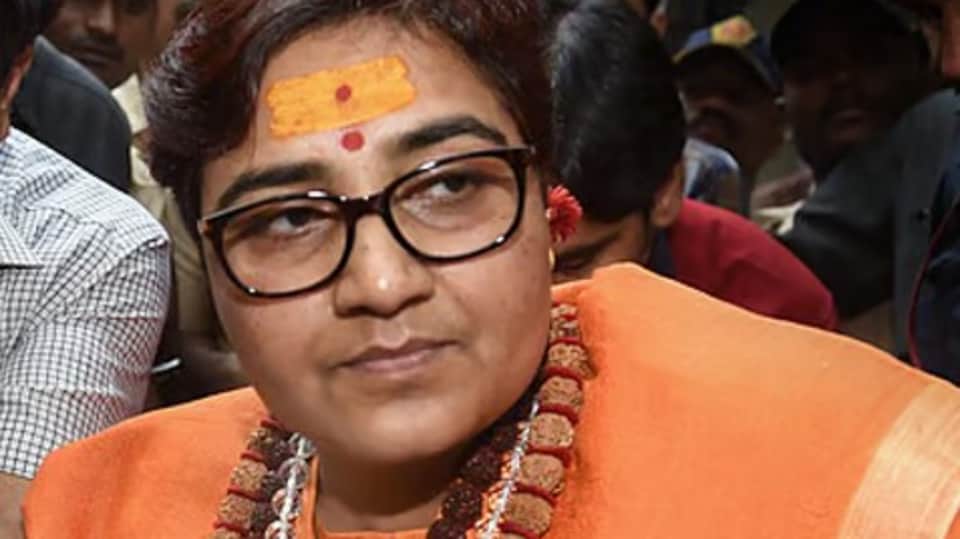
The other five accused were retired army officer Ramesh Shivaji Upadhyay (73), Pune-based businessman Samir Sharad Kulkarni (53), Purohit’s close associates Ajay Eknath Rahirkar (56) and Sudhakar Omkarnath Chaturvedi (53), and Sudharkar Dhar Dwivedi, also known as Swami Amrutanand Devtirth (56), a self-proclaimed Shankaracharya, all of whom were arrested by the Maharashtra Anti-Terrorism Squad (ATS).
Special judge AK Lahoti said that the overall evidence doesn't inspire confidence to prove a case against the accused and said the accused persons deserve the benefit of doubt.
The blast took place near a mosque in Malegaon, about 200 km from Mumbai, on September 29, 2008.
What probe said, why Pragya Thakur was arrested
Around a month after the incident, the state government handed the case over to the Maharashtra Anti-Terrorism Squad (ATS), which eventually arrested Pragya Thakur, a native of Lahar in the Bhind district of Madhya Pradesh, and two of her alleged accomplices, after finding that a motorcycle used in the blast allegedly belonged to her.
The ATS also said the blast was the handiwork of an extreme right-wing group led by Purohit, Upadhyay and Dwivedi.
In its charge sheet, the agency claimed that Purohit, who at the time served in the Indian Army’s Military Intelligence unit, had in February 2007 formed Abhinav Bharat, an organisation with an intention to convert India into a “Hindu rashtra named Aryawart” — meaning, a nation only for Hindus.
The organisation had allegedly held several meetings across the country in which they discussed increasing “jihadi” activities by Muslims and expressed strong anti-Muslim sentiments.
According to the ATS, in one such meeting held in Bhopal in April 2008, Purohit suggested carrying out a bomb blast in Muslim-dominated Malegaon to take revenge for atrocities committed by Muslims on Hindus. Thakur, according to the ATS, quickly responded by offering to provide people for carrying out the blast, for which RDX was allegedly supplied by Purohit.
On January 20, 2009, the ATS arrested 11 people and filed a chargesheet against them and two wanted planters — Ramji Kalsangra and Sandeep Dange, both associated with Thakur.
The agency invoked the stringent Maharashtra Control of Organised Crime Act (MCOCA) due to the involvement of Rakesh Dhawde, an accused who was linked to previous blast cases. The agency later also arrested Pravin Takkalaki, an alleged close aide of Purohit, and filed a supplementary charge sheet against him.
NIA wanted to exonerate Pragya Thakur in 2016
However, in April 2011, the case was transferred to the NIA, a specialised federal agency established after the 2008 Mumbai terror attack to handle terrorism-related cases with national ramifications.
In May 2016, the NIA filed a supplementary chargesheet in the case, exonerating Thakur and five other accused, and recommending their discharge from the case.
The agency said it found no evidence linking Thakur directly to the blast, adding that the motorcycle registered in her name was in the possession of absconding accused Kalsangra before the attack.
The NIA also dropped anti-terror MCOCA charges against all the accused, citing its questionable application by the ATS.
It found flaws in the ATS’s investigation, describing it as filled with “lacunae” or gaps. It said that some of the confessions recorded by the state agency, such as that of Chaturvedi’s, were likely obtained through torture and were unreliable.
Accordingly, the special NIA court in December 2017 dropped MCOCA charges against all the accused, but retained charges under the Unlawful Activities (Prevention) Act and the Indian Penal Code (IPC). The court discharged Kalsangra, Sahu, and Takkalaki from the case, but refused to discharge the remaining seven arrested accused, including Thakur, and two wanted accused.
The court refused to discharge Thakur, citing her attendance at meetings where the blast was discussed, such as one in Bhopal in April 2008. While Thakur continued to be on trial, she secured bail in the case and even contested the 2019 general elections on a BJP ticket, winning the Bhopal constituency.


