E-Paper



30 million frontline workers to get Covid-19 vaccine in phase 1
The 30 million include 7 million doctors and paramedics, in addition to 20 million other frontline health workers, Union health secretary Rajesh Bhushan said on the sidelines of a Covid-19 media briefing on Tuesday.

 Prefer HTon Google


India is looking at vaccinating about 30 million people, including healthcare specialists, who are on the frontline of the fight against the coronavirus disease (Covid-19) in the first phase once protection against the viral disease becomes available, Union health ministry officials said on Tuesday.
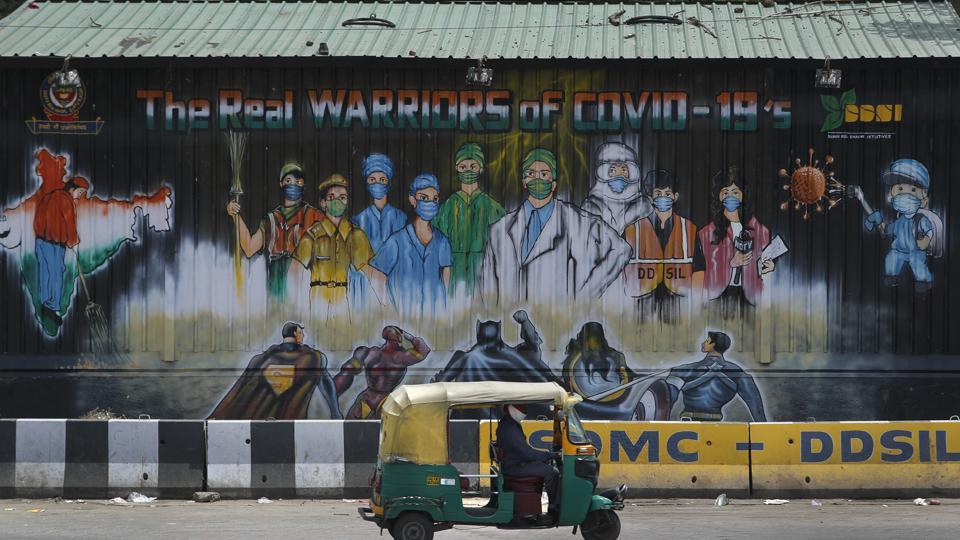
The 30 million include 7 million doctors and paramedics, in addition to 20 million other frontline health workers, Union health secretary Rajesh Bhushan said on the sidelines of a Covid-19 media briefing on Tuesday.
The country has the infrastructure already in place to vaccinate the 30 million, Bhushan said. “We have the cold chain, vials, syringes and everything,” he added.
Click here for full Covid-19 coverage
The first phase of vaccination has been tentatively scheduled between January and June 2021.
“In the deliberations of the national expert committee on vaccine administration we have come up with a draft prioritisation plan. We have also tried to match the numbers which have come from this draft plan to the number of doses that would become available from tentatively January to July 2021. And we think if the present trials proceeded according to plan, and succeed, then the number of doses that will become available from January to July 2021 would be sufficient to immunize the priority list persons. That we are working on…,” said Bhushan.
They added that even after a vaccine is made available, people cannot afford to let their guard down.
“The same precautions (against the disease) will have to be continued even after the Covid-19 vaccine is developed. We have to remain cautious... we have to test, treat and isolate for a good time. The requirement for this may gradually reduce over time, but there is no scope for relaxation,” said Indian Council of Medical Research (ICMR) chief Dr Balram Bhargava.
India has been running a successful Universal Immunisation Programme for the past 50 years, vaccinating about 25 million children and adults each year.
“As a result we have more than 28,000 cold storages already existing across the country that are used to store several vaccines administered under the programme. All these facilities have temperature trackers that help upload information in real-time on our centralized server,” said Bhushan.
“We also have our own digital platform that has all updated information — from vaccine procurement to storage, cold chain and transportation in refrigerated vehicles. If non-refrigerated vehicles are used, then to transport vaccines in them, a special kind of refrigerated boxes are used where temperature is regulated. This facility already exists in India, and what the government is contemplating is how to augment this facility to be able to deliver Covid-19 vaccine. For this, we have a national-level expert committee in place,” he added.
Certain private hospitals are claiming that they have the infrastructure to store and administer large doses of Covid-19 vaccine. The health secretary said the government was engaging with private entities.
“We are in constant engagement with private sector health care providers and going ahead as the contours of the plan develop we would be sharing it with you. We have surplus capacity for both vials as well syringes domestically in the country. We are in constant touch with the manufacturers. We also have an existing inventory within the ministry of health and family welfare which most of the people are not aware of. So, we will be utilizing our inventory, and we would also be utilizing the inventory that is presently available in the domestic industry,” Bhushan said.
Experts say that it is good to stay prepared.“No one knows when the vaccine will be available for use but when it does many countries will be in line to procure it. It makes sense to start preparing now,” said Dr K Srinath Reddy, founder, Public Health Foundation of India.