E-Paper



5-point plan to tackle worst case
The orders are part of a plan detailing a rapid scale-up that will be required to fight the spread of the pandemic caused by the Sars-Cov-2 virus that has infected 5,305 people in the country, and killed 160.

 Prefer HTon Google


New Delhi: India’s health ministry has ordered 107 million tablets of hydroxychloroquine, 16.6 million units of personal protective equipment (PPE), and 48,000 ventilators, and hopes to have everything in place by May 31 -- it’s deadline for scaling up health infrastructure to fight Covid-19.
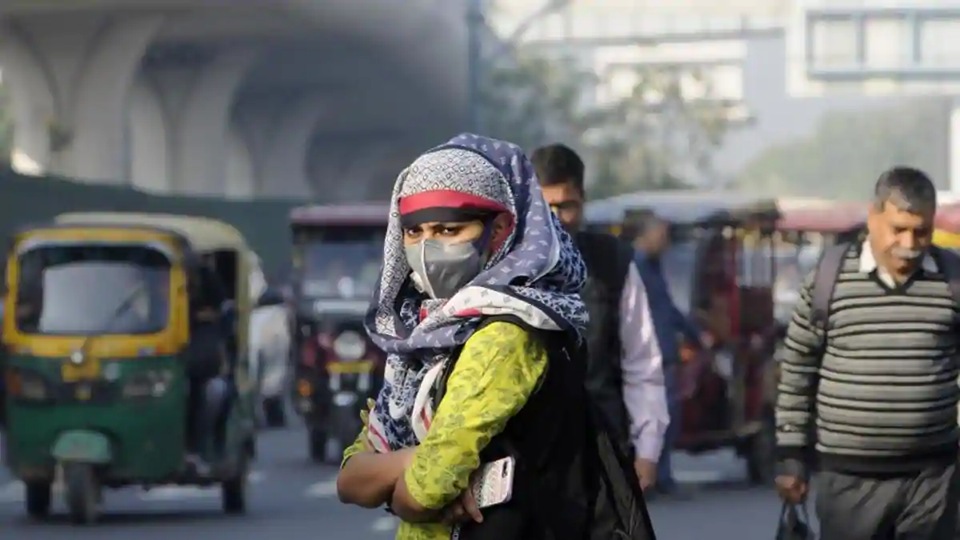
The orders are part of a plan detailing a rapid scale-up that will be required to fight the spread of the pandemic caused by the Sars-Cov-2 virus that has infected 5,305 people in the country, and killed 160.
The plan also includes enhanced testing -- up to 100,000 a day at the peak -- and drafting final year students of medicine and nursing.
Some parts of this plan were already known, but HT spoke to health ministry and other officials engaged in the fight against the pandemic to capture granular details of what the government thinks India needs to fight the pandemic. They described this as a plan that prepares for the worst case scenario, which India may not actually face.
There’s a caveat, especially on the equipment front. A country can count international orders in its stockpile only when it gets them in hand in these times, said a consultant with a multinational consulting firm who spoke on condition of anonymity. And while “some of the ventilators being turned out are very good, at least some are being made by companies that do not have much experience in this”, he added.
Still, even internationally, companies such as Ford Motor and GM that have no experience are working on a war footing to produce ventilators.
The health ministry’s plan has five components.
The first is people.
India has about 70,000 students in the final year of their MBBS course; about 2.5 lakh final year nursing students; 30,000 in final year dentisty, about 1.8 million registered Ayush (ayurveda, siddha, naturopathy, unani, and homeopathy -- all alternative systems of medicine) practitioners and allied health professionals such as paramedics, technicians and helpers in the field, and an estimated 10,000 physiotherapists. The idea is to involve all of them.
The fight against Covid-19 also requires feet on the ground to screen hundreds of thousands of people, and monitor others who are in quarantine. The field surveillance will be done by students of Ayush streams, volunteers from National Service Scheme, Nehru Yuva Kendra Sangathan, Indian Red Cross Society, National Cadet Corps, workers of sate-owned firms, ambulance drivers, gram panchayats, urban local bodies, rozgar sevaks (workers under MGNREGA in villages), members of resident welfare associations, and observers used during general elections, according to the plan, parts of which were reviewed by HT.
“People with medical knowledge can be used for screening , while others can be used for surveillance, which is the mainstay of our Covid-19 management strategy,” a senior health ministry official said on condition of anonymity. The field workers will be supervised by Ayush practitioners, dentists, physiotherapists, veterinarians, and doctors working at the primary health centres in villages, this person added. For testing, local lab technicians and even BSc and M Sc microbiology students will be drafted for collecting, packing, and transporting samples.
The states will be involving this workforce as per their requirement.
“It’s an excellent idea to list out possible volunteers beforehand because you don’t know which way this pandemic will go. The doctors would also need help -- as the numbers rise they could get tired -- so this is a good way of managing the situation,” said K Sujatha Rao, former health secretary.
The plan is to also use medical interns and final year MBBS and nursing students, alongside doctors and other medical staff drawn from the defence forces, the paramilitary and the railways at isolation facilities (hospitals) where confirmed positive cases are being treated.
“If the numbers rise, every single medical professional and student will count,” the official added.
“Any knowledge workforce is useful in a situation like this, so involving medical students will definitely help. There is a section of doctors trained in intensive care, and post graduate students of fields like anesthesia who can come in handy at this time,” says Dr Devi Prasad Shetty, senior cardiac surgeon, and chairman and founder, Narayana Health.
Meanwhile, retired doctors, as well as health care staff above the age of 60 or with known medical conditions will be used to treat non-Covid patients.
The second dimension is testing.
Since January 24, government and private laboratories approved by the Indian Council of Medical Research (ICMR) have tested only around 1,09,536 samples for Covid-19. The plan is to take this up to 100,000 a day (the current daily total is 9,000-11,000).
“One lakh tests a day is the worst case scenario; it may or may not be required, but we should be able to perform these many tests, if it’s required, and which is what our labs are staying prepared for.” said an ICMR spokesperson.
ICMR has approved at least 200 labs (both public and private) for testing through RT-PCR machines and is in the process of identifying other government and private labs, research institutions and medical colleges that have the capability and infrastructure to undertake testing for inclusion into the Covid-19 testing network.
The plan also envisages the laboratories working 24x7 and re-deploying automated and manual RT-PCR machines already in the country, and optimising in-lab processes such as RNA extraction to reduce turnaround time between the time a sample is received and it is tested.
ICMR is also procuring 500,000 rapid testing (blood test) kits for mass testing, to be deployed in the worst-affected states. The first lot of these kits, which test for antibodies, is expected this week. However, it is not yet open for everyone, and has been allowed only in large clusters, evacuation centres and migrant worker camps. Experts say a more widespread use of the antibody test will also help scale up testing efforts.
“The currently used test – PCR tells us who are currently sick. We are seeing only the tip of the iceberg. The antibody detection blood test will identify people who already have been infected, even those with mild or no symptoms. It will help us to know how many have been able to fight off the infection and have become what is called ‘corona-blocker’,” says Dr Lalit Kant, a senior infectious disease expert.
“These tests are expected to be very economical, simple and give results within 15-20 minutes. Indian companies would be able to produce them easily and at massive scale,” he added.
The third is hospitals.
The centre on Monday released close to ₹3,000 crore under its National Health Mission (NHM) to be distributed among states and UTs. Earlier, about ₹1,100 crore was released for the purpose of Covid-19 management. All states and Union territories have been asked to earmark at least one hospital dedicated to Covid-19 patients. The states have also been given a free hand to procure ventilators, personal protection equipment, masks, gloves and other consumables as per their requirements over and above what the centre is providing them.
As of now, about 15,000 ventilators have been identified in various hospitals across the country and set aside for Covid-19 patients.
Some states have been temporarily taken over small private hospitals in the districts from where a large number of cases have been reported to be used as dedicated isolation facilities. And many of the big corporate hospitals have already began admitting Covid-19 positive patients, and also are testing samples.
“All states have followed the directive, and have been creating dedicated Covid-19 facilities even till district level. These hospitals will only be used to manage positive cases, and we are working with state governments to ensure all these hospitals are equipped with facilities to also handle critical patients such as intensive care unit beds and beds with ventilators,” says Lav Agarwal, joint secretary, health and family welfare ministry.
Hostels, hotels and lodges are being converted into quarantine facilities to place asymptomatic people under watch for the mandatory 14 days, and if any of them shows symptoms then they are moved to a health care facility for testing, and disease management.
“Infrastructure scale up is our focus as now the strategy is to strengthen processes for disease management and surveillance,” said Agarwal.
The fourth is drugs, medical devices, and protective equipment.
The problem area in terms of medicines is the anti-malaria drug (hydroxychloroquine) that has shown promise in treatment of the disease. Hydroxychloroquine (HCQ) is currently being given to health care workers, and close contacts (family) of Covid-19 positive patients as part of a demonstration study by ICMR, to know whether it works as a prophylactic drug. And Covid-19 patients in ICUs are being given this medicine along with antibiotic erythromycin . There are about 1.5 million health care workers who have received around 7.5 million HCQ tablets.
To meet the shortage of supply, the government has restricted the drug’s export currently and also booked supplies from the two manufactures in India. “We have booked all their supplies- about 107 million tablets, and once they supply this to the government then they are free to export,” said a government official familiar with the matter who asked not to be named.
The health ministry has placed orders for 8 million PPEs from Singapore, and is expecting to receive at least one million per week. In all, it has ordered 16.5 million PPEs from global and local firms (some 20 domestic manufacturers have been identified with the help of ministry of textiles).
The ministry has also placed an order for 48,000 ventilators and is likely to add more, depending on the requirement. “In China the capacity to produce these items in a day is huge; it is difficult to match up to their level of production; however, our indigenous manufacturers have risen to the occasion. Some from other fields are also chipping in,” the government official added.
And the fifth is shortening the time it takes to get innovations related to treatment to the market.
The department of science and technology (DST) has set up a Centre for Augmenting WAR with Covid-19 health crisis (CAWACH) at a total cost of Rs 56 Cr to scout for, evaluate and support the innovations and start-ups that address Covid-19 challenges.
The Society for Innovation and Entrepreneurship (SINE), a technology business incubator at IIT Bombay supported by DST has been identified as the Implementing Agency of the CAWACH, and has been asked to encourage innovations in the manufacture of ventilators, diagnostics, therapeutics and informatics.
CAWACH aims to identify up to 50 innovations and start-ups that are in the area of novel, low cost, safe and effective ventilators, respiratory aids, protective gear, novel solutions for sanitizers, disinfectants, diagnostics, therapeutics, informatics and any effective interventions
“We have been having meetings every day and have come up with strategies to prioritise our research work. The focus has been on developing improved diagnostic kits, looking for novel molecules or re-purposed drugs for the treatment of the disease, and also developing a vaccine,” says Dr Renu Swarup, secretary, department of biotechnology.