E-Paper



80% excess rain in 1st 10 days of post-monsoon season: IMD
Some experts said India Meteorological Department may have prematurely announced the monsoon withdrawal

 Prefer HTon Google


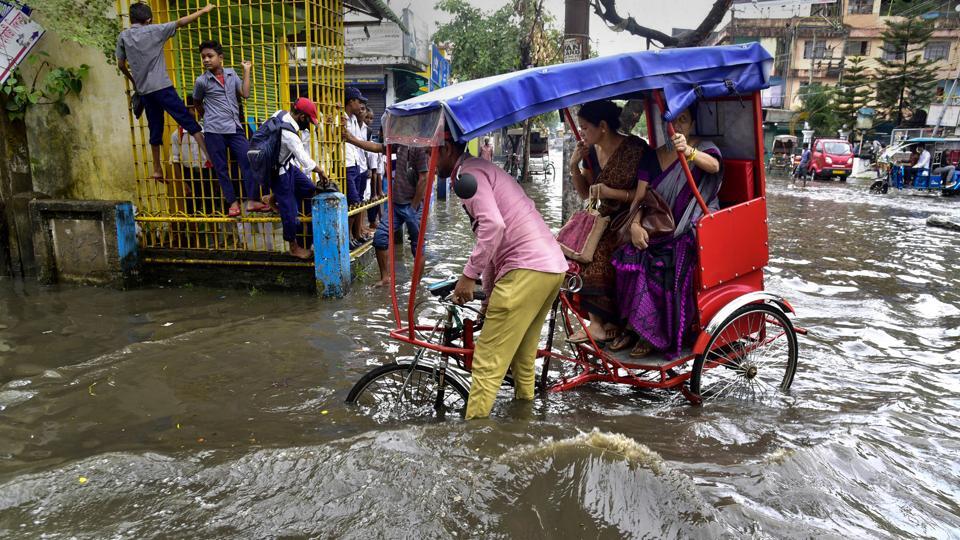
There was 80% excess rain in the first 10 days of the “post-monsoon” season from October 1 to 10 and 405% extra rainfall in the country’s northwest alone, the India Meteorological Department (IMD) has said as some experts said it may have prematurely announced the monsoon withdrawal.
The withdrawal has been significantly delayed over the past few years and stretched to late October, which means farmers have to make changes in their sowing schedules. The monsoon is critical for India as around 60% of the country’s net arable land lacks irrigation and half its population is dependent on agriculture.
IMD released new monsoon onset and withdrawal dates in 2020 factoring in the likely impact of climate change, which has altered the way the southwest monsoon progresses.
Delhi recorded 625% (63.8mm against a normal of 8.8mm), Haryana 577%, Uttarakhand 538%, and Uttar Pradesh 698% excess rainfall in the first 10 days of October.
IMD on September 30 announced that monsoon has withdrawn from Punjab, Chandigarh Delhi, parts of Jammu & Kashmir, Himachal Pradesh, Uttar Pradesh, Haryana, and Rajasthan.
On Tuesday, IMD said the withdrawal line of monsoon was passing through Uttarkashi (Uttarakhand), Najibabad, Agra (Uttar Pradesh), Gwalior, Ratlam, (Madhya Pradesh), and Bharuch (Gujarat). Conditions were likely to become favourable for the withdrawal of southwest from more parts of northwest and central India this week.
IMD director general M Mohapatra said the percentage of excess rainfall seems very high because the normals are very low for this period. “There was active monsoon flow over Uttar Pradesh, Madhya Pradesh, etc, and a circulation developed over the Bay of Bengal. The southeasterly winds interacted with a western disturbance and led to an intense rainfall spell over northwest India.”
Mohapatra said they announced the monsoon withdrawal from Delhi but the withdrawal line was still passing over the region. “So it was a borderline case.”
He said they predicted the rainfall event in October about seven days in advance. “In September 1988, after monsoon withdrew, a similar event happened leading to flooding rains in parts of northwest India on September 23, 24, and 25. Last year also there was heavy rain in Uttarakhand in October.”
In 2019, monsoon withdrawal commenced on October 6 and withdrew by October 15. In 2020, it commenced on September 28 and withdrew on October 28. Last year, this took place on October 25 and was the seventh-most delayed monsoon withdrawal between 1975 and 2021.
IMD’s new onset dates were based on an analysis of monsoon data from 1961 to 2019, and withdrawal dates on that from 1971 to 2019. They were delayed by three to seven days in parts of central, west, and east India. The withdrawal has been delayed by a week to two weeks in northwest India. Monsoon normally withdraws completely by October 15.
Until 2019, the onset and withdrawal dates were determined based on records of 149 meteorological stations between 1901 and 1940.
Climate scientists said agriculture and allied activities need to factor in this change in the monsoon cycle to better adapt to unseasonal rainfall events.
Skymet Weather vice president (climate change and meteorology) Mahesh Palawat said the monsoon withdrawal from parts of northwest India may have been announced early. “Even while monsoon withdrawal was being announced, one could see two weather systems building up in the next two to three days.”
He said the wind direction changed briefly to northwesterly and moisture only reduced marginally. “They could have waited for a few more days before announcing withdrawal from Delhi, Haryana, etc. Only now it seems like withdrawal will begin around October 14, 15, and 16. Intense rainfall in October may have damaged the paddy crop and affected paddy harvest in parts of the region but it will help the Rabi crop by providing adequate soil moisture.”
Former earth sciences ministry secretary M Rajeevan said the heavy rain over the last few days was not purely monsoonal. “[It resulted from] an interaction between mid-latitude systems and monsoon systems.” He added this can happen and that there is no point blaming IMD for announcing the withdrawal early. “What is important is that farmers and the entire agricultural community should adapt to the new dates. Their sowing and harvest dates should be in sync with new monsoon onset and withdrawal dates. The new dates were released in 2020 mainly so that various sectors know about the shifting monsoon pattern.”
Institute of Climate Change Studies director DS Pai said IMD did not announce the withdrawal from the entire northwest India. “...this was because monsoon was still active over some regions. “We are seeing a significant delay in the withdrawal of monsoon in recent years which is why monsoon onset and withdrawal dates have been officially revised. But this year is also exceptional.”
Pai said there had been a continuation of La Nina conditions for three consecutive years, and it is likely to continue till next year. “La Nina is associated with good monsoon. So monsoon will now gradually begin withdrawing from the rest of northwest India and central India. The agricultural community should have a strategy to deal with this climatological shift in rainfall months.”