
 E-Paper



80 yrs on, Netaji’s homecoming still awaited
In short, 80 years have elapsed without a reverential farewell to his departed soul

 Prefer HTon Google


On January 30, 78 years ago, Mohandas Gandhi, supreme leader of the Indian National Congress, met an unspeakably violent end. In a radio broadcast the same night, his hand-picked second-in-command and India’s first prime minister, Jawaharlal Nehru, tearfully told his people, “The light has gone out of our lives and there is darkness everywhere”.
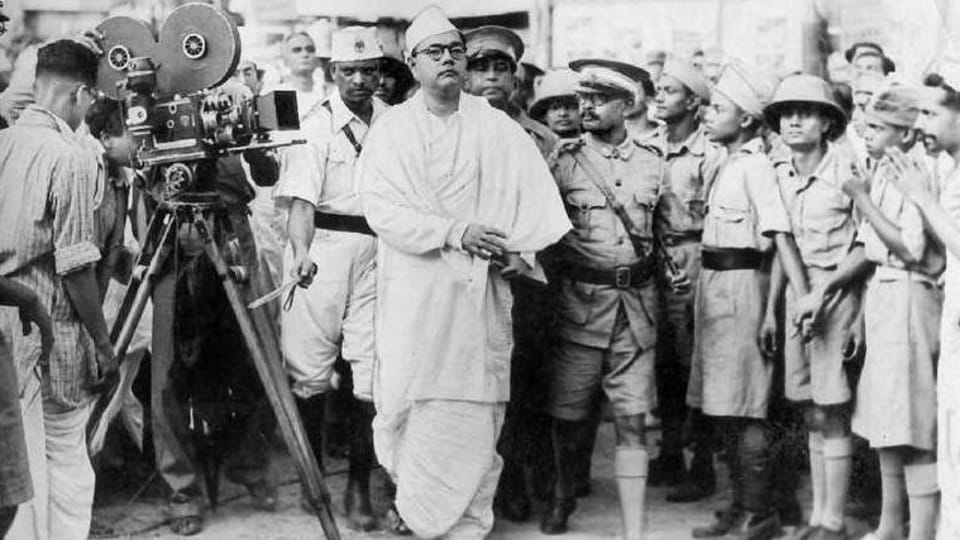
The “father of the nation”, as Subhas Bose first addressed the Mahatma over the airwaves from Burma in 1944, was cremated in Delhi and his ashes were scattered in several rivers sacred to Hindus, including at the confluence of the Ganga, Yamuna, and the mythical Saraswati in Allahabad.
Bose, too, met an unnatural death, following a plane crash in Taipei on August 18, 1945. He suffered third degree burns from head to foot, to which he unavoidably succumbed. He was cremated in the Taiwanese capital, following which his mortal remains were taken to Tokyo, where they have stayed since, without final disposal in accordance with Hindu custom.
In short, 80 years have elapsed without a reverential farewell to his departed soul — which not just Gandhi, but Nehru and other stalwarts of the Indian independence movement have been routinely extended.
Week before last, Bose’s daughter and sole heir, Germany-based former professor of economics, Anita Bose Pfaff, reiterated in an interview to Karan Thapar on The Wire, her clear desire for closure on her father’s remains. She has often expressed her father’s ambition was to return to a free India. Since this wasn’t fulfilled, his remains should at least touch Indian soil. Her other sentiment is that while her father uncompromisingly upheld secularism, he was a Hindu; and therefore, the last rites as far as his remains are concerned should be in consonance with practice in this faith — generally a submersion of remains in the Ganga.
However, circumstances conspired against Bose. At the time of his passing, India was still under British rule and Japan was in the clasp of Allied occupation after surrendering in the Second World War. Neither the British in India nor the Americans who primarily took charge of Japan were bothered about transferring his remains to India.
Needless to mention, it was not before 1947 that India gained self-governance and not till 1950 that it dispensed with dominion status. Correspondingly, it was only in 1952 that Allied superintendence over Japan concluded. In effect, an effort to bring Bose’s remains to India could only commence in earnest after the two had become sovereign nations and established full diplomatic relations. This did happen; but Nehru’s endeavour in the 1950s was thwarted by vested interests.
It is another matter that Prime Minister Nehru issued instructions to the transitional Indian consul-general in Tokyo in 1951 that he should convey to Renkoji temple, where the remains were preserved and still are, that India will pay for their upkeep — which successive Indian governments of all political hues have honoured. Indeed, a reply by the Indian home ministry under the Right to Information Act in 2017 categorically stated Bose had died as a result of the air accident.
Bose’s family was bewildered by a Reuters’ report about his death five days after it had occurred. His Austrian wife, Emilie Schenkl, came to know of the tragedy in a BBC broadcast. The predominant arbiter on issue, Bose’s elder brother and mentor, Sarat Bose, died in 1950 before undertaking any steps to settle the matter. Thus, a critical seven years passed without a resolution.
During that period, fabrication factories mushroomed, manufacturing stories to mislead and confuse significant sections of the Indian public. Such concoctions commenced with Bose having escaped to the Soviet Union. Then being sighted in China; followed by a Pakistani official at the 1966 Indo-Pak peace talks in Tashkent being identified as Bose. Worst of all, a sadhu in north Bengal and thereafter a baba in Uttar Pradesh — the latter with suspected criminal antecedents — were touted as being Bose, notwithstanding their prayerful pleas to the contrary.
In the case of Gandhi and Nehru — whose ashes, too, were dispersed in the waters at the Triveni Sangam in Allahabad – their families rightfully decided how and where the final ceremonies with the respective ashes would be conducted and they themselves performed these. The Indian government correctly fell in line with their wishes and facilitated the rituals, including managing the security challenges. New Delhi, though, has denied this courtesy to Professor Pfaff.
In 1995, Pranab Mukherjee, as India’s external affairs minister, visited Schenkl (who died the following year) and Pfaff in Germany to seek their consent to tranship Bose’s remains to India. This was given; and Mukherjee was informed that Pfaff would be the point person for the Indian government to liaise with. Unfortunately, at a meeting of the Indian cabinet to approve the initiative, home minister SB Chavan recycled a hackneyed Intelligence Bureau input, which warned of riots in Calcutta, if Bose’s remains were brought to India.
Prime Minister PV Narasimha Rao, who wanted a climax prior to Bose’s birth centenary in 1997, shelved the proposal. He then lost power in the 1996 general election. Pfaff has, therefore, been kept hanging for 31 years.
“I am not an important person”, she smilingly answered when pressed by Thapar about the treatment meted out to her. It’s never too late, though, to make amends.
Ashis Ray is the author of Laid to Rest: The Controversy over Subhas Chandra Bose’s Death published by Roli Books.


