
 E-Paper



‘A borrowed knife’: How China used Pak during Op Sindoor, explains Indian Army deputy chief
Speaking on lessons from the conflict, Lt Gen Rahul R Singh said China was able to test its weapons in extensive support to Pak: 'It's like a live lab'

 Prefer HTon Google


“It's like a live lab,” Indian Army Deputy Chief Rahul R Singh said on Friday about China's interest as the backer for Pakistan during India's Operation Sindoor.
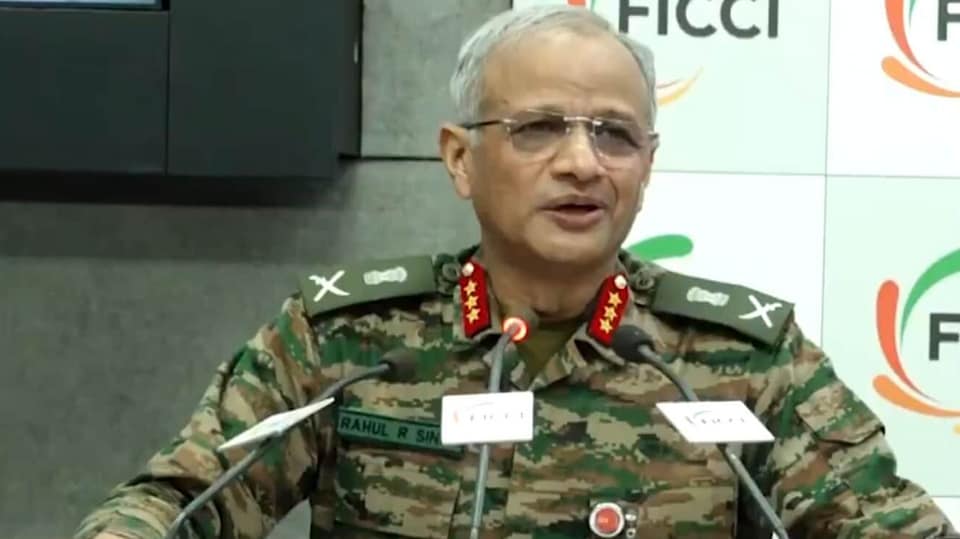
Underlining that 81 per cent of Pakistan's military equipment is Chinese, he spoke about the India-Pakistan conflict zone being turned into testing grounds: “China has able to test his weapons against various other weapon systems that are there. It's like a live lab which is available to it.”
Lt General Singh was speaking at a function organised by industry body FICCI, where he referred specifically to learnings during India's action against terror launchpads across the border.
He mentioned there being “one border, two adversaries”, counting China along with Pakistan, and quickly added, “Actually, three!” He later listed Turkey as the third, for its extensive backup support, particularly in providing drones to Pakistan.
China, he further said, follows the dictum of “kill by a borrowed knife” and prefers using Pakistan to “inflict pain” rather than get into “a mudslinging match on the northern borders” with India. The ‘borrowed knife’ analogy is among 36 dictums that China purportedly follows as strategy.
'Pak had live info'
He also said Pakistan had realtime information on some of India's moves during the conflict.
“Even when the DGMO-level talks were going on, Pakistan was mentioning, ‘We know that your such-and-such vector is primed and ready for action.’” He said Pakistan told the Indian side at the time that “we would request you to perhaps pull it back”. This, he termed, were “live inputs that [Pakistan] was getting from China”.
India's military action followed a terrorist attack in Kashmir's Pahalgam on April 22, in which 26 civilians were killed. Operation Sindoor was launched on May 7, targeting terror bases and headquarters in Pakistan's Punjab province and in Pakistan-occupied Kashmir (PoK).
Pakistan hit back with a series of missile and drone strikes – believed to have been provided majorly by China and some by Turkey – in parts of Indian Punjab, Jammu and Kashmir, and other states. Most of the attacks were quelled by the Indian air defence systems.
A ceasefire was eventually reached after Pakistan's Director General of Military Operations (DGMO) reached out to his Indian counterpart. US President Donald Trump has claimed to have effected the move, but that's been denied by India.
(with agency inputs)


