E-Paper



A Brahmin who adopted tribal Rai dance among Padma awardees in MP
Ramsahay Pandey, who won the Padma Shri award, was ostracized from his family and community for practising the dance form associated with the denotified tribe, Bedia.

 Prefer HTon Google


BHOPAL/SAGAR: Ramsahay Pandey was ostracised from his family and community for practising a dance form associated with the denotified tribe, Bedia. After seven decades, Pandey, 94, has been nominated for the Padma Shri award for his contribution to the field of arts through his dance.
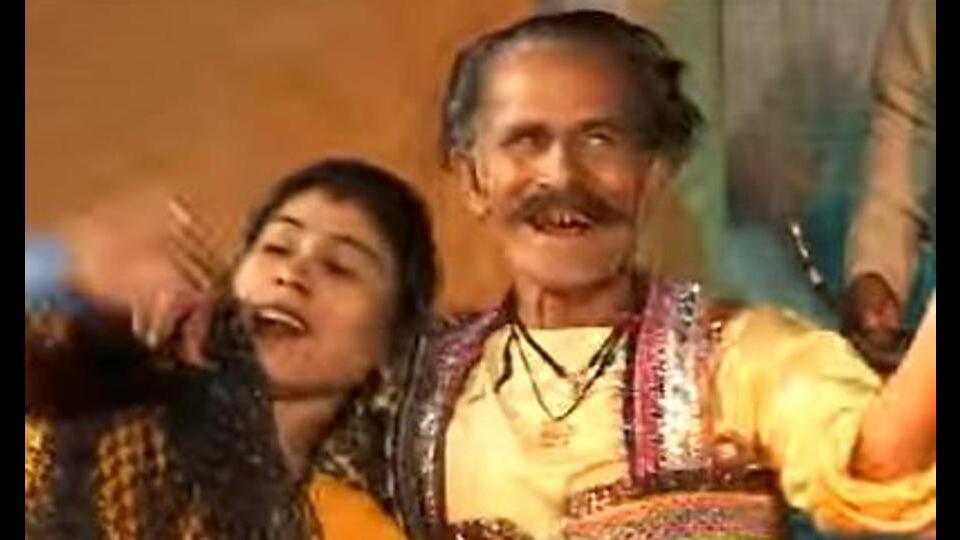
Pandey was born on March 11, 1933 in Maddhar Patha village of Sagar district. His father was a farmer and Pandey was the youngest among four brothers.
Pandey first saw the dance form in a fair when he was 14 years old. Later, he started practising it. He got married only after his family assured the woman’s family that he would leave the dance and adopt farming as a livelihood. But he didn’t agree on this. After the death of his father, his brother removed him from his house for practising Rai dance.
“I was fighting with my family as well as the Brahmin community for practising this dance. I used to convince them that this is an art form nothing else but they ostracised me. But it only motivated me to take it to the zenith,” he said.
Pandey also used to play mridang while performing Rai dance. Pandey is a father of four sons and five daughters. Pandey said his children also used to feel ashamed as he was a Rai dancer.
His son Santosh Pandey said, “People used to mock on us as my father was a Rai dancer. I used to feel bad. I requested my father to leave it but once he took me to Japan to perform. Then I realised that art has no caste and religion and people loved my father’s performance. Later, I joined him.”
Ramsahay Pandey said, “In 1964, I performed at Akashvani Bhopal in the presence of the then chief minister Govind Narayan Singh and many other dignitaries. People were amazed with my dance form and from then, I started getting respect in the society.”
Apart from Pandey, Dr. NP Mishra, who was known for working for hours to save the lives of people during Bhopal Gas tragedy, will be given the Padma Shri award posthumously.
Two tribal artists, Durga Bai and Arjun Singh Dhurve will also receive the award.
Durga Bai from Mandla will receive the award for her Gond painting. At the age of six, he learned the art of Digna, a painting in which Gond tribals paint the inner and outer walls and floors of a house with geometric patterns during weddings and harvest festivals.
Arjun Singh Dhurve from Dindori district is a master in Baiga Pardhuni dance. He is the first Baiga who has done post-graduation. In 1993-94, the MP government honored him with Tulsi Samman.
A Bundeli poet from Chhatarpur, Awadh Kishore Jadia has been selected for the Padma Shri award for his outstanding literary work. Jadia, who is an Ayurvedic doctor, wrote four books in Bundeli.
(With inputs from Anupam Pateriya from Sagar)