The Yamuna in Delhi has so far failed to reach even its “modest” warning level during this year’s monsoon, raising concerns among experts that the river may have missed its annual monsoon flush, which is considered important for its ecological health and for replenishing groundwater in the floodplains.
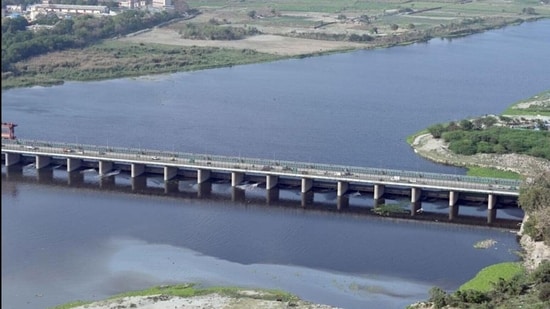
The river, which typically swells during the four-month monsoon cycle, was flowing at 202.52 metres at the Old Railway Bridge (ORB) at 9pm on Thursday, according to official data. The Central Water Commission has forecast steady levels over the next week. The ORB, also known as Loha Pul, is the reference point for measuring the Yamuna’s water level in Delhi. The warning level is 204.50 metres and the danger level is 205.33 metres. Bhim Singh Rawat, coordinator of the South Asia Network on Dams, Rivers and People (SANDRP), said the river had experienced an unusually dry monsoon so far.
“There is not a single instance when the river has reached 204.5m level. Coupled with erratic rainfall in the upper catchment area, it is also linked to the distribution of water being carried out the Hathnikund barrage with most of the river water being diverted to Eastern and Western Jamuna canals rather than the river stream,” he said.
Also Read | Ganga, Yamuna water levels recede in Prayagraj; monitoring continues
{{/usCountry}}Also Read | Ganga, Yamuna water levels recede in Prayagraj; monitoring continues
{{/usCountry}}Rawat said the monsoon was the only period when the river received enough water for pollutants to be flushed downstream. “Depriving river of the monsoonal flow is also bad for its ecology in long run,” he said. Experts said the annual swelling of the Yamuna was important for maintaining its ecological health, supporting aquatic life and recharging underground aquifers beneath the floodplains.
During periods of low-level flooding, water spreads across the floodplain and helps replenish groundwater by soaking the sand underneath the river. For the river the monsoon also provides an annual period of relatively continuous flow from its upper reaches downstream, helping flush accumulated contaminants.
Data from the Hathnikund barrage in Haryana showed that around 410 cumecs of water was being released into the Western Yamuna Canal on Thursday, compared with between 9.9 and 120 cumecs being released into the river stream. Rawat said the National Institute of Hydrology had recommended doubling the minimum flow during summer to maintain environmental flow in the river.
Also Read | Ganga, Yamuna swell towards danger mark, cremations shift to roads
The Yamuna was at 204.08 metres on August 8, just below the warning level. Data from previous years showed that the river had failed to reach 204.5 metres only twice in the past decade.