E-Paper



Aadhaar card mandatory for feast in this Madhya Pradesh temple
In the Pashupatinath temple of Mandsaur, free feast for pilgrims began on August 1 this year leading to a sharp increase in number of visitors every day.


Like many government schemes which require beneficiaries to link their Aadhaar card, a temple in Madhya Pradesh’s Mandsaur has made it mandatory to carry Aadhaar card to enjoy feast on the campus.
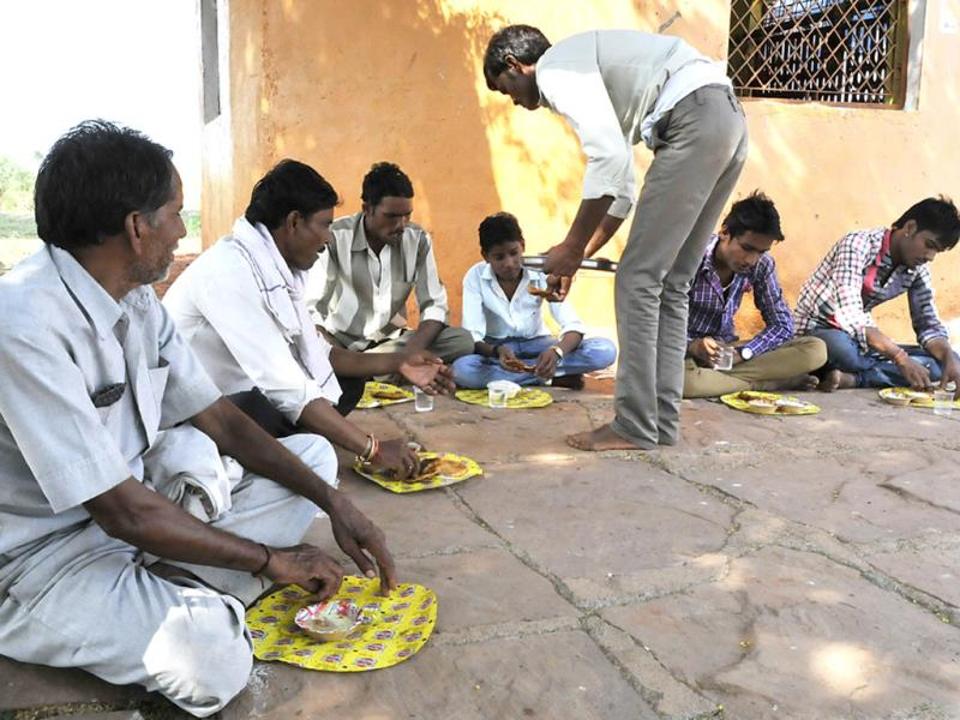
In the Pashupatinath temple of Mandsaur, free feast for pilgrims began on August 1 this year leading to a sharp increase in number of visitors every day.
The temple management was satisfied on the number of visitors in the first fortnight. But the number of visitors doubled and food started finishing in an hour. Pilgrims soon started queuing up for a meal and fight broke too, said a member of the temple management.
Interestingly, the footfall inside the temple remained the same. When the temple authorities checked, they found out that it was not pilgrims but residents of nearby villages who were mostly attending the feast.
“When we asked some boys who were regular visitors, they said their mothers had stopped cooking at home and they were dependent on the feast for the past 10-15 days. More than 300 locals have started attending the feast daily,” said Rahul Runwal, manager of the temple committee.
The feast was introduced for 150-200 pilgrims who came to the temple from far-flung areas.
The district collector, who started the meal plan, came up with idea of making Aadhaar card compulsory so that only genuine people could get the benefit of it. After the Aadhaar scheme was implemented, the number of people attending the feast was reduced to half.
Collector Manoj Pushp said, “It is fine to allow locals to have a free feast but they have started creating a mess in the temple premises. That’s why I have made Aadhaar card compulsory. If people are visiting the temple in groups, then the card of one of them will be valid for the feast. However, I have asked the management to allow poor people to have the feast.”