
 E-Paper



‘Absurd legal paradox’: Shashi Tharoor questions Centre over passport ‘not citizenship proof’, offers fix via Aadhaar
Shashi Tharoor suggested that the Unique Identification Authority of India issue a visually distinct Aadhaar card to non-citizen residents.

 Prefer HTon Google


Congress MP Shashi Tharoor on Friday criticised the Centre's clarification that a passport is not conclusive proof of Indian citizenship, calling the situation an “absurd legal paradox” and urging a legislative overhaul to end what he described as a “fatuous” controversy.
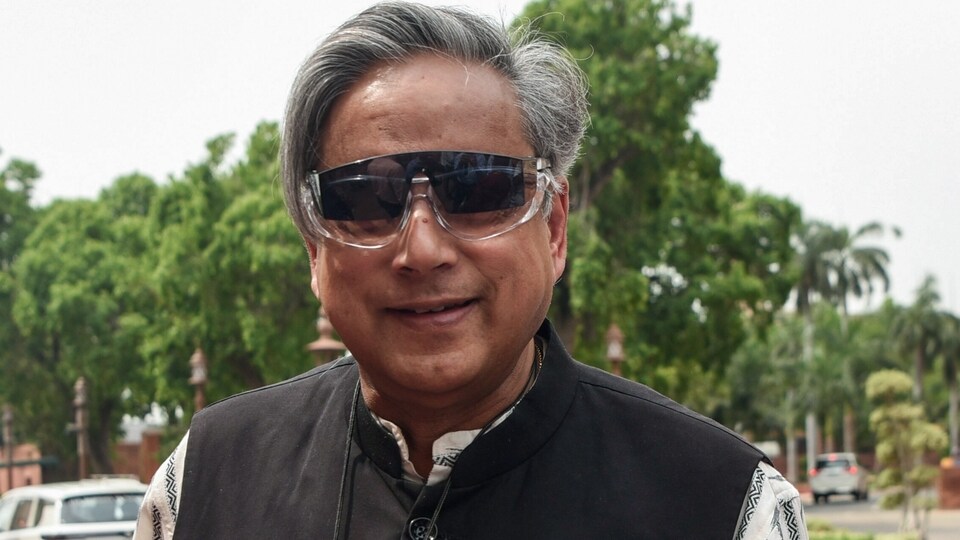
His remarks came a day after the government reiterated that a passport has never been treated as proof of citizenship and that no policy change had been made in recent years. The clarification followed a debate sparked by comments from the ministry of external affairs (MEA) on Passport Seva Divas.
In a detailed post on X, Tharoor said the MEA's clarification had led to “public bewilderment and political sparring”. While acknowledging that the government's position stems from provisions in the Passports Act, 1967, he argued that the distinction makes little sense in practical terms.
Tharoor noted that Indian passports are issued only after extensive verification and document checks. “To turn around and declare that the very document born from this rigorous vetting does not actually prove citizenship creates an absurd legal paradox. If a passport does not establish domestic citizenship, then what does?” he asked.
Raises concerns over ‘administrative limbo’
The Congress leader also pointed to the legal position surrounding Aadhaar, noting that the Supreme Court has held that Aadhaar serves as proof of identity and residence but not citizenship.
According to Tharoor, "This leaves millions of Indians in a bizarre administrative limbo where they possess world-class biometric and state-issued documents, yet none are legally deemed 'conclusive' proof of their nationality within their own borders,” he said.
Seeking to end the controversy, Tharoor proposed changes to the legal framework so that both passports and Aadhaar cards could be treated as conclusive proof of citizenship unless cancelled or withdrawn by the government.
He also suggested that the Unique Identification Authority of India issue a visually distinct Aadhaar card to non-citizen residents. Such a distinction, he argued, would allow the government to recognise a standard Aadhaar card or a valid Indian passport as sufficient proof of citizenship.
“By clearly demarcating the two categories, the state can safely mandate that carrying either a standard citizen's Aadhaar or a valid passport is compulsory and sufficient proof of citizenship for all Indian nationals at all times," the Thrivananthapuram MP wrote.
"This dual-document policy would immediately streamline domestic verification, eliminate arbitrary bureaucratic challenges during electoral revisions, and provide every Indian with absolute, unquestionable legal certainty regarding their identity. End of story!” he said.
What the government said
The controversy stems from an MEA briefing earlier this week in which officials said that an Indian passport is primarily a travel document and should not be treated as definitive proof of citizenship.
The government subsequently clarified that this has always been the legal position and that no new decision had been taken in the past 12 years.
The government also referred to a 2013 Bombay High Court ruling that held that possession of a passport, by itself, does not establish citizenship.
Officials cited Section 20 of the Passports Act, 1967, which allows the Centre to issue a passport or travel document to a non-citizen if it considers doing so necessary in the public interest.


