E-Paper



Access to critical minerals key to net zero emissions amid strained supply chain
India is enhancing access to critical minerals for its net zero goals, signing deals with resource-rich nations

 Prefer HTon Google


New Delhi:
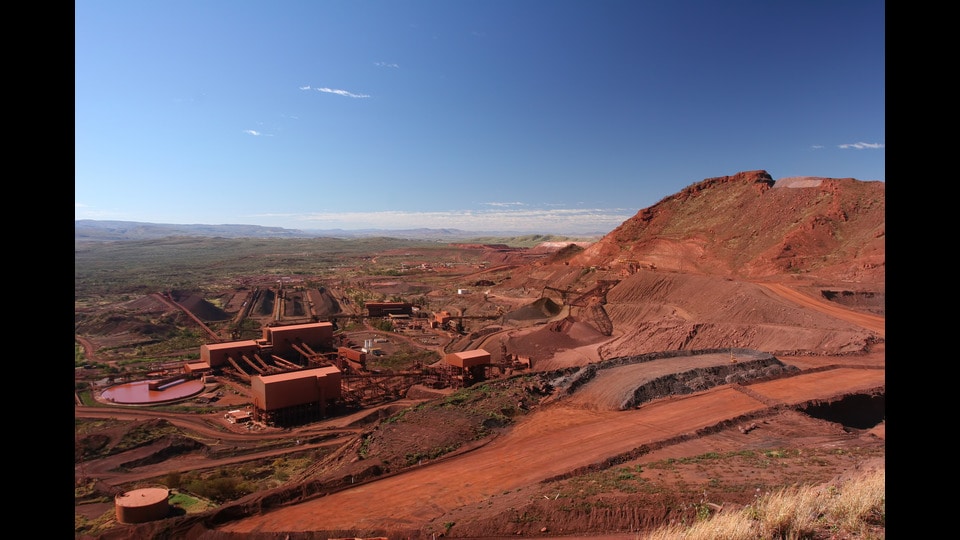
Access to critical minerals has emerged as a key factor in India’s pursuit of its long-term net zero emissions goal, prompting the country to sign agreements with resource-rich nations including Australia, Argentina and Chile for mining, exploration and investment, whilst launching a ₹34,300 crore (approximately $4 billion) National Critical Mineral Mission to secure supplies amid China’s tightening control over global reserves and processing.
Critical minerals such as lithium, cobalt, nickel and rare earth elements are indispensable for solar panels, wind turbines, electric vehicle batteries and other clean energy technologies essential to India’s climate goals. However, China’s grip on both mining and refining—it processes almost 90% of the world’s rare earth elements despite mining only half—has created a strategic vulnerability for countries pursuing energy transitions. With global demand for these minerals expected to more than double by 2030, India faces the twin challenge of securing access to geographically concentrated resources whilst navigating intense US-China competition over supply chains.
The strategy was outlined by the ministry of mines in response to HT’s queries. The ministry stated it is actively engaged in multiple strategic partnerships to strengthen the critical minerals value chain, including the US-led Mineral Security Partnership—launched in 2022 with 14 countries and the European Commission—the Indo-Pacific Economic Framework, the India-UK Technology and Security Initiative, the Quad and the Strategic Mineral Recovery Initiative, a US-India partnership announced in February following Prime Minister Narendra Modi’s visit to the US.
China has intensified pressure by imposing tighter controls over the sector and refining technologies over the past couple of years, adding urgency to India’s efforts.
“The core message is that India must urgently adopt a strategic perspective on its mineral economy. Minerals are essential for our industrial requirements including defence and strategic industries. The global transition towards decarbonisation of energy is creating a mineral-dependent world, and this is occurring amidst intense geopolitical competition, particularly between the US and China,” states a discussion paper by the Centre for Social and Economic Progress (CSEP) titled “India’s Mineral Requirements in a World of Economic and Geopolitical Transition.”
Think tanks have warned that India must accelerate its efforts to address geopolitical challenges associated with acquiring these reserves. Policymakers recognise that China’s dominance and moves such as export restrictions will have significant implications.
Multi-pronged approach
India’s response centres on the National Critical Mineral Mission, launched in January, which focuses on increasing domestic production, acquiring assets abroad, recycling critical minerals and developing trade and markets, among other priorities.
“Apart from acquiring these mines abroad through Khanij Bidesh India Limited (KABIL), we are also trying to ramp up domestic mining as soon as possible. The biggest issue with rare earths is not that they are rare, but because they exist in trace quantities and extracting them can be difficult,” said an official on condition of anonymity.
“The other issue is that refining is not only expensive but also has huge pollution implications,” the official added.
Domestic production ramps up
To secure raw material for magnet manufacturing, the ministry of mines has auctioned the Nawatola-Laband rare earth elements (REE) block in Uttar Pradesh. Additionally, three blocks have been auctioned in which REE are associated with other minerals: the Katghora Lithium Block in Chhattisgarh, the Dombarahalli Phosphate Block in Karnataka and the Patehra REE and graphite block in Madhya Pradesh.
Exploration licence blocks—the Ontillu-Chandragiri REE Block in Andhra Pradesh and the Nawatala-Devigarh REE block in Rajasthan—have also been auctioned. Two blocks with REE from Rajasthan (one mining licence, one composite licence) and one block each from Karnataka (one mining licence), Maharashtra (one composite licence) and West Bengal (one composite licence) are undergoing the auction process in Tranche 6.
The Geological Survey of India has ramped up exploration significantly, carrying out 49 REE projects in 2022-23, 59 in 2023-24, 78 in 2024-25 and 95 projects in 2025-26. Since 2015, GSI has augmented 482.6 million tonnes of REE ore resources at various cut-off grades across 34 exploration projects.
The ministry has also auctioned composite licences for 13 offshore mineral blocks under Tranche I, including three blocks of lime mud off the Gujarat coast, three blocks of construction sand off the Kerala coast and seven blocks of polymetallic nodules and crusts off the Great Nicobar Island coast.
Policy momentum builds
According to the Council on Energy, Environment and Water’s (CEEW) September report, “Making India a Hub for Critical Minerals Processing,” India’s ambitious trajectory to achieving net zero by 2070 entails energy independence and carbon neutrality that hinge critically on large-scale deployment of clean energy technologies such as solar, wind and batteries.
Recognising the strategic importance of critical minerals, policy decisions governing them gained substantial momentum since India’s G20 presidency in 2023. After successful negotiations during the G20 Energy Transition Working Group, the ministry amended the Mines and Minerals (Development and Regulation) Act to ease the process of critical mineral block auctions. One key action point of the mission is developing four processing parks where existing capabilities should be leveraged.
India is not among the top three producing countries for many critical minerals relevant for clean energy transition technologies and the defence sector. It remains dependent on imports for nearly all of its lithium, cobalt and nickel requirements, CEEW has found.
Rare earth elements—a subset of critical minerals that includes 17 elements such as neodymium, promethium and cerium—are used extensively in clean energy systems and other advanced technologies, according to the International Energy Agency.
Understanding China’s edge
The transition away from fossil fuels, which provide 80% of the world’s primary energy, will create a mineral-dependent global economy, the CSEP paper notes. India is experiencing faster economic growth with a greater role in manufacturing whilst taking up the challenge of a rapid energy transition, making the mineral economy increasingly significant.
China’s success lies in its vertical integration strategy. The country mines 50% of the world’s rare earth elements but refines and produces almost 90% of processed rare earth elements and industrial products, utilising extremely polluting and energy-intensive processes. For cobalt and lithium, used in electric vehicle batteries and other low-carbon products, China imports raw materials from major producers—the Democratic Republic of Congo for cobalt and Australia for lithium—but dominates world markets for processed metals from both, the CSEP paper notes.
Environmental trade-offs
Critical minerals present an environmental and social conundrum, according to the IEA. While necessary in the fight against climate change, mining and processing of these minerals can drive greenhouse gas emissions, pollute the environment and bring risks to nearby communities.
Rapid growth in zero-carbon technology has supercharged the world’s need for critical minerals, and demand is expected to keep climbing. The IEA estimated last month that if governments meet their announced energy and climate pledges, critical mineral demand could more than double from 2022 levels by 2030 and quadruple by 2050.
However, scaling up production remains challenging. From discovery to first production, it takes an average of 15.5 years to develop new mining projects, depending on the mineral, location and mine type. Long lead times raise questions about the world’s ability to ramp up output as demand grows, especially if companies wait for deficits to emerge before committing to new projects, the IEA has said.
Refining and processing at scale may pose environmental challenges for India, whilst pressure on land and forests is also expected. HT reported on July 16 that the Union environment ministry is considering fast-tracking forest and environmental clearances for critical or strategically important minerals, including rare earth elements, under a separate head in its Parivesh 2.0 portal. These proposals are not in the public domain.
Mining operations are governed by the Mines and Minerals (Development and Regulation) Act, 1957 and the Mineral Conservation and Development Rules, 2017, which mandate scientific mining practices, approved mine plans (including environmental management plans) and implementation of progressive and final mine closure plans covering air, water and waste management as well as land reclamation.
The ministry of mines has implemented sustainable mining practices by making provisions under Chapter V of the Mineral Conservation and Development Rules, 2017. Provisions have been incorporated for precaution against air pollution, prevention of discharge of toxic liquid, precaution against noise and control of surface subsidence.