
 E-Paper



PM Modi back with a selfie video, hails passage of stricter anti-paper leak bill
PM Modi said the issue of question paper leaks had plagued governments at both the Centre and the states for decades and threatened the future of students.

 Prefer HTon Google


Prime Minister Narendra Modi on Thursday welcomed Parliament's passage of the anti-paper leak Bill. Addressing the nation in a selfie-style video late at night, Modi said the issue of question paper leaks had plagued governments at both the Centre and the states for decades and threatened the future of students.
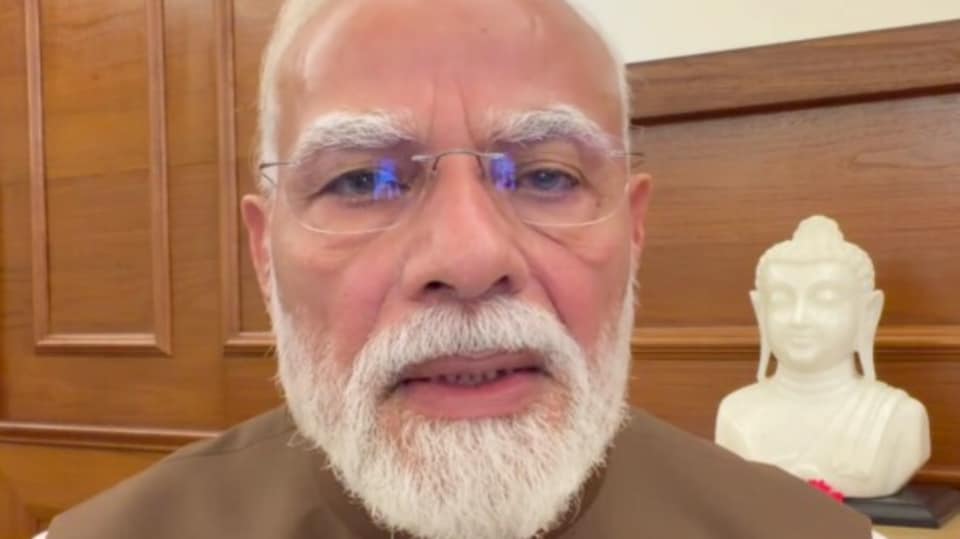
The PM said the government was taking successive steps to strengthen the examination system and vowed that those involved in “paper leak rackets” would face strict action.
“Saathiyo, we are continuously taking one step after another to build a reliable examination system. Whether it is the creation of passports, the creation of fast-track mechanisms, or taking into account the suggestions of the states,” he said, after the Bill was passed by both Houses of Parliament.
He said reforms in the examination and education system had become essential across the country, with greater use of technology playing a crucial role.
“Keeping all this in mind, it has become essential to reform the education system across all the states as well as at the Centre. Extensive use of technology has also become necessary,” he said.
Modi on ‘paper leak mafia’
The Prime Minister also warned that those involved in paper leak rackets would not escape punishment.
"And at the same time, any paper mafia, any gang involved in paper leaks, any gang that plays with the future of the country's children, will not be spared.
Strict laws are also necessary. We had taken a Bill to Parliament, and as I had promised you, over the last two days, both Houses of Parliament, the respected Members of Parliament, discussed it in detail."
Referring to the Bill's passage, Modi said both Houses of Parliament had held detailed discussions before approving the legislation.
"And as I promised you, two days ago, both the MPs of the Parliament, the most respected MPs, discussed it in detail. And today, both the MPs have passed this bill with strict laws. Now, an important task has been completed in the direction of the international test system."
He added that the government would continue working to ensure such incidents do not recur and urged people to join hands in building a developed India.
"The work will continue. We will not allow such a situation to continue for a long time. With this belief, friends, let us all come together to fulfill the dreams of a developed India."
ALSO READ | 'First of kind' vs 'showpiece amendment': Fiery paper leak bill debate in Parliament
‘Sathiyon’ instead of ‘Friends’
The Prime Minister's latest selfie-style video is the fourth in a series of direct social media addresses on the paper leak issue.
Unlike the previous three videos, which opened with his now-familiar "Fraands" greeting, PM Modi began Thursday's address with the Hindi salutation "Saathiyo."
What is the anti-paper leak bill passed in Parliament?
The Public Examinations (Prevention of Unfair Means) Amendment Bill, 2026 strengthens India's anti-paper leak law by imposing tougher punishments for examination fraud, speeding up investigations and trials, and creating dedicated mechanisms to tackle organised exam-related crimes.
The Bill amends the Public Examinations (Prevention of Unfair Means) Act, 2024, which was enacted after the NEET-UG 2024 paper leak. The government brought the amendments after fresh paper leak allegations and massive student protests demanding stronger action.
Key provisions
-Harsher punishment: Individuals convicted of using unfair means can now face five to 10 years' imprisonment, up from three to five years under the 2024 law.
- Higher fines: The maximum fine for individuals has been raised from ₹10 lakh to ₹50 lakh.
- Stricter action against service providers: Agencies or service providers involved in exam fraud can be fined up to ₹5 crore, up from ₹1 crore, and barred from conducting examinations for eight years instead of four.
-Organised crime: Those involved in organised examination fraud face a minimum jail term of seven years and fines of up to ₹10 crore.
-Time-bound investigations: Investigations must be completed within two months of referral by the Centre.
-Fast-track courts: States and Union Territories are required to establish fast track courts to complete trials within three months of the filing of the chargesheet.
-Existing safeguards retained: Offences remain cognisable, non-bailable and non-compoundable, while students appearing for examinations are not treated as accused under the law.
The Bill was passed by the Lok Sabha on July 29 and cleared by the Rajya Sabha on July 30. It will become law after receiving the President's assent.


