E-Paper



Act on bad air in 24 hrs: SC to Centre
The Supreme Court also said that it may set up a task force itself since “nothing is really happening to control pollution” and “all authorities have failed”.


The Supreme Court on Thursday put the Centre on a 24-hour deadline to come out with a “creative” and “urgent” mechanism to control air pollution in Delhi-NCR, failing which, the court said, it may set up a task force itself since “nothing is really happening to control pollution” and “all authorities have failed”.
The top court also pulled up the Delhi government for reopening schools on November 29, directing it to reconsider the decision in the wake of exposing young children to bad air and toxic smog. Hours later, the Delhi government announced the closure of schools until further orders.
Also Read | Delhi schools shut again after push from SC
Fixing the next hearing at 10am on Friday, a bench, headed by Chief Justice of India (CJI) NV Ramana, said that the Centre and the Commission for the Air Quality Management (CAQM) for Delhi-NCR and Adjoining Areas must apprise the court if they could come up with a more effective mechanism for implementing the pollution control measures.
“We expect a serious, serious action or we will pass orders. We give you 24 hours to come out with a plan of action. You take a hard look at the issue and come up with a solution with seriousness. If you cannot, we will have to pass some directions tomorrow,” the bench, which also comprised justices Dhananjaya Y Chandrachud and Surya Kant, told solicitor general Tushar Mehta.
While Mehta, representing the Centre and CAQM, sought to highlight the steps taken by the Commission against violators, the court remained unimpressed and remarked that all authorities have been unable to contribute anything on controlling pollution.
“If there is an emergency situation, you have to act urgently and with some creativity and innovation. But we cannot induce creativity in the bureaucracy. We cannot help you if you don’t want to do something... We will have to do something extraordinary or the situation cannot be helped,” observed the bench.
Also Read | Rain has little impact as air quality slides to severe in Delhi
It also questioned the efficacy of CAQM, asking whether the Commission has any power to enforce its directives or if its remit is confined to only issuing directions. “Also, look at the composition of your Commission. It has members from all states, all departments in the country. Then, you have so many subcommittees under the Commission. It is more like all departments of the government of India together...What is the purpose of having 20-30 members except creating an additional burden on the state exchequer,” the bench said, pointing at the composition of the 28-member CAQM.
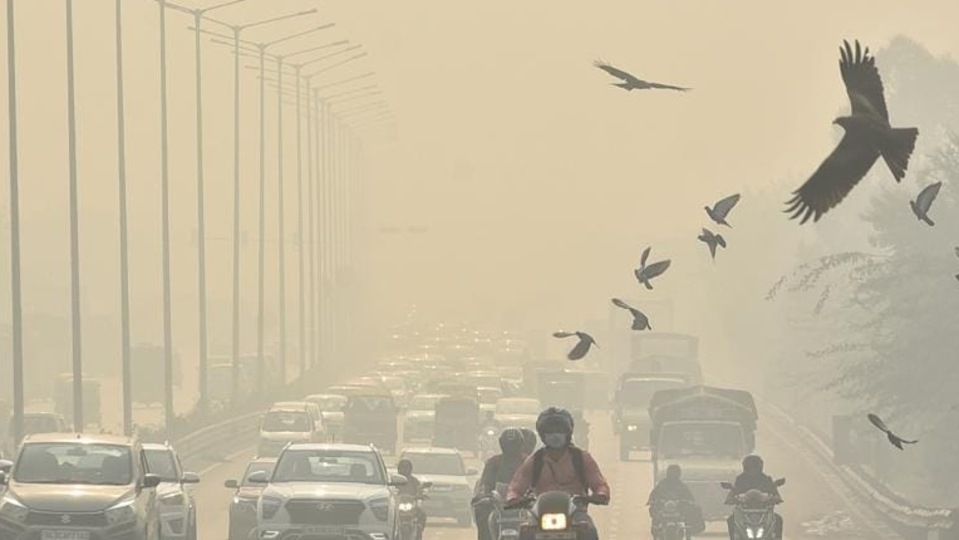
Delhi has been in the grip of hazardous pollution for over a month now. This was the worst November for Delhi in terms of the average air quality index (AQI).
December too has started with alarming pollution levels, with the AQI hitting 429 on Thursday, up from 370 a day earlier. While pollution in November was driven significantly by smoke from farm fires in upwind states, the air quality so far this December has been fuelled largely by local emissions.
Mehta, on his part, tried to convince the bench that there are flying squads which have been monitoring the directions given by CAQM, and read out details of monetary penalties imposed for industrial and vehicular pollution.
“Fines are not the solution to this problem...We feel nothing is happening even as pollution levels are rising. All this is just wasting our time...We will take up tomorrow morning... We will come at 10am and will give you 15 minutes to tell us what you can do now. We will only say don’t compel us to do what you should do,” retorted the bench.
The CJI further told Mehta: “As a layman, I am asking this question. The question is the day when this matter started, there was a particular level of pollution. Then we heard the matter, there were reports in the newspapers and media; there was wide publicity; directions were given too. The question that we ask is why the pollution levels are still going up? That’s the question every citizen will ask... Delhi government and others said stubble burning is a main cause but that’s over now.”
Mehta said that CAQM has identified industrial and vehicular pollution as chief contributors but the bench yet again noticed that there was no implementation mechanism in place to check vehicles coming from Uttar Pradesh to the national capital. “This is just an instance of non-implementation,” added the bench.
To this, Mehta said he would consult the Union environment minister and other authorities on certain points that he has for a better structuring of the Commission and a more effective implementation mechanism.
The court also slammed the Delhi government for reopening schools in the city.
“Small children have to go in morning in fog. Children have to go to schools at 6-7 in the morning in this bad weather,” the bench told senior counsel Abhishek Manu Singhvi, who appeared for the Delhi government.
Singhvi maintained that the Delhi government has taken strongest possible measures to control pollution and that there is no dilution of the court order, and pointed to studies and reports on learning loss due to school closure during the pandemic. “But if this court wants us to reconsider, we will do it,” he added.
“Don’t use our shoulders to fire shots. You are the government. You do your work. Who will sit at home when you open schools?,” the bench told Singhvi.
Meanwhile, senior counsel Vikas Singh, who appeared for the 17-year-old petitioner, Aditya Dubey, pressed for a ban on construction in the Central Vista, citing huge amount of dust. “Even for Central Vista, the same standard has to follow. No project can be more important than lives of people. Why allow Vista only? Other builders could also say that we will also comply with pollution norms and therefore, they should also be allowed,” argued the lawyer.
Singh urged the bench to set up a task force under the chairmanship of a former Supreme Court judge and suggested justice Rohinton F Nariman’s name. “Norms are there, but no implementation. Please constitute an empowered task force and flying squads to ensure compliance,” he said.