
 E-Paper



After SC steps in, pregnant woman, her son to be brought back from Bangladesh
The bench, in its order recorded, that Sunali, who is in an advanced stage of pregnancy, must receive urgent medical supervision

 Prefer HTon Google


The Union government on Wednesday agreed to bring back a pregnant woman deported to Bangladesh earlier this year along with her eight-year-old son, after a strong nudge from the Supreme Court, which said the matter demanded humanity over technicalities. Recording the Centre’s undertaking, the court directed that she be provided immediate medical assistance and permitted to reside near her family in West Bengal.
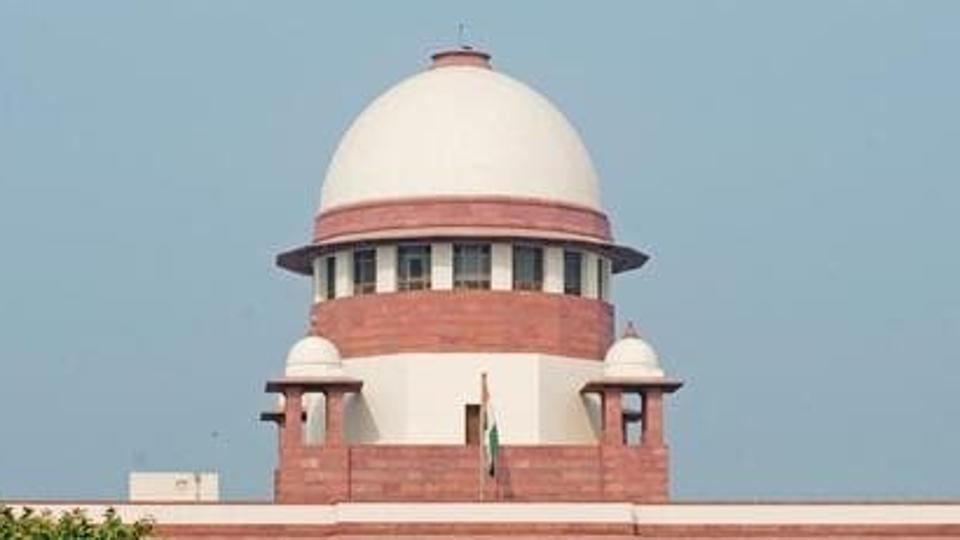
“These are cases where law has to bend to humanity. Some of these cases require a different outlook,” observed a bench of Chief Justice of India Surya Kant and Justice Joymalya Bagchi, as it took on record a statement from Solicitor General Tushar Mehta that Sunali Khatun and her son Sabir could be brought back to India “on humanitarian ground” and kept under appropriate surveillance.
Mehta submitted that as the deportation was carried out through official channels, a judicial order recording the government’s position was necessary to enable diplomatic procedures. The bench accordingly incorporated the assurance into its written order to facilitate immediate coordination between agencies on both sides of the border.
Also Read: SC tells ECI to consider Kerala plea for extending SIR deadline
The bench, in its order recorded, that Sunali, who is in an advanced stage of pregnancy, must receive urgent medical supervision. Taking note of a request by senior advocates Kapil Sibal, appearing for the state of West Bengal, and Sanjay Hegde, appearing for Sunali, the court directed that she be allowed to travel to and temporarily reside in Birbhum district, where her close relatives live.
“The Chief Medical Officer of Birbhum is directed to provide all medical facilities, including delivery-related amenities free of cost. As her eight-year-old child will also accompany her, the child will be provided all assistance,” stated the order, directing that the needful be done during the day.
The bench also asked the Centre to verify whether action had been taken against Sunali’s father, an Indian citizen. “If her father is an Indian citizen, she also becomes an Indian citizen, and her son is also one. There has to be some inquiry following the principles of natural justice,” the bench told the SG.
The court then adjourned the matter to December 12 and asked the Centre to take instructions regarding four other deportees who also seek repatriation.
Wednesday’s development came in appeals filed by the Centre against two orders of the Calcutta High Court on September 26, directing that six persons deported to Bangladesh in June be brought back and given a full opportunity to prove their Indian citizenship. The deportees included Sunali, her minor son and husband, who lived in Delhi’s Rohini area where she worked as a domestic help. The high court had also passed a similar direction in a separate petition involving another woman and her two minor sons.
On December 1, the Supreme Court had asked the Centre to consider a temporary return for Sunali after being informed that she was pregnant when deported. The bench had then remarked: “We are treating this on humanitarian grounds. You take instructions and let us know by Wednesday.”
At that stage, Mehta had expressed concerns about the precedent that complying with the high court order might set, to which the bench responded; “On your advice, needful can be done subject to whatever surveillance is required.”
Earlier, the high court had criticised the rapid pace with which Delhi Police arrested the deportees on June 21, produced them before the Foreigners Regional Registration Office (FRRO), and secured a deportation order on June 26, observing that this occurred without a proper hearing.
Although the Union government maintained that their deportation was warranted due to failure to furnish valid identity proof, the high court recorded that the names of the deportees’ grandfathers appeared in the electoral rolls of West Bengal and noted that a May 2025 Ministry of Home Affairs memo permits immediate deportation only in emergent circumstances after due inquiry, which the court found absent. “Not following such procedure and acting in hot haste … is a clear violation which renders the deportation order bad in law,” it held.
The Supreme Court on Wednesday clarified that its order was confined to humanitarian relief for Sunali and her child and does not prejudice the Centre’s legal arguments. The status of the remaining four deportees will be taken up next week.



