E-Paper



Ahead of Madhya Pradesh polls, Shivraj Singh Chouhan inducts 3 new ministers
Madhya Pradesh chief minister Shivraj Singh Chouhan inducted Balkrishna Patidar, Narayan Singh Kushwaha and Jalam Singh Patel as ministers of state, ahead of the assembly elections later this year.

 Prefer HTon Google


Madhya Pradesh chief minister Shivraj Singh Chouhan on Saturday expanded his ministry, inducting three new faces ahead of assembly elections in the state due later this year.
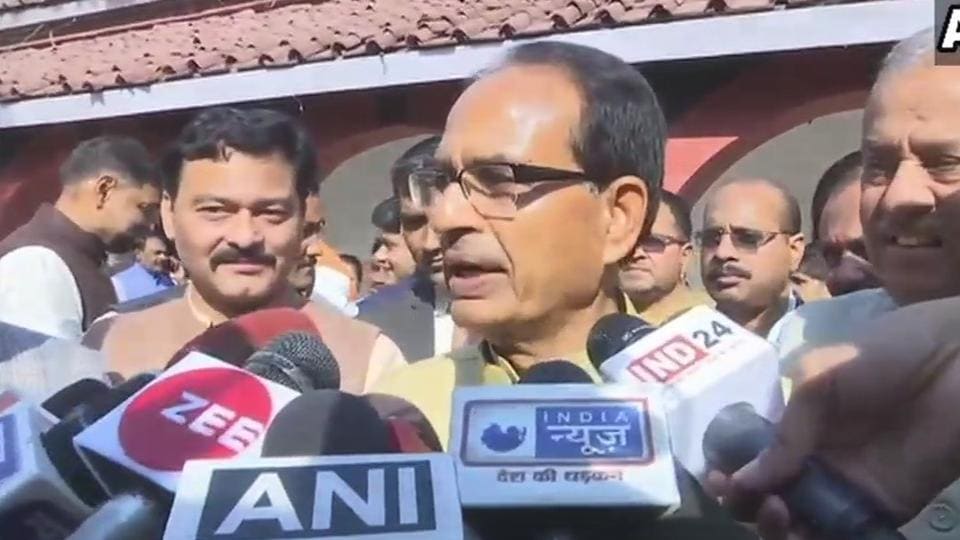
BJP MLA from Gwalior, Narayan Singh Kushwaha, took oath as a cabinet minister while Narsingpur legislator Jalam Singh Patel and Khargone MLA Balkrishna Patidar were made minister of states, purportedly to woo Patidar, Lodhi and Kushwaha communities.
Governor Anandiben Patel administered the oath of office to the new ministers at a function in the Raj Bhavan in Bhopal.
Balkrishna’s inclusion in the cabinet is seen as an effort by the BJP government to placate the Patidar community that was angry with the saffron party following their agitation for reservation benefits in Gujarat and violent farmer stir in Mandsaur last year.
Four of the five farmers killed in the police firing in the agitation on June 6 last year were from the Patidar community.
Induction of Kushwaha and Patel (from Lodhi community) in the ministry will help the party to consolidate its support base among the two communities, who have a significant presence in the state where the BJP is in power since 2003.
Singh is the brother of former union minister Prahlad Singh Patel.
The state has now 20 cabinet ministers, including the chief minister and nine minister of states. According to constitutional provisions, the state can have a maximum of 35 ministers.
The ministry was expanded after the CM held discussions with the state BJP president Nand Kumar Singh Chauhan and party’s state general secretary (organisation) Suhas Bhagat.
Ahead of the oath-taking ceremony, state Congress on Friday submitted a memorandum to the Election Commission seeking a stay on the process asserting that the BJP government cannot carry out a cabinet expansion, as the model code of conduct was in force ahead of February 24 assembly bypolls in Mungaoli and Kolaras.
The opposition party had demanded the cabinet expansion be postponed until February 28.
The new ministers told media persons after the ceremony that they will try their best to fulfil the expectations of the chief minister and work to their utmost capacity for the welfare of the people.
Patel said he would work for the development of the state and welfare of the people to the best of his capacity. Kushwaha said the priority of the government to reach out to the people and help them is also his priority.
Patidar said as a minister he would work to make 7.5 crore people of MP happy.
On his community’s purported angst against the government and pending issues of farmers, Patidar said they were happy as CM was doing a lot for them.