E-Paper



Ahmedabad court allows govt to withdraw complaint against Hardik Patel
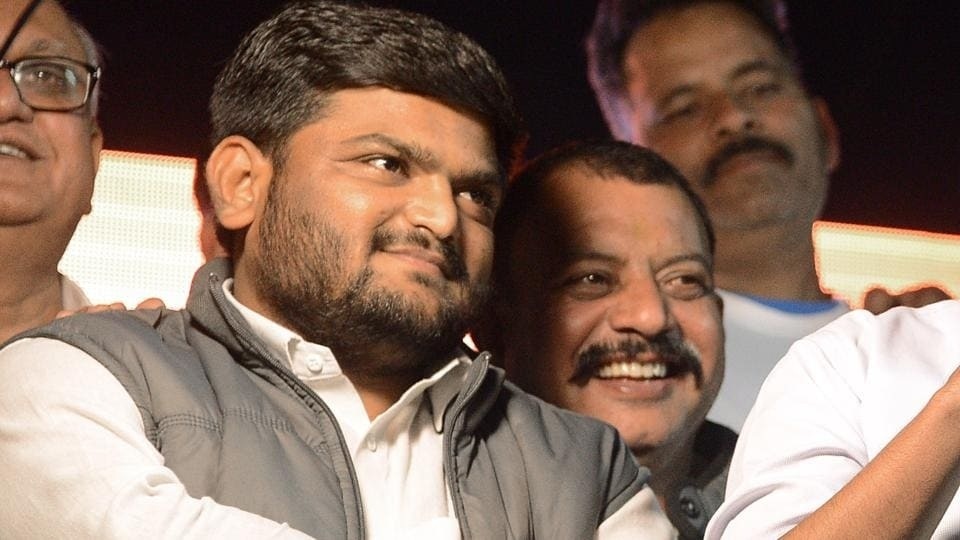
Gujarat Congress working president Hardik Patel still has at least a dozen cases registered against him including one in which he is accused of sedition.

 Prefer HTon Google


A sessions court in Ahmedabad on Monday allowed the Gujarat government to withdraw a criminal case registered against 21 people including Patidar leader and Gujarat Congress working president Hardik Patel on a complaint by a Bharatiya Janata Party (BJP) councillor in 2017.
“Allowing the application under section 321 of CrPC the sessions court orders release of all 21 accused named in the FIR... without any charges against them,” additional sessions judge Prashant N Raval said in his order.
In his police complaint, BJP councillor in the Ahmedabad municipal corporation Paresh Patel alleged Hardik Patel and his supporters assembled outside his house, trespassed into his house and vandalised the premises.
A metropolitan court rejected the government’s request in April, prompting the state government to appeal against the decision in a sessions court the following day arguing that the lower court’s order was “wrong and contrary to the provisions of law.”
Section 321 of the Code of Criminal Procedure allows the prosecutor to withdraw from the prosecution of any case if the court allows it. This request can be filed at any stage before the judgment is pronounced.
The sessions judge allowed the state to withdraw the case, observing that the magisterial court’s focus appeared to be more on the previous behaviour of the accused and that its interpretation of the law was not proper. The metropolitan court intended to frame charges against the accused in this case.
Hardik Patel still has at least a dozen cases registered against him including one in which he is accused of sedition.
The PAAS convenor in 2015 spearheaded a quota agitation to seek reservation in government jobs and colleges for the Patidar or Patel community under the other backward classes category. The agitation turned violent in August 2015 and 15 people lost their lives.
There were 537 FIRs filed across the state during the rioting in 2015 where public property worth ₹44.5 crore was damaged.
Hardik Patel won a reprieve from the Supreme Court on April 12 when the top court stayed his conviction in a rioting and arson case registered against him in connection with the Patidar protests. The stay will enable Patel to contest the assembly elections.
Patel was among the two people convicted in 2018 by a court in Gujarat’s Mehsana district for offences of rioting, dacoity and arson for ransacking a BJP legislator’s office in Visnagar.
Patel was sentenced to two years imprisonment, which is the minimum benchmark set under Section 8 of the Representation of Peoples Act, 1951to disqualify a person from contesting elections for the next six years. The legal bar can be overcome on an acquittal from the case or by obtaining a stay on conviction, an order which is rarely issued by the higher courts. The Gujarat high court had turned down his request to stay the conviction in March 2019.