
 E-Paper



Air India inspecting fuel switches on Boeing 787s, second time after Ahmedabad crash: What's the connection?
Air India inspecting its Boeing 787 Dreamliner fleet, starting Tuesday, a day after a pilot reported a possible defect in the fuel switch on Monday

 Prefer HTon Google


Air India is again inspecting the fuel-control switch (FCS) mechanism on its fleet of Boeing 787 and 737 planes, a second time since the June 2025 Ahmedabad crash that preliminary findings linked to the FCS being turned off on that aircraft. More than 260 people died in that crash, and the private carrier then did a precautionary inspection of the locking mechanism of the FCS. It declared all planes all clear.
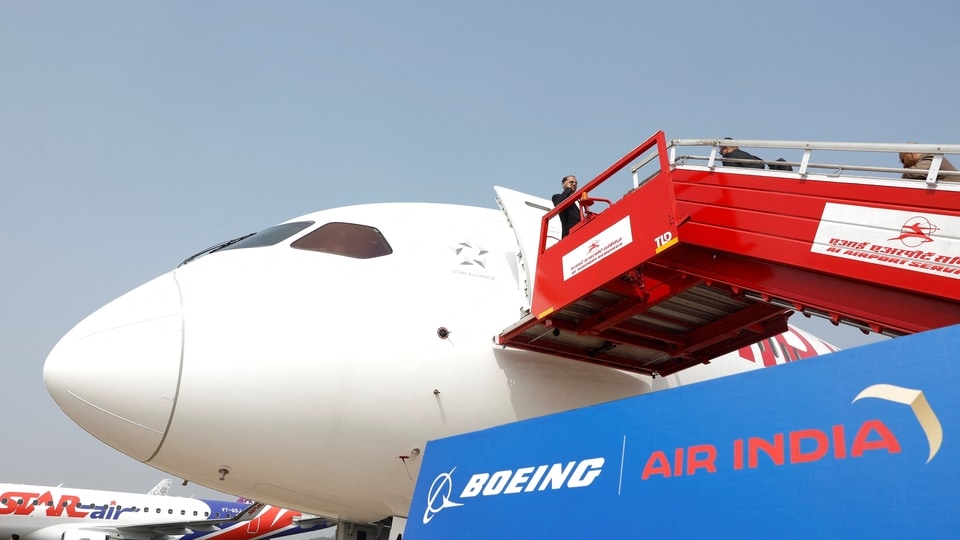
It’s inspecting them all over again across its Boeing 787 Dreamliner fleet, starting Tuesday, a day after a pilot reported a possible defect in the fuel switch on Monday.
Inspections of half the fleet have been completed with no glitches found so far, a report by news agency PTI said citing sources Tuesday afternoon. The report further said the Tata-owned airline — which used to be India’s national public-sector carrier before divestment — has escalated the matter to manufacturing company Boeing for a priority evaluation.
What prompted the latest inspection?
As for the reported defect, an Air India Boeing 787-8 Dreamliner was grounded after its left fuel switch failed to stay in the 'run' position twice and moved to 'cutoff' during engine startup, an airline spokesperson said.
The flight, AI-132, came from Heathrow in London to Bengaluru on Monday.
"We are aware that one of our pilots has reported a possible defect on the fuel control switch of a Boeing 787-8 aircraft. After receiving this initial information, we have grounded the said aircraft and are involving the OEM (Original Equipment Manufacturer) to get the pilot's concerns checked on a priority basis. The matter has been communicated to the aviation regulator, DGCA. Air India had checked the fuel control switches on all Boeing 787 aircraft in its fleet after a directive from the DGCA, and had found no issues. At Air India, the safety of our passengers and crew remains top priority," an Air India spokesperson said.
The pilot noted that the switch appeared to slip out of position if pushed down slightly and did not lock properly, news agency Reuters reported citing sources. The aircraft involved (registration VT-ANX) is nine years old. The aircraft can operate for up to 30 years before requiring enhanced maintenance checks, and its full service life could extend to as long as 50 years, is what Boeing says.
There’s reaction from the pilot community.
Why Ahmedabad crash comes to mind
Captain CS Randhawa, president of the Federation of Indian Pilots (FIP), on Monday urged the Directorate General of Civil Aviation (DGCA) and the Aircraft Accident Investigation Bureau (AAIB) to immediately investigate possible electrical faults in Boeing 787 aircraft.
Captain Randhawa said this was the third known incident in which un-commanded movement of fuel control switches had been recorded on a Boeing 787 aircraft.
"The first incident on the Boeing 787-800 aircraft took place on 17 February 2019 at Osaka on an ANA flight, which was landing at Osaka, where both fuel control switches on touchdown, when the throttles were brought to idle position, both these switches went to cutoff position automatically due to an electrical malfunction,” he told news agency ANI
“We have been relating the same theory for the Air India 171 crash on June 12 at Ahmedabad,” he added.
After the Ahmedabad crash, the DGCA had directed all airlines to inspect the fuel switch locking system in their Boeing 787 and 737 planes by July 21, 2025 after the AAIB said in its preliminary report that fuel switches were cut off before the crash.
A final report is awaited, as to how that happened. What caused both fuel switches to transition from normal operation to the cutoff position remains the central mystery, leaving open possibilities ranging from mechanical failure to human error or electronic malfunction. The preliminary report also said the cockpit voice recorder captured one pilot questioning the fuel cutoff, with the other denying responsibility.
FCS and a 2018 advisory
The Ahmedabad crash preliminary investigation report also referred to a 2018 advisory by the US Federal Aviation Administration that recommended — but did not mandate — operators of several Boeing models, including the 787, to inspect the locking feature of the fuel cutoff switches, to ensure these could not be moved accidentally.
Air India told the probe team that it had not carried out the inspections at the time as the FAA's 2018 advisory was not a mandate. But it also said maintenance records showed that the throttle control module, which includes the fuel switches, was replaced in 2019 and 2023 on the plane involved in the crash. The report noted “all applicable airworthiness directives and alert service bulletins were complied on the aircraft.”
Following the Ahmedabad crash, the DGCA ordered FCS inspections on almost all Boeing aircraft operating in India, effectively making such checks compulsory within the country.
Where things stand now
Air India operates 33 Boeing 787 Dreamliners, according to data from Flightradar24.
A Boeing spokesperson said on Monday, “We are in contact with Air India and are supporting their review of this matter.” Honeywell had not responded to HT's requests for comment yet.
“While no connection is implied, the repeated emergence of issues with a critical flight control system on the same aircraft type demands the highest level of scrutiny,” Capt Amit Singh, founder of aviation Safety Matters Foundation, an independent aviation safety education platform.
“This discrepancy raises urgent questions: Were the checks thorough? Is this a new, recurring defect? Passengers and crews deserve unambiguous answers,” he further told HT.
(with inputs by Neha LM Tripathi)


