E-Paper



Amid lockdown, rally organised in Arunachal to protest death of civilian in Army shooting
Wancho Council, an apex body of Wancho, a Naga sub-tribe, took out the peace march that ended at the Longding district deputy commissioner’s (DC) office, where the council members submitted a memorandum demanding justice for the slain and compensation for his next of kin.


At least 50 residents in Arunachal Pradesh’s remote Longding town took out a peace rally on Monday amid the lockdown restrictions, which have been imposed since end-March to contain the spread of coronavirus disease (Covid-19) outbreak, in protest against the alleged killing of a Wancho tribesman by an Indian Army patrolling party two days ago.
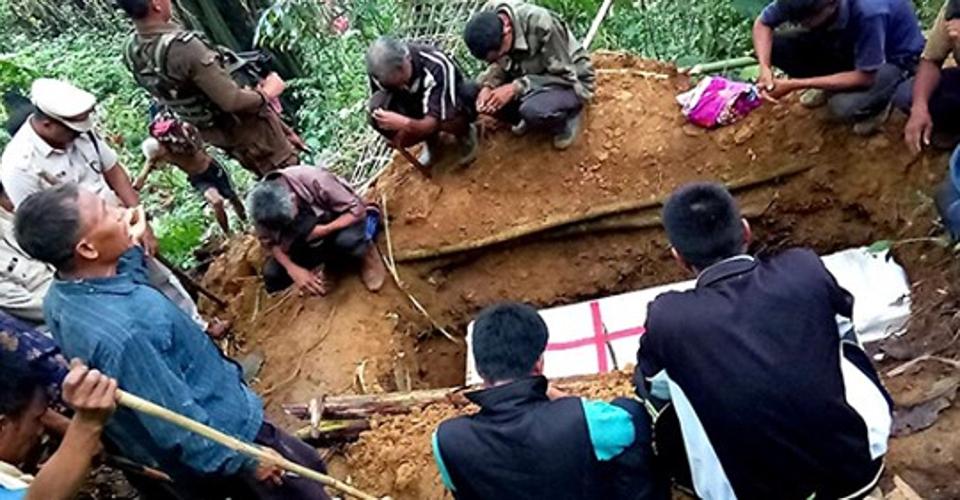
Wancho Council, an apex body of Wancho, a Naga sub-tribe, took out the peace march that ended at the Longding district deputy commissioner’s (DC) office, where the council members submitted a memorandum demanding justice for the slain and compensation for his next of kin.
“No untoward incident was reported during the rally. All lockdown norms were followed. The participants submitted a memorandum, which will be forwarded to the competent authority for necessary action,” said Chesta Yadav, DC, Longding.
The district administration made an exception to hold the peace rally, as the Union Ministry of Home Affairs’ (MHA) prevailing lockdown restrictions prohibit any public gatherings and congregations except for weddings and funerals.
“There was a public demand to hold the peace rally in protests against the firing incidents at Pumao village on Saturday. The district administration allowed the rally to be held by Wancho Council in a peaceful manner,” said an order issued by Longing DC on Sunday.
The order asked all rally participants to maintain social distancing, wear masks and only 50 people were allowed to take part in the march. “This rally is a one-time exception. No other gathering will be allowed after the rally is over. The violation of Covid-19 guidelines will attract legal action,” it added.
On Saturday, Lamdaan Lukham (60) was killed when personnel from the 19th Sikh Regiment of the Indian Army fired at villagers in Pumao during a combing operation against the National Socialist Council of Nagaland-Isak-Muivah (NSCN I-M) cadres. Several others, including villagers and the army personnel, reportedly sustained injuries in the incident.
On Saturday night, the army issued a statement, which stated that a search operation was launched at Pumao based on intelligence inputs about the presence of NSCN (I-M) cadres in the village.
“Villagers started protesting against security forces and resorted to stone-pelting. Troops identified suspicious movement and started moving towards a house, which drew two to three bursts of fire on the patrolling party,” the statement said.
“Civilians were told to disperse and to safeguard their lives and property. Eight single shots were fired as controlled retaliation. In this melee, insurgents managed to escape. However, in this crossfire, it is believed few villagers have got hurt and one died,” it added.
However, local residents, student bodies and human rights organisations in Arunachal have alleged that the army personnel deliberately opened fire in a bid to retaliate to settle a dispute that occurred a day earlier, when security forces thrashed a villager in Pumao.
Though there was a bid to settle the dispute, trouble broke out when the meeting ended inconclusively, and the army team left the deliberations midway amid stone-pelting by irate villagers. But before leaving the spot, the army personnel purportedly opened fire at the protesters, where one Wancho tribesman was killed.
“The heinous crime purported by the Indian Army has severely contradicted the very underlying purpose for which they have been deployed for in the region which is to maintain law and order and to guard against external aggression,” said a release, issued by the North East Students Organisation (NESO), on Sunday.
The state government has ordered a judicial inquiry into the incident and a separate police probe is also being conducted. The North East Human Rights Organisation (NEHRO) has filed two complaints with the National Human Rights Commission against the Indian Army for alleged human rights violations.
Longding is one of the three districts in Arunachal, along with Tirap and Changlang, where rebels groups from Nagaland and Assam, such as the NSCN (I-M) and the United Liberation Front of Assam-Independent (ULFA-I), are still active.
The three districts are the only ones in the north-east largest state, where the Armed Forces (Special Powers) Act, (AFSPA), which gives sweeping powers to the armed forces, is operational.
“Usually the army informs the local police before conducting any operation. But since Longding is under the AFSPA, we’re not informed,” Arunachal Police director-general of police (DGP) RP Upadhyaya said on Sunday.
In a press release issued on Monday, NSCN (I-M) condemned Saturday’s firing incident and blamed the Indian Army for targeting innocent Naga villagers in Arunachal as a ruse to flushing out holed up insurgents.
The rebel outfit termed the army’s version of the incident as a “hilarious statement to absolve itself from the criminal assault of innocent villagers”.