
 E-Paper



Amit Shah, Adhir Ranjan, Ghulam Nabi in Kovind committee on simultaneous polls
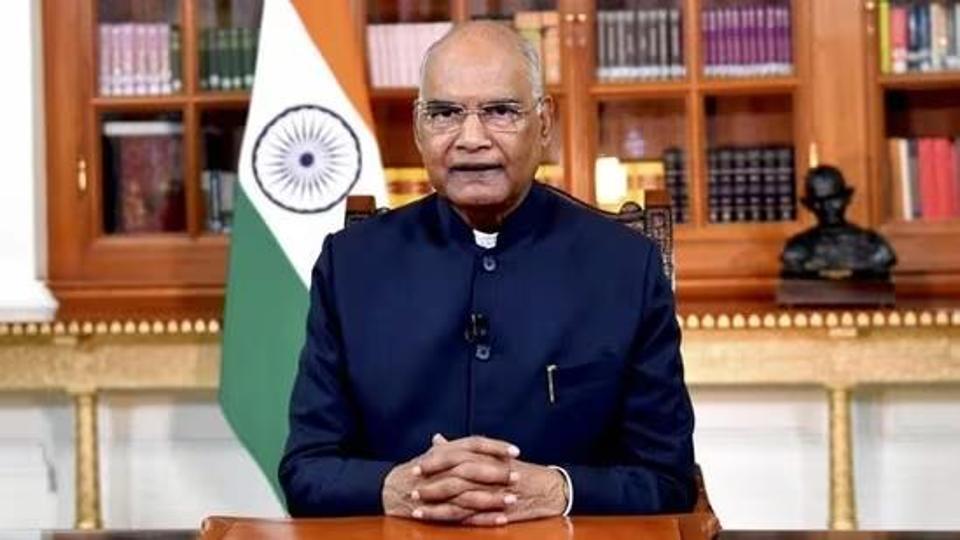
The eight-member committee headed by former President Ram Nath Kovind is mandated to study the feasibility of ‘One Nation, Election’ proposal pitched as an electoral reform by Prime Minister Narendra Modi

 Prefer HTon Google


The central government on Saturday announced that Union home minister Amit Shah, Congress leader in Lok Sabha Adhir Ranjan Chowdhury and former leader of Opposition in the Rajya Sabha Ghulam Nabi Azad will be among the eight-member committee headed by former President Ram Nath Kovind to study the feasibility of ‘One Nation, Election’ proposal pitched as an electoral reform by Prime Minister Narendra Modi.
The panel, which has been mandated to commence functioning “immediately” and make “recommendations at the earliest”, will also have N.K. Singh, the former chairman of the 15th Finance Commission; Subhash C. Kashyap, who is a former secretary general of the Lok Sabha, senior advocate Harish Salve and Sanjay Kothari, a former chief vigilance commissioner, as members.
Union law minister, Arjun Ram Meghwal will attend the meetings of the committee as a special invitee while Niten Chandra, secretary in the department of legal affairs will be the secretary to the committee, according to a government notification, detailing the terms of functioning and the composition of the committee.
The mandate of the committee is to examine and make recommendation for holding simultaneous elections to the Lok Sabha, State Legislative Assemblies, Municipalities and Panchayats, keeping in view the existing framework under the Constitution and other statutory provisions, and for that purpose, examine and recommend specific amendments to the Constitution, the notification states.
It goes on to say that the committee should examine and recommend specific amendments to the Constitution, the Representation of the People Act, 1950, the Representation of the People Act, 1951 and the rules made thereunder and any other law or rules which would require amendments for the purpose of holding simultaneous elections. It is also mandated to examine and recommend, if the amendments to the Constitution would require ratification by the states; analyse and recommend possible solution in a scenario of simultaneous elections emerging out of hung House, adoption of no-confidence motion, or defection or any such other event.
The committee will also suggest a framework for synchronisation of elections and specifically, suggest the phases and time frame within which simultaneous elections may be held if they cannot be held in one go and also suggest any amendments to the Constitution and other laws in this regard and propose such rules that may be required in such circumstances, the notification says.
To ensure the continuity of the cycle of simultaneous elections, it has been tasked to recommend necessary safeguards and amendments to the Constitution, so that the cycle of simultaneous elections is not disturbed.
The high-level committee that will be based in the national Capital, has also been mandated to examine the logistics and manpower required, including electronic voting machines (EVMs), voter verifiable paper audit trail machines (VVPAT) for holding simultaneous elections and recommend the modalities of use of a single electoral roll and electoral identity cards for identification of voters in elections.
While the Bharatiya Janata Party (BJP)-led National Democratic Alliance (NDA) government has been vociferously pushing for the roll-out of simultaneous polls, referred to as ‘One Nation, One Election’ by PM Modi, opposition parties have criticised the suggestion.
If implemented ahead of the 2024 general elections, simultaneous polling will result in the terms of some assemblies being extended while others will have to forego their terms by four to six months.
The panel has been set up ahead of the upcoming five-day special session of Parliament, beginning September 18. It is speculated that the Lok Sabha polls might be brought forward and a bill paving the way for simultaneous or synchronised elections may be tabled during the session, even as the government is yet to announce the agenda.
The suggestion to have simultaneous polls to save money and prevent the model code of conduct from impeding government business has been backed by a parliamentary standing committee, the federal think-tank Niti Aayog, and the Law Commission.
A 2016 NITI Aayog paper on the feasibility of simultaneous polls suggested holding elections in two cycles with an interregnum of 30 months, a parliamentary standing committee on personnel, public grievances, law and justice recommended that elections to some assemblies could be held during the midterm of Lok Sabha and polls to the remaining legislative assemblies could be held at the end of Lok Sabha’s term.
In 2018, the draft report of the Law Commission said holding simultaneous elections would be ideal as well as desirable and will not alter the federal structure. The same year, the election commission, while not dismissing the idea, underlined the financial implications to meet the added requirement for EVMs and security personnel.


