E-Paper



ASI resumes operation to remove sand from 13th-century Sun Temple in Konark
ASI superintending archaeologist DB Garnayak said a core drill was conducted to assess the wall’s strength

 Prefer HTon Google


Archaeological Survey of India (ASI) officials have started drilling into the weathered walls of the Jagamohan (assembly hall) of the Sun temple at Konark, the only surviving edifice of India’s iconic medieval monuments, to remove the sand that was filled into it more than a century ago.
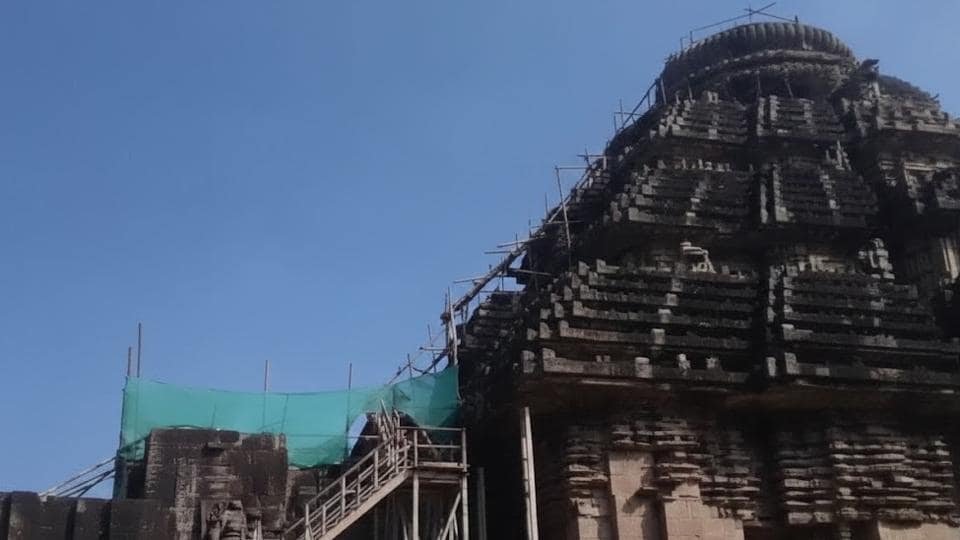
ASI superintending archaeologist DB Garnayak said a core drill was conducted to assess the wall’s strength. “After that, we will get to know the thickness of the wall. Based on that information, further steps will be taken to strengthen it,” he said.
The process involves piercing through khondalite stone at a point between the structure’s first and second tiers, marking the first step in what has been described as an effort to remove tons of sand poured into the building in 1903 to prevent its collapse.
The operation follows mounting evidence that the sand, initially meant to stabilise the monument, may now be hastening its deterioration.
To be sure, it was then culture minister Prahlad Singh Patel who asked ASI five years ago to evacuate the sand to assess the extent of damage the sealed, damp interiors would have caused to the monument. ASI subsequently constructed a platform near the western wall to be used to evacuate the sand without damaging the structure.
ASI officials said core drilling was being done on the western wall of the Jagamohan to find out the length and strength of the inner core of the wall after which a pocket or a frame would be made for digging a tunnel to remove the sand.
The monument’s troubled history was first recorded in 1837, when Scottish historian James Fergusson visited the site and documented its deteriorating condition through detailed drawings that captured public attention. By 1900, British colonial authorities faced a stark choice: watch the structure crumble or take drastic action.
On the advice of engineer Bishan Swarup, Lieutenant Governor of Bengal J.A. Bourdillon ordered that the Jagamohan be filled with sand. Workers sealed the four entrance gates and spent three years pouring sand into the 128-foot-tall structure from the top and sides, transforming the assembly hall into what was essentially a massive stone container.
The intervention appeared successful — Jagamohan remained standing while the main temple had already been reduced to rubble.
But decades of monitoring revealed troubling developments. In the mid-1950s, former ASI Director General Debala Mitra conducted the last previous drilling attempt and discovered that rainwater seepage was creating damaging moss in the damp, sealed interior, causing the khondalite stones to decompose.
A 2019 examination by the Roorkee-headquartered Central Building Research Institute found that the sand had settled approximately 12 feet, leaving a dangerous gap at the top while simultaneously exerting lateral pressure on the walls. Endoscopic surveys revealed large stones on the floor inside the structure, evidence of ongoing interior deterioration hidden from view.
The current drilling operation targets the same location British engineers used to introduce sand more than a century ago.