E-Paper



Assam, Meghalaya CMs begin second round of talks on border disputes
The two chief ministers in March had sealed a deal in the presence of Union home minister Amit Shah and resolved the first six areas of dispute


Assam chief minister Himanta Biswa Sarma on Sunday held talks with his Meghalaya counterpart, Conrad Sangma, to resolve border disputes in the remaining six out of 12 areas of differences.
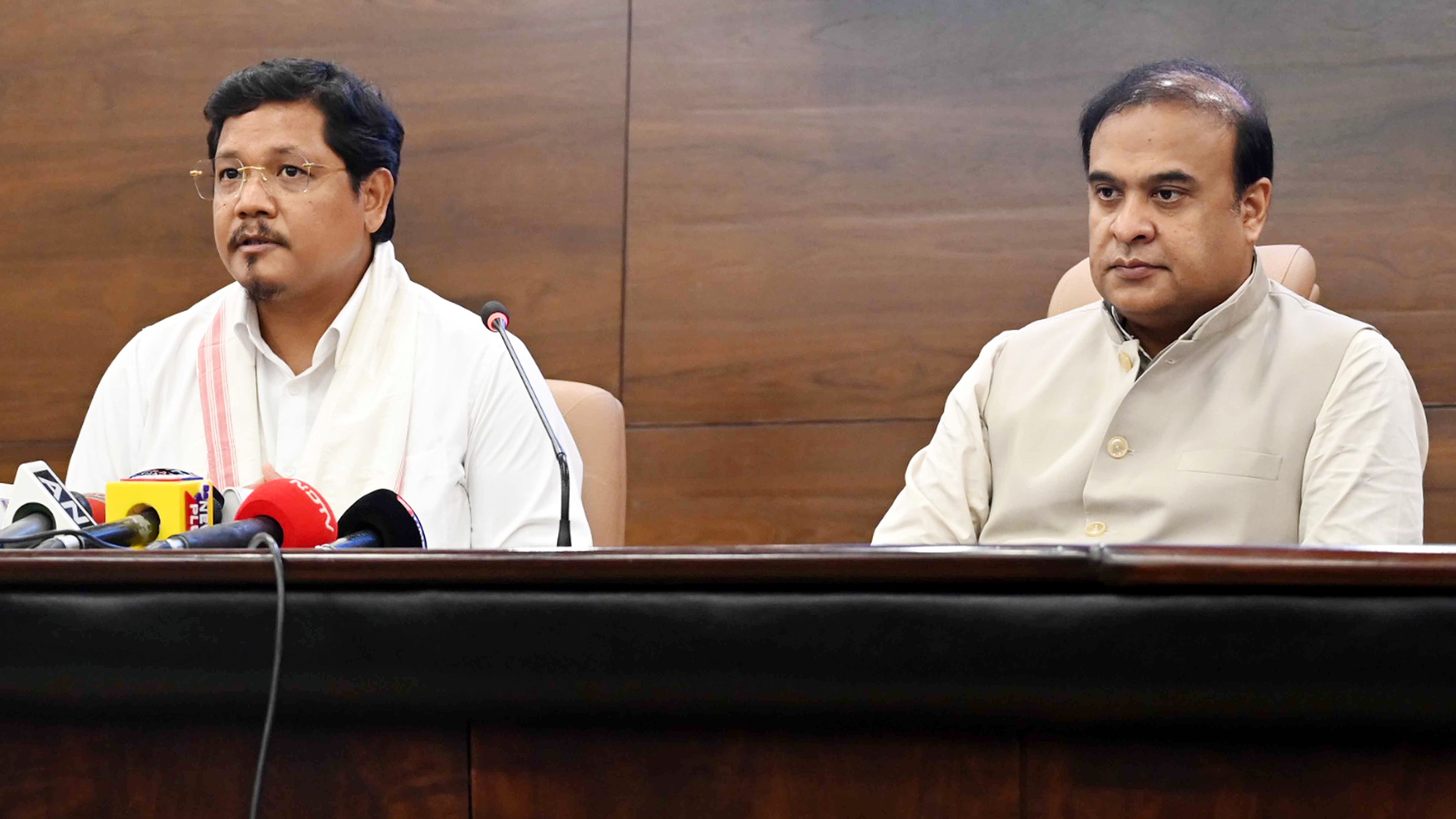
The two chief ministers in March had sealed a deal in the presence of Union home minister Amit Shah and resolved the first six areas of dispute. The matter is now with the Centre and will be required to be placed in Parliament for approval on redrawing of boundaries.
On Sunday, the two leaders held preliminary discussions to plan a framework for the remaining areas of discord.
“We are committed to resolving the border dispute. Today, we have taken a decision to start work on the remaining six disputed sites,” Sarma told reporters after a meeting in Guwahati.
“The six disputed sites share a border with three districts of Meghalaya. Like last time, we have decided to form three regional committees from each state, which will be headed by cabinet ministers, to study the disputes,” he added.
Meghalaya was carved out of Assam in 1972 and both states share a 733-km boundary. Over the years, the two neighbouring states have witnessed several skirmishes between various communities inhabiting the border areas.
The two sides decided to resolve the areas of dispute in a phased manner.
In the first phase earlier this year, the two governments decided to resolve the dispute in Gizang, Tarabari, Boklapara, Khanapara-Pilingkata, Ratacherra and Hahim. They set up regional committees comprising ministers, who visited these areas and interacted with local residents to understand in which state they wish to live in.
The governments ultimately agreed that Assam would retain 18.51 sq km of the total 36.79 sq km disputed land in the disputed areas.
The two states preferred to resolve these six “relatively less complicated” areas in the first phase before moving to resolving the remaining six “complicated” points of discord in the second phase.
In the second phase, the two sides are looking forward to resolving differences in Langpih, Borduar, Deshdoonreah, Block-I-II, Pisar-Khanduli and Nongwah-Mawtamur (Garbhanga) areas.
The committee for the second phase will be notified in the next 15 days following which the members will hold meetings, conduct visits to the sites and interact with local residents before submitting their reports to the state governments, Sarma said.
In a post on Twitter, Sangma said: “In order to give confidence to the people and in the spirit of commitment to resolve our border issue, CM of Assam and I will make visits to some of the areas.”
The Meghalaya chief minister also said the process of survey and demarcation of borders are underway in the six areas of differences that were taken up in the first phase.