
 E-Paper



Assam to rename places not reflecting culture: CM says ‘much in a name’
Chief minister Himanta Biswa Sarma said the Assam government will invite suggestions from the public on change of names across the state.


Assam chief minister Himanta Biswa Sarma on Wednesday said that his government will invite suggestions from the public to change names of places in the state reflecting its culture, tradition and civilisation.
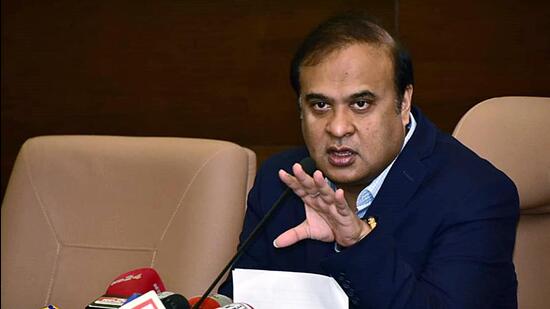
“There’s much in a name. Name of a city, town or village should represent its culture, tradition and civilization. We shall launch a portal to invite suggestions on change of names across Assam which are contrary to our civilisation, culture and derogatory to any caste or community,” Sarma tweeted on Wednesday.
The CM’s tweet came two days after he suggested changing the name of a locality in Guwahati called Kalapahar, saying that the name associated with a Muslim general Kala Pahar from Bengal, who invaded the region in the 16th century and is alleged to have damaged the sacred Kamakhya Temple.
“Kala Pahar had destroyed Kamakhya Temple. There’s no reason why a medical college should be named after him. I feel Ramendra Narayan Kalita (local MLA) should consult residents and find a new name for the locality,” Sarma said on Monday after conducting ‘bhumi pujan’ of a new medical college.
On Wednesday, the CM reiterated his suggestion while adding that the government won’t forcibly change names of places. It will be done only with suggestions and recommendations of the local residents of a particular place.
“The state government won’t change names of places forcibly. A web portal would be launched where residents would be asked to give new names for places which they think need renaming. If there are no recommendations, there’s no question of changing the old name,” Sarma said at Majuli.
Opposition parties in the state are, however, against the move and asked the Bharatiya Janata Party-led government to focus on more important issues like unemployment and development, instead.
“The CM is attempting to change history by renaming places. We studied in our history lessons that Kala Pahar destroyed Kamakhya Temple. It’s a part of our history and we should be able to accept it and not hide it by changing names of places,” said Congress MLA and leader of opposition in the assembly, Debabrata Saikia.
“After having failed to bring about all-round development in the state, the state government is trying to keep the public engaged with such irrelevant issues. Sarma seems to have taken a leaf from his Uttar Pradesh counterpart Yogi Adityanath who started renaming places in the state after failing to fulfil promises of development,” said All India United Democratic Front (AIUDF) MLA Aminul Islam.



