
 E-Paper



Atmanirbharta directly translates to strategic autonomy: Top general
Lieutenant General Rahul R Singh says the Indian Armed Forces accomplished their objectives expeditiously and professionally during Operation Sindoor


The critical role played by indigenous weapons and systems during Operation Sindoor — the four-day military confrontation with Pakistan in May — proved that Atmanirbharta (self-reliance) directly translates to strategic autonomy, Lieutenant General Rahul R Singh, deputy chief of army staff (capability development and sustenance), said on Monday, adding that the focus must now be on addressing a few weaknesses in the system, including extended timelines and dependence on import for certain high-end technologies,
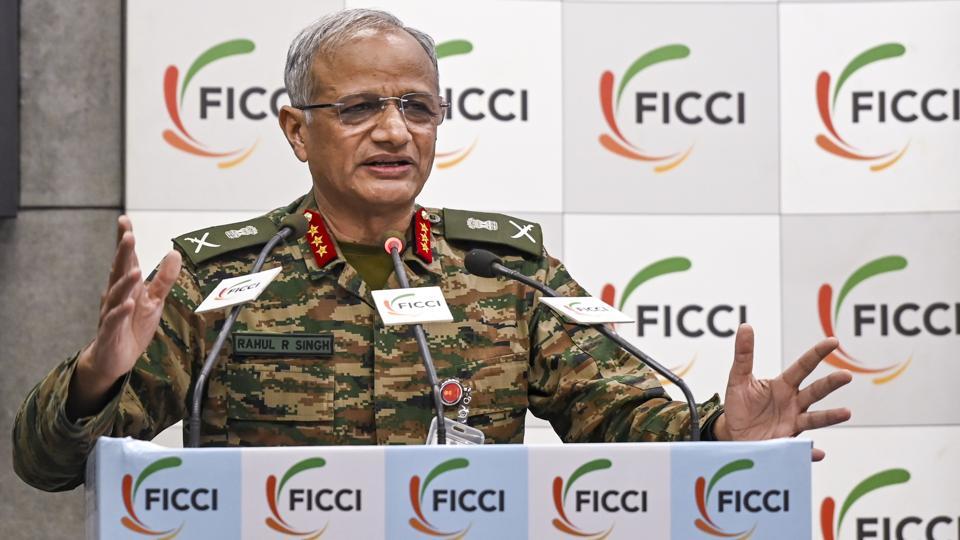
The Indian Armed Forces accomplished their objectives expeditiously and professionally during Operation Sindoor, he said.
“In many of the actions that took place, indigenous systems played a critical role. It proved that Atmanirbharta translates into freedom to act decisively when the security situation demands without seeking external clearances. While this was a job well done resulting in a resounding victory, there are a few infirmities that we need to address,” Singh said during a curtain-raiser to the Chanakya Defence Dialogue scheduled for November 27-28.
The infirmities, he said, included “extended timelines, integration hurdles, limited upgrade paths and continued reliance on import for certain high-end technologies.
Singh highlighted the risks this poses in today’s times and the way forward.
“We live in a world riddled with unpredictability. The risk is clear. The reliance on external actors during a crisis restricts not only our capability but also choice, speed and operational freedom. This gap marks the next frontier of Atmanirbharta. It’s not about making it in India, but building the technological, institutional and industrial depth to operate independently, resiliently and on our own terms,” the deputy chief said.
The Indian defence industry can no longer be content with assembling components and licensing technology, and must move from manufacture to innovation and from dependence to design sovereignty, Singh said.
“That shift is not just about what we build, but how we build…on our own terms. An innovative ecosystem thrives on speed, agility and trust, especially when technology is growing at a fast pace. The operator, the scientist, the engineer and the entrepreneur must all be part of a single loop; learning from the field, refining prototypes, testing iteratively and deploying rapidly.”
The traditional linear method of requirement, design, testing and procurement must give way to a continuous cyclic process of co-creation between the user and the innovator, an art mastered by the Israelis, he said.
Strategic sovereignty, he said, is the capacity to conceive, design, produce, deploy and sustain systems and capabilities that “meet our nation’s threat environment on our terms.”
“A nation that commands comprehensive indigenous defence capability sends an unambiguous signal to potential adversaries that we possess the capability to defend our interests decisively and sustainably, and that our strategic choices will not be constrained by concerns about supply chain, spare parts availability and external diplomatic pressure,” Singh said.
Atmanirbharta is not an end in itself, he stressed.
“When we look at Atmanirbharta in the defence context, we often restrict ourselves to manufacturing numbers, percentage of indigenisation, local content and import substitution...But it’s a means to achieve strategic autonomy, ensuring that in times of crises our options are not constrained by external dependencies.”
“Atmanirbharta is about the confidence that the weapons our armed forces employ are designed and manufactured on our soil, by our own scientists and engineers, meeting our specific operational requirements and terrain conditions…It is about fostering innovation across ecosystems. And most fundamentally, it is about deterrence,” Singh added.


