
 E-Paper



Authorities try crop diversification to check human-animal conflict around UP
Gurumangat Singh Cheema, a farmer, said he has begun growing mentha and potato in his four-acre field and gets equally good returns without any fear of tigers, who would easily hide in cane fields earlier


Authorities in Uttar Pradesh’s Pilibhit have launched a campaign to check human-animal conflict around the tiger reserve there through crop diversification. “Since tigers can easily hide in sugarcane fields, they provide big cats a semblance of natural habitat. The tigers attack and kill farmers when they come across each other. We launched the campaign to persuade cane farmers to shift to equally remunerative alternative crops...,” said district magistrate Pulkit Khare. “After several rounds of discussions with progressive farmers and experts, crops such as haldi, laahi, sarson, matar, chana, soyabean, mentha, lemon, kheera, parval, lemongrass, khus and rose were identified as alternatives.”
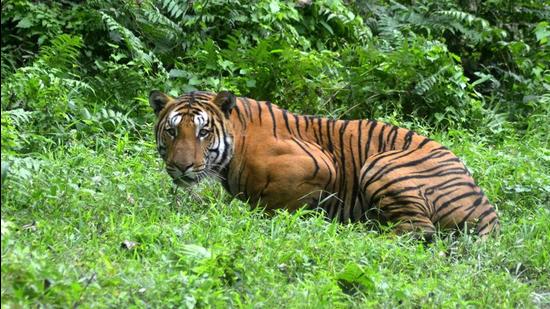
Khare said farmers would spend nights in their cane fields guarding their crops or moving in a group with torches while harvesting them. “They were then told about equally or even more remunerative crops as alternatives to the sugarcane plantation. ...medicinal and aromatic crops even drove the herbivores away due to their pungent odour, further reducing the chances of a tiger chasing prey and entering these fields.”
The campaign has started yielding results. Khare cited a 2020-21 survey and said cane was gown on 1,04,213 hectares of land. “...(This has) reduced to 1,02,114 hectares...in 2021-22.” He added the reduction of around 2,099 hectares (3.5%) of cane area was a result of the campaign to motivate and train farmers for alternative safer crops which would reduce human-animal conflict too.
Amandeep Singh, a farmer who has started growing vegetables instead of sugarcane near a jungle, said tigers would often come to his field.
Gurumangat Singh Cheema, another farmer, said he has begun growing mentha and potato in his four-acre field.”(I) get equally good returns without any fear of tigers, who would easily hide in cane fields.”
Pilibhit Tiger Reserve is home to Indian leopard, swamp deer, hispid hare, floricans as well as an estimated 65 tigers. Tigers would often stray into nearby villages. “In the last five years, 15 humans have been injured and 21 lives lost in such conflicts. Fencing the entire perimeter of the reserve is a mammoth project which moves slowly each year as per the availability of budget,” said Khare.
Also Read: ‘Problematic’ tiger caught alive in 21-day operation
The lighting of the fire, the beating of drums to scare away the animals, moving in groups for irrigation or manuring were tried but did not help much in reducing the conflict and forced the administration to rethink their strategy.
“Analysis showed a high percentage of such conflict in the sugarcane fields adjoining the jungle; 12 out of 21 deaths in the last five years were reported in sugarcane fields,” said Khare.
“Sugarcane tigers” stray out of the reserve and adopt sugarcane fields as their habitat. These include sub-adults pushed out of the forest by dominant tigers. “Cane fields also provide a semblance of the forest ecosystem with long canes often providing hiding places...,” said Khare. He added farmers were reluctant but were convinced to shift to plantations of pulses, medicinal plants. Training sessions were also conducted.


