E-Paper



Bangladesh files extradition request for Sheikh Hasina, says she’s wanted
A note verbale was received from the Bangladesh high commission in “connection with an extradition request,” people familiar with the matter said

 Prefer HTon Google


NEW DELHI: Bangladesh made a formal request to India on Monday to extradite former prime minister Sheikh Hasina, who has been living in the country since she fled Dhaka in August, with the move expected to exacerbate the strained relations between the two sides.
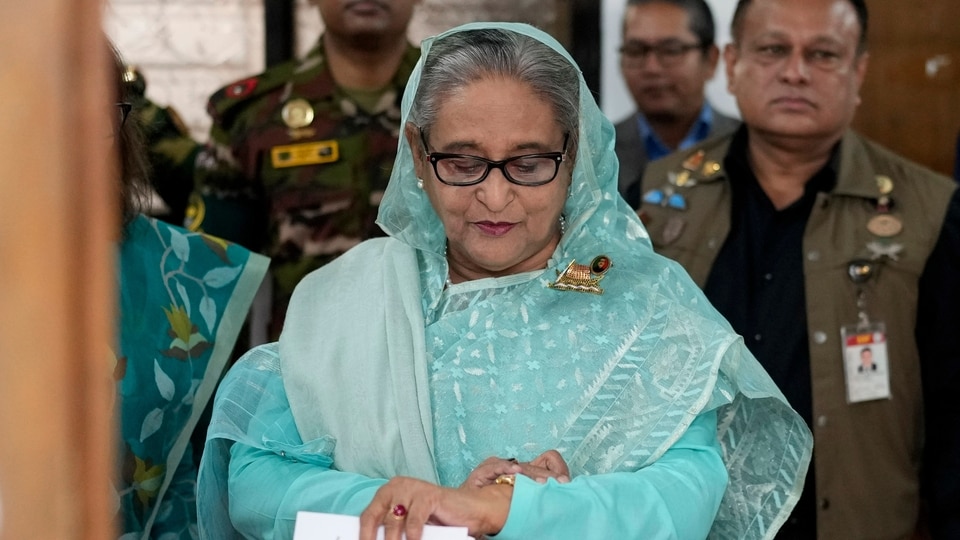
External affairs ministry spokesperson Randhir Jaiswal confirmed that the Indian side had “received a note verbale from the Bangladesh high commission today in connection with an extradition request”.
“At this time, we have no comment to offer on this matter,” he added.
Also Read: Bangladesh anti-graft panel alleges Sheikh Hasina involved in corruption in nuclear plant
Jaiswal’s response came several hours after Bangladesh’s de facto foreign minister Touhid Hossain told media in Dhaka about the request to extradite Hasina, who stepped down in the face of widespread protests led by student groups and fled to India on August 5.
“We have informed [India] that she [Hasina] is wanted back here for the judicial process,” Hossain told reporters.

Hossain, who spoke in Bengali, added: “We have done this through a note verbale.”
Soon after, the Bangladeshi mission in New Delhi delivered the note verbale, or unsigned diplomatic correspondence, to the external affairs ministry.
Bangladesh’s de facto home minister Jahangir Alam also told the media in Dhaka that his ministry had written to the foreign ministry to facilitate Hasina’s return from India. “We have sent a letter to the foreign ministry regarding her extradition. The process is currently underway,” Alam was quoted as saying by state-run BSS news agency.
Alam noted Hasina could be brought back under the extradition treaty between India and Bangladesh.
People familiar with the matter said on condition of anonymity that all extradition requests are decided on the merits of the case.
The India-Bangladesh extradition treaty of 2013 includes a provision known as the “political offence exception”. Article 6 of the treaty states that extradition “may be refused if the offence of which it is requested is an offence of a political character”.
Article 8 of the treaty, which lists grounds for refusing extradition, further states a person may not be extradited by India if the accusation against him or her is not “made in good faith in the interests of justice”.
Dhaka’s move comes at a time when bilateral relations are at a fresh low. The relationship cratered soon after the interim government led by Nobel laureate Muhammad Yunus assumed office in August.
The Indian side has repeatedly expressed concern at the persecution of Hindus and other minorities in Bangladesh and asked the interim government to ensure their rights. The arrest of Bangladeshi monk Chinmoy Krishna Das on sedition charges in November has also emerged as an irritant in bilateral relations. The arrest triggered protests in several Indian states bordering Bangladesh.
Yunus and other members of the caretaker administration have spoken several times in recent months about seeking Hasina’s extradition from India to face charges in Bangladesh. Since Hasina stepped down on August 5, scores of cases have been filed against her and leaders of her Awami League party. The Awami League has contended these complaints are politically motivated and Hasina has accused Yunus of failing to protect Bangladesh’s religious minorities.
During a meeting with Indian high commissioner Pranay Verma in August, Hossain said Hasina’s statements emanating from India are “not conducive to fostering better bilateral relations”. More recently, Yunus raised the issue of Hasina’s presence in India with foreign secretary Vikram Misri when he visited Dhaka on December 9.
Yunus referred to Hasina’s “ruthless and corrupt” rule of 15 years and told Misri: “Our people are anxious because she is making many statements from there (India). It creates tensions.”
External affairs minister S Jaishankar told Parliament in August that Hasina decided to quit after meeting leaders of Bangladesh’s security establishment and sought approval to come to India “for the moment”. Since then, the external affairs ministry has said it is up to Hasina to decide her plans.