E-Paper



Bangladesh PM Sheikh Hasina arrives on two-day visit to India, meets Jaishankar
The Bangladesh side was keen to go ahead with the prime minister’s trip to India in June before her planned visit to China in July

 Prefer HTon Google


NEW DELHI: Dhaka’s plans to develop its section of the Teesta river and the signing of several agreements to bolster bilateral cooperation are expected to top the agenda for Bangladesh Prime Minister Sheikh Hasina’s two-day visit to India from Friday.
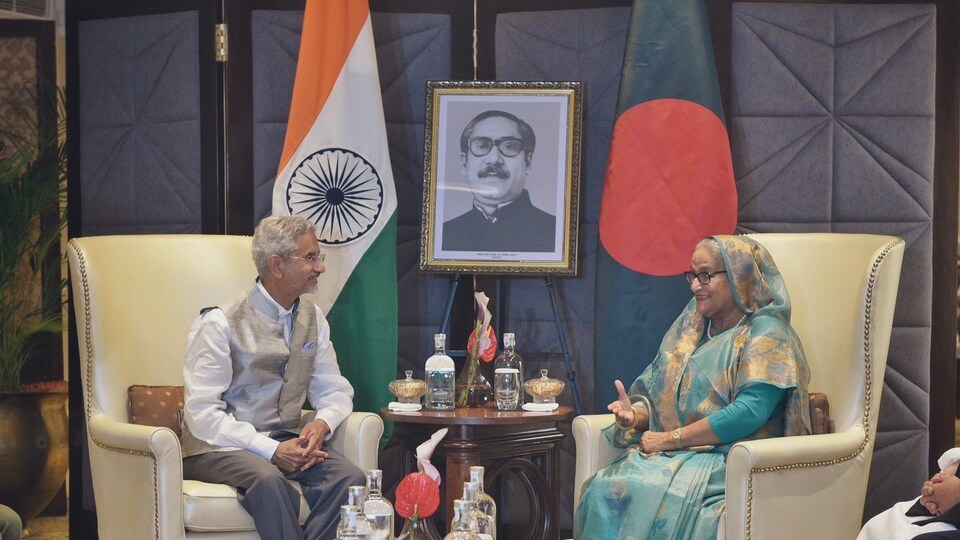
Hasina was among the leaders of seven regional countries invited to New Delhi for the inauguration of Prime Minister Narendra Modi’s third term on June 9, and her decision to undertake a bilateral visit within a fortnight reflects the importance attached by Bangladesh to the ties with India.
The Bangladesh side was also keen to go ahead with the prime minister’s trip to India in June before her planned visit to China in July, people familiar with the matter said on condition of anonymity. This is being seen as part of Dhaka’s efforts to balance its ties with New Delhi and Beijing.
Hours after Hasina’s arrival in the Indian capital, external affairs minister S Jaishankar met her to discuss bilateral ties. “Delighted to call on Prime Minister Sheikh Hasina of Bangladesh this evening. Her State visit to India underlines our close and abiding ties,” Jaishankar said on X after the meeting.
“Appreciate her guidance on the further development of our special partnership,” he added.
External affairs ministry spokesperson Randhir Jaiswal told a regular media briefing that Bangladesh is a key partner and trusted neighbour of India and Hasina’s visit will give a major boost to the “celebrated bilateral partnership”.
This is also the first incoming state visit by a foreign leader after the formation of the new National Democratic Alliance (NDA) government in India. Hasina is scheduled to meet Modi on Saturday morning.
The Indian side is expected to raise the issue of Bangladesh’s plans to develop its section of the Teesta river, especially in the context of China’s offer to carry out the work, the people cited above said. About 10 agreements covering a wide range of areas of bilateral cooperation, including one on collaboration between defence training institutions, are expected to be signed on Saturday. Some of the agreements will be renewals of existing treaties, they said.
On her arrival, Hasina was received at the airport by minister of state for external affairs Kirti Vardhan Singh.
Apart from holding bilateral consultations with Modi, Hasina is scheduled to meet President Droupadi Murmu and vice president Jagdeep Dhankhar on Saturday.
The strategic ties between India and Bangladesh have been on the upswing over the past decade. Bangladesh has been one of the main beneficiaries of India’s “Neighbourhood First” policy, especially grants and lines of credit aimed at strengthening energy, financial and physical connectivity.
The achievements in the connectivity sector include the inauguration of the Maitri Setu bridge over the Feni river in Tripura and the launch of the Chilahati-Haldibari rail link.
Bangladesh is India’s largest development partner, with nearly one-fourth of New Delhi’s commitments under lines of credit made to that country. Bangladesh is also India’s biggest trade partner in South Asia and India is the second biggest trade partner of Bangladesh in Asia
India is Bangladesh’s largest export destination in Asia, with exports worth $2 billion during 2022-23.