
 E-Paper



‘Benefits outweigh risks’: Govt rejects reports about harms of fortified rice
“Fortified rice is nutritious and all rumours about harmful effects should not be bought into,” said S, Jagannathan, joint secretary in the department of food and public distribution.


The Union government on Monday said that the rice fortified with three micronutrients – iron, folic acid and vitamin B12 – for mass distribution under the ongoing food schemes was nutritious and safe while asking the public to not fall for “rumours” about harmful effects.
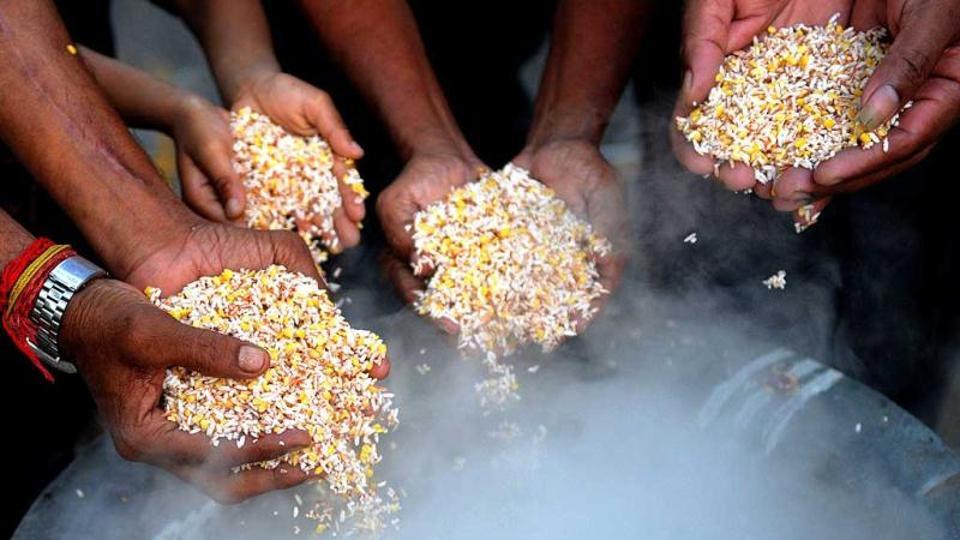
“Fortified rice is nutritious and all rumours about harmful effects should not be bought into,” said S, Jagannathan, joint secretary in the department of food and public distribution.
The food ministry has progressed into the second of its three-stage fortified rice-distribution mission, under which it plans to provide 17.5 million tonne of nutritionally-enhanced cereals in 291 districts during 2022-23, a senior official said.
“Only 0.01% of population may face health risk due to consumption of fortified rice, particularly those ailing with thalassemia major,” said Kapil Yadav, additional professor at the Centre for Community Medicine of the All-India Institute of Medical Sciences.
“Fortified rice helps prevent cretinism, goiter, thyrotoxicosis, brain damage and improves foetal and neonatal health. Therefore, the benefits of rice-fortification intervention far outweigh the risks involved,” he said.
The country aims to provide fortified rice under all the state-run food schemes in three stages by 2024 to “improve nutritional outcomes”.
Infrastructure to produce fortified rice is still being ramped to be able to supply a total of 35 million tonnes during the next phase (2023-24) which will cover the government’s entire food distribution programme, including subsidized grains for nearly 800 million food-insecure recipients.
Last month, a fact-finding team of activists and experts had said it found indigenous Adivasi people in Jharkhand with thalassemia being given fortified rice without their knowledge, which poses health risks.
According to the 2016 National Family Health Survey-4, which provides latest data on health and nutrition, 38.4% of children in the country are stunted (low height for age) and 21% are wasted (low weight for height).
The survey also showed that prevalence of anaemia among Indian women had seen only a small decline from 55% in 2005-06 to 53% in 2015-16. During stage 1, the fortified-rice programme covered the Integrated Child Development Scheme (ICDS) and PM POSHAN, under which schoolchildren get free lunches. The transition to fortified rice will cost ₹ 2,700 crore every year till 2024, which will be borne by the Centre, according to official data.


