
 E-Paper



Beyond the News | Is Rawat reading from Sidhu’s Punjab playbook in Uttarakhand?
The big imponderable is whether Harish Rawat will be reined in or allowed to replicate Punjab in the hilly state, where the Congress’s poll prospects are rated higher

 Prefer HTon Google


NEW DELHI: Poll-bound Uttarakhand is the new epicentre of tremors in the earthquake-prone Congress. Rocking the party’s applecart there is former chief minister Harish Rawat, the AICC’s erstwhile point person in Punjab who let Navjot Sidhu swashbuckle his way against Captain Amarinder Singh. The result: Singh has floated his own party and joined the BJP for the upcoming elections.
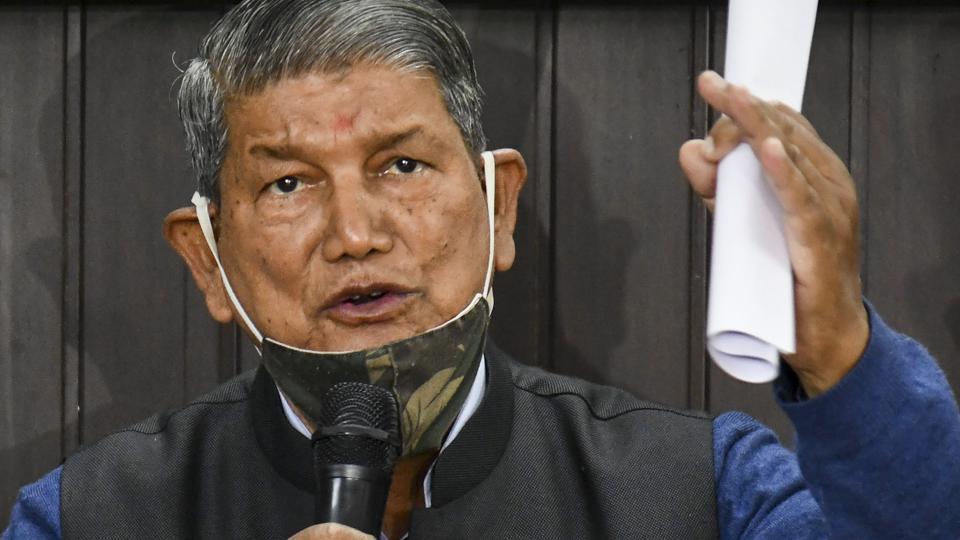
In a series of emotive tweets directed at the central leadership and its emissaries in the state, Rawat seemed to take a leaf out of the Sidhu playbook on how to arm-twist a weakened high command. The inspiration apparently is the former cricketer’s success in showing himself as the de facto CM, at the expense of the de jure appointee, Charanjit Singh Channi.
The party in Punjab has had to give in to Sidhu’s choices in the appointments of the advocate general and the police chief. Its acquiescence of silence is evident also in his comments after the public lynching of suspects in recent cases of alleged sacrilege, where he called for those that commit sacrilege to be hanged publicly.
In their anxiety to keep Sidhu in the party fold, the central leadership ignored his irrepressible, insubordinate ways. The dangerous precedent they set in the process caused a near-total dilution of the party writ. Little wonder then that Rawat, the Punjab referee, is seeking to be similarly audacious in Uttarakhand.
But why is he upset? From what one learns, his crib is no different from that of Sidhu. They both want to be declared the CM face in the run-up to the polls. Doing that in Punjab would be suicidal, the incumbent being a Dalit whose promotion has fetched the Congress the traction it needs among the 32% scheduled caste electorate.
The other tussle which could soon come to a head is over the selection of candidates. Their shared quest to be CMs can only be realised through majority support in new legislature parties. The exercise will be akin to walking on egg shells in Punjab with multiple Congress factions led by Sidhu, Channi, home minister Sukhjinder Randhawa and senior leaders Pratap Bajwa and Sunil Jakhar.
Watch: How Harish Rawat’s cryptic tweets expose the power struggle in Uttarakhand Cong
In relative terms, ticket distribution could be simpler in Uttarakhand which currently has two factions, one led by Rawat and the other by Congress legislature party leader Pritam Singh. There is resistance from these groups -eyeing a lion’s share of seats - to the return of Congressmen who defected to the BJP after the 2017 debacle.
In those polls, the Congress made Rawat its CM face, projecting him as the electorate’s choice: “Sabki chaahat Harish Rawat.” The outcome: he failed to enter the assembly from the Kichha and Haridwar rural seats he contested; the Congress tally sank from 31 to 11 in the House of 70.
The Congress denouement was a repeat of sorts of the BJP’s 2012 defeat when voters dumped the latter’s “Khanduri hai zaroori” pitch, defeating the party and the venerated former union minister BC Khanduri in the constituency from where he fought. The Congress won without naming its CM, opening post-election the doors for Vijay Bahuguna whom Rawat later replaced in the coveted office.
Superstitious though it seems, such past experiences, including the late ND Tiwari’s failed 2007 bid as the Congress’s CM candidate, make many unaligned leaders want the party enter the fray without naming anybody as CM.
Opinion is divided, however, over Rawat’s barely concealed push back against accepting the post-2017 deserters in the party. Among such former Congressmen are Vijay Bahuguna, Harak Singh Rawat, Satpal Maharaj and Yashpal Arya. Only the last named has since returned.
Rawat’s refrain that those who left the party must pay for their “mahapaap” (sins), was met with a biting rebuttal from Harak Singh, his bête noire for many years. He tauntingly reminded the former CM that people punished him in 2017 when he couldn’t win either of the two seats he contested.
To be fair, Rawat could have had valid reasons to go public with his grievances. Congress apparatchiks assigned to states often tend to play favourites or obediently follow the high command’s directives without factoring in the downsides. That ironically happened on Rawat’s watch in Punjab. The boot now is on the other foot.
The big imponderable is whether Rawat will be reined in or allowed to replicate Punjab in the hilly state - where the Congress’s poll prospects are rated higher.


