
 E-Paper



Bharat Ratna for farm icon, two former PMs
Former prime ministers PV Narasimha Rao, Chaudhary Charan Singh, and scientist MS Swaminathan will be posthumously awarded India's highest civilian honour, the Bharat Ratna. The timing of the announcement, months ahead of general elections, holds political significance. The awarding of Rao exploits the rift between him and the Gandhi family of the Congress party, while the award for Singh brings the BJP closer to his son Jayant Chaudhary, who has significant support in Uttar Pradesh. This is the fifth Bharat Ratna announced by the government in a single year.

 Prefer HTon Google


Former prime ministers PV Narasimha Rao, Chaudhary Charan Singh, and scientist MS Swaminathan, will be posthumously conferred India’s highest civilian honour, Bharat Ratna, Prime Minister Narendra Modi announced on Friday.
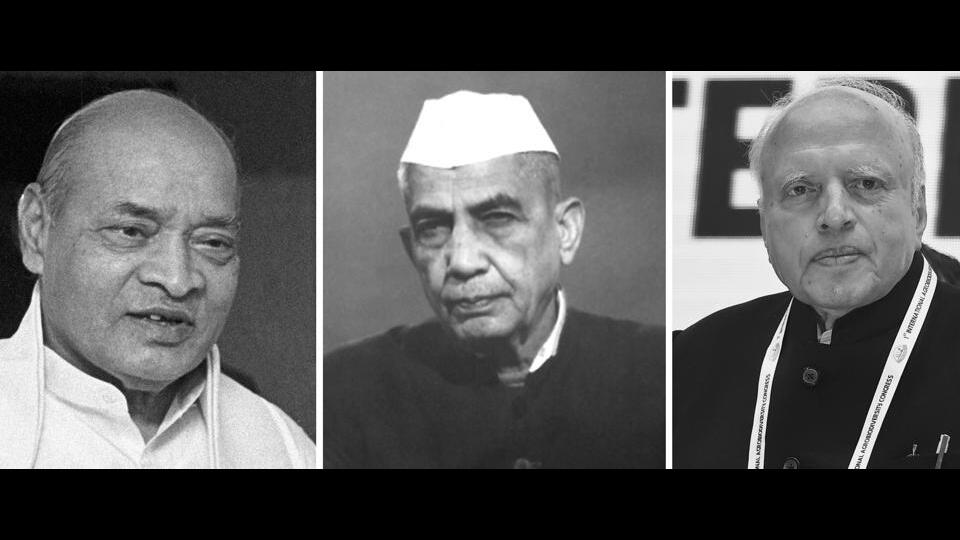
It was in Rao’s term that India opened up its economy; Singh was an iconic farm- and socialist-leader; and Swaminathan was the man behind India’s Green Revolution which made the country self sufficient in grains.
The award and its timing, months ahead of general elections, bears political significance: honouring Rao exploits the fault-lines that existed between him and the Gandhi family leadership of the Congress party after 1991; and awarding Singh helps the Bharatiya Janata Party edge closer to his son and Rashtriya Lok Dal’s Jayant Chaudhary, who commands significant support in Uttar Pradesh. Indeed, there are reports that the two parties have already arrived at an understanding that will be announced soon.
With the three names announced on Friday, the government has now announced five Bharat Ratnas in a single year — the other two include BJP leader and former deputy prime minister Lal Krishna Advani, and two-time Bihar chief minister Karpoori Thakur — which is almost a tenth of the 53 announced since the award’s inception.
In a series of posts, Modi called it his government’s good fortune that Singh is being honoured with Bharat Ratna. “This honour is dedicated to his incomparable contribution to the country. He dedicated his life to the rights and welfare of farmers.”
Modi cited Singh’s role in nation-building as the Uttar Pradesh chief minister, the country’s home minister, and as a lawmaker. “He also stood firm against the Emergency. His dedication to farmers and his commitment to democracy during the Emergency is inspiring.”
Rashtriya Lok Dal (RLD) chief and Singh’s grandson, Jayant Chaudhary, responded to Modi’s post on X announcing the award, saying it has “won hearts”. The response came amid speculation that the RLD could join the ruling Bharatiya Janata Party (BJP)-led National Democratic Alliance.
Modi described Rao as a distinguished scholar and statesman, who served India in various capacities. “He is equally remembered for the work he did as chief minister of Andhra Pradesh, Union minister, and as a member of Parliament and Legislative Assembly for many years. His visionary leadership was instrumental in making India economically advanced, laying a solid foundation for the country’s prosperity and growth.”
Modi said significant measures that opened India to global markets and fostered a new era of economic development marked Rao’s tenure as the prime minister. “...his contributions to India’s foreign policy, language, and education sectors underscore his multifaceted legacy as a leader who not only steered India through critical transformations but also enriched its cultural and intellectual heritage.”
Rao became India’s unlikely prime minister after Rajiv Gandhi’s assassination and, with Manmohan Singh as his finance minister, pushed seismic economic reforms even as the country faced a balance of payments crisis. But Rao himself was shunned by the Congress party after his loss in the 1996 elections. When he died in 2004 his body was not even brought to the Congress headquarters. It was under Rao’s watch as Prime Minister that the Babri Mosque was demolished in Ayodhya in December 1992.
Asked about the Bharat Ratna announcements, specifically for Rao, former Congress chief Sonia Gandhi, in a brief response outside Parliament, said, “I welcome them... why not?”
Congress leader Jairam Ramesh, in a post on X, said, “PV Narasimha Rao, Chaudhary Charan Singh and MS Swaminathan were, are and will always be the gems of India. Their contribution was unprecedented, which every Indian respects. Modi government is silent on giving the legal status of minimum support price to farmers based on the Swaminathan formula. Due to the stubbornness of Prime Minister Modi, 700 farmers were martyred during the movement, but the government broke its promise to the farmers. Even today the farmers are ready to march to Delhi, but the government is not listening.”
On Swaminathan, the PM said the agriculture scientist was being conferred the Bharat Ratna in recognition of his contribution to farmer welfare. “He played a pivotal role in helping India achieve self-reliance in agriculture during challenging times and made outstanding efforts towards modernizing Indian agriculture.”
Modi referred to Swaminathan’s invaluable work as an innovator and mentor, and added he encouraged learning and research. Modi said Swaminathan’s visionary leadership transformed Indian agriculture and also ensured the nation’s food security and prosperity. “He was someone I knew closely and l always valued his insights and inputs.”
Swaminathan, who died last year, and experts at the erstwhile Planning Commission worked on a policy to subsidise fertilisers and power while expanding irrigation cover to promote the wheat variety he developed for India, utilising British-era water canals in Punjab and Haryana. The scientist was instrumental in bringing to India wheat and rice varieties that led to high yields, which made India a large cereal producer.
Former WHO chief scientist, and the plant geneticist’s daughter, Dr Soumya Swaminathan welcomed the announcement. “I am sure that he would have also been happy if the news had come during his lifetime. But he was never somebody who worked for awards or waited for recognition,” she said, adding that it was the farmers’ love that meant a lot to him.
Modi’s announcement about conferring the Bharat Ratna comes days after he said Advani and Thakur will get the country’s highest civilian award. Thakur championed the equitable distribution of reservation benefits and implemented quotas in jobs for other backward classes (OBCs). The award for Thakur was announced a day before his birth centenary. His legacy on affirmative action continues to reverberate in Bihar and among backward classes. The award for him was seen as a major outreach, months ahead of the general elections. Caste is expected to play a major role in shaping the poll narrative in Bihar.
Thakur became the 49th person to get the honour and the 15th to receive it posthumously. His Bharat Ratna was the first to be announced after five years. The last rounds of the awards were named in 2019, when former President Pranab Mukherjee, Jana Sangh stalwart Nanaji Deshmukh, and artiste Bhupen Hazarika won the award.
The award for Advani was announced as the BJP fulfilled its poll promise of building the Ram temple. Advani’s absence from the temple consecration ceremony in Ayodhya on January 22 surprised many as he is credited with having changed the fortunes of the party after he led the Rath Yatra demanding a temple.


