
 E-Paper



BJP, Congress eye wins in 4 state poll results today
Results of state elections to have implications for national politics and ruling and opposition coalitions

 Prefer HTon Google


Around 119 million votes for 639 seats spread across four states will be counted on Sunday, concluding a poll exercise billed as a virtual semi-final for the 2024 general elections with implications for national politics and both the ruling and opposition coalitions.
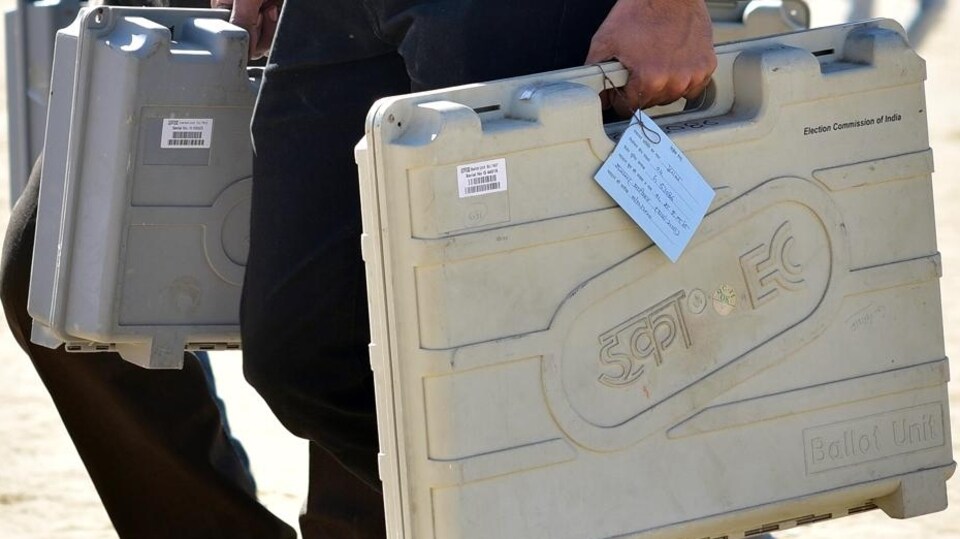
The polls began on November 7 with 20 seats in Chhattisgarh and all 40 in Mizoram. On November 17, Madhya Pradesh and 70 seats in Chhattisgarh voted. Rajasthan went to the polls on November 25, and Telangana on November 30.
The votes in Mizoram will be counted on Monday.
Apart from deciding who will govern these four states, which together send 82 representatives to the Lok Sabha, the results will also have a bearing on how the Bharatiya Janata Party (BJP), the national political hegemon, approaches the general elections, and on seat-sharing negotiations between members of the Opposition’s Indian National Developmental Inclusive Alliance.
Follow Election Results 2023 LIVE Updates Here.
Rajasthan Chief Election Office Praveen Gupta said that the counting process will begin on 8am, with postal ballots first being counted.
“Counting for the 199 Assembly constituencies of Rajasthan will begin at 8 am on Sunday in 36 centres across 33 zila headquarters,” Gupta said.
Three of the four states — Rajasthan, Madhya Pradesh and Chhattisgarh — also featured bipolar contests between the BJP and the Congress, presenting an opportunity to test the strengths of the two national parties that will go head to head in nearly a third of all Lok Sabha seats next year.
Across states, the counting process will largely take place in district headquarters, with each centre with pre-determined observers, returning officers and assistant returning officers. The process is videographed, with the centres under heavy protection from state and central security personnel.
Madhya Pradesh, the largest of the states to go to the polls, saw a head-to-head battle between the BJP, which has ruled the state for 18 of the last 20 years, and the Congress, which hoped to cash in on anti-incumbency to dislodge chief minister Shivraj Singh Chouhan. A majority of exit polls predicted an intense battle between the ruling BJP and the Congress — two gave the edge to the Congress, one to the BJP and two forecast a dead heat. But two other prominent surveys — IndiaToday-AxisMyIndia and Today’s Chanakya-News 24 were the outliers, predicting a sweep for the BJP and a decimation for the Congress.
The BJP fielded a bevy of senior ministers and parliamentarians, in addition to talking about its welfare outreach and Chouhan’s image. The Congress focussed on anti-incumbency and corruption allegations against Chouhan.
Its northern neighbour, Rajasthan, witnessed an intense battle between the BJP and the Congress. The desert state usually votes out the incumbent every five years. But this time, Congress chief minister Ashok Gehlot hoped to put up a tough battle, using a bouquet of welfare and cash transfer schemes, and exploiting factionalism in the BJP. But the state’s opposition party remained confident that political tradition would continue, and Modi’s popularity would carry the day. A majority of exit polls predicted that the BJP was coming back to power with anywhere between a narrow and a comfortable majority. But IndiaToday-AxisMyIndia and Today’s Chanakya-News 24 both predicted a squeaker with the Congress marginally ahead.
In Chhattisgarh, where the Congress trounced the BJP in a landslide in 2018, the contest appeared more evenly poised. Five exit polls predicted a furious fight between the two national parties with the Congress inching ahead. Three others forecast that chief minister Bhupesh Baghel was comfortably set for a second straight term. In the tribal-dominated state, the Congress had campaigned on its paddy procurement scheme and other welfare programmes, with the BJP attacking Baghel over corruption allegations.
In Telangana, the only southern state to go to the polls in this round, every exit poll predicted that the Congress — which created the province while it was in power at the Centre in 2014 — was set to displace the Bharat Rashtra Samithi (BRS) that has ruled the state since its inception. Four exit polls even said that the Congress would get a simple majority of its own while others predicted that it would likely emerge as the single-largest party.
The Congress, which was decimated in the 2018 polls and ended up around 20 percentage points in vote share behind the BRS, ran an energetic campaign led by state unit chief Revanth Reddy who attacked the BRS over corruption and anti-incumbency. Chief minister K Chandrasekhar Rao, on the other hand, underlined his welfare outreach and the raft of schemes that the state government operationalised over the last decade. The results will be crucial not only for the 2024 polls, but also opposition dynamics because the BRS has maintained equal distance from the NDA and INDIA.
On Saturday, Karnataka deputy chief minister DK Shivakumar flew in to Hyderabad, ostensibly to keep the Congress flock together on counting day, and alleged that the BRS was attempting to make contact with their MLA’s. BRS leader Dasoju Shravan however said that these were “stupid allegations”. “K Chandrasekhar Rao and BRS do not require anyone’s support. We are emerging the single largest party and will form the government,” Shravan said.
In Madhya Pradesh meanwhile, incumbent chief minister Shivraj Singh Chouhan said, “BJP has received unprecedented support from every section of society and is going to get a huge majority.”
Madhya Pradesh Congress president Kamal Nath however said that he was not concerned with exit poll results. “We will win with a huge majority and I have faith in the voters of Madhya Pradesh.”
Madhya Pradesh based political expert Jayram Shukla said that the variation in exit poll numbers has added to the palpable tension ahead of Sunday, but that the results would be the clash of two sets of people. “The first is those that aspire for more, and the other is those who are beneficiaries. Among the first group, there are many that don’t have work, want the old pension scheme and are perhaps fed up with the monotony of power. The second category are those that have benefitted from the welfare scheme of the incumbent government, whether it is women, farmers or housing. It will be interesting to see what pressure group comes out on top,” he said.


