
 E-Paper



BJP-led NDA's ‘simple formula’ for 2027 Uttar Pradesh polls as Nitin Nabin meets party leaders, allies
Emphasis on “repeating 2017” reflects the BJP's benchmark in Uttar Pradesh

 Prefer HTon Google


Signalling an early push for the Uttar Pradesh assembly elections due at the start of next year, BJP national president Nitin Nabin on Sunday said the party would contest the polls unitedly with its National Democratic Alliance (NDA) partners, while asserting that the BJP is capable of fighting elections on its own strength.
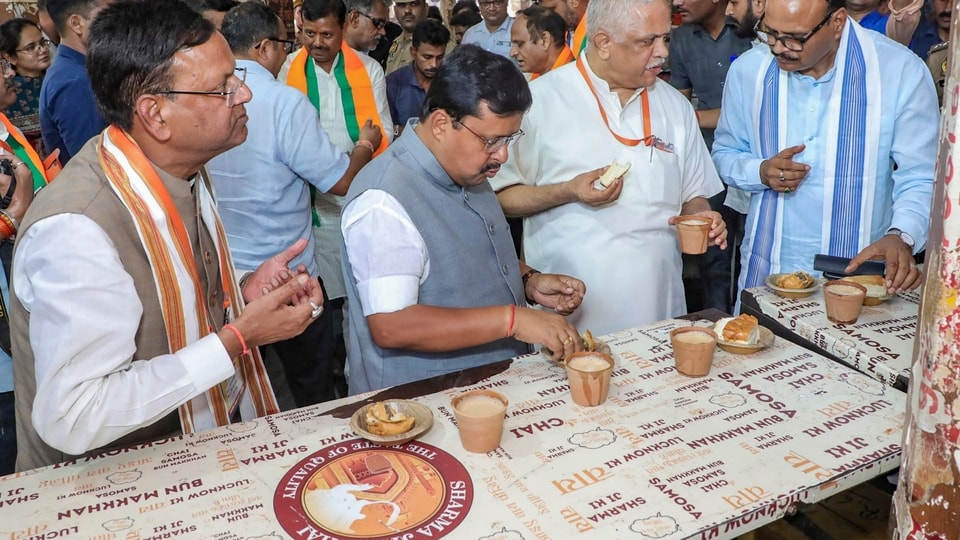
Addressing reporters after meeting leaders of NDA allies in Lucknow, Nabin projected confidence that the alliance would retain power in the state with a “thumping majority” and said the BJP's focus would be on strengthening coordination among allies.
“The Bharatiya Janata Party is capable of fighting elections. We will ensure that all NDA constituents continue to work together to make Uttar Pradesh an 'Uttam Pradesh',” Nabin said.
He added, “Our leaders, Prime Minister Narendra Modi and Chief Minister Yogi Adityanath, have worked for the people with a spirit of service. We are fully confident that in the 2027 Assembly elections, the NDA alliance will form the government with a thumping majority.”
Series of meetings
The meeting with allies followed Nabin's interaction earlier in the day with former state BJP presidents, where leaders discussed preparations for the 2027 elections.
Deputy CM Keshav Prasad Maurya said, “We discussed that the government and the organisation will work together to repeat the 2017 performance and secure an even bigger victory in 2027. All our NDA allies will remain united.”
He also attacked the opposition led by Samajwadi Party, saying, "The people of Uttar Pradesh do not want goonda raj, mafia raj, dynastic politics or riots. They want development, good governance and security. He said that if Akhilesh Yadav-led SP returned to power, “land grabbing would be back”.
Another former state BJP president, Bhupendra Singh Chaudhary, said the party remained committed to working closely with its allies.
Asked whether the BJP's weaker performance in the 2024 Lok Sabha elections in Uttar Pradesh figured in the discussions, Chaudhary said, “After the 2024 Lok Sabha elections, you saw the results of the bypolls, where the BJP won all the seats. We are fully prepared. A negative agenda does not succeed repeatedly. I am confident that the BJP will secure an even bigger mandate in UP than it did in 2017.”
Why the talk of 2017 redux
The emphasis on “repeating 2017” reflects the BJP's benchmark in Uttar Pradesh. In the 2017 assembly elections, the BJP-led NDA, comprising the BJP, Apna Dal (Sonelal) and the Suheldev Bharatiya Samaj Party (SBSP), won 325 of the 403 seats, including 312 by the BJP alone.
In 2022, the BJP retained power with a reduced but comfortable majority, with the NDA — then comprising the BJP, Apna Dal (Sonelal) and the NISHAD Party — winning 273 seats, while the Samajwadi Party-led alliance improved its tally to 125.
Among the NDA constituents, Rashtriya Lok Dal national general secretary Trilok Tyagi described the strategy for the next election as straightforward.
“The formula is simple — the strongest alliance candidate capable of winning a seat will be fielded,” Tyagi said, while expressing confidence that the NDA would retain power in 2027.
NISHAD Party president Sanjay Nishad said discussions centred on improving the sync among alliance partners. “Our discussions focused on how all alliance partners can work in coordination, complement each other and ensure better organisational synergy among workers to secure victory,” Nishad said.
On seat-sharing, Nishad said, “That is a matter for the future. We were given respectable seats earlier, and we expect the same going forward.”
Apna Dal (Sonelal) leader Ashish Patel also said the meeting focused on improving coordination between the BJP and its allies ahead of the polls.
Former Uttar Pradesh BJP president and minister Swatantra Dev Singh said the party's priority was to take the welfare schemes of Prime Minister Modi and Chief Minister Adityanath to every village.
“Our workers rise above casteism, regionalism, individualism, family rule and dynastic politics, and are guided by nationalism,” Singh asserted, adding that the BJP's cadre-based structure remained its biggest strength.


