
 E-Paper



BJP’s silence on remission for rapists incongruous to its women-centric policy
The party’s silence comes at a time when it is intensifying and broadening its outreach towards women, and also riding high on their support in elections owing to its social welfare schemes


In December 2012, making a passionate appeal for convicted rapists to be hanged, senior Bharatiya Janata Party (BJP) leader and the then Leader of the Opposition in the Lok Sabha, Sushma Swaraj drew Parliament’s attention to victims of rape as “jeevit laash” or the living dead.
The late leader’s speech came against the backdrop of the horrifying gang rape of a paramedic student in Delhi that sent shock waves across the country. And to illustrate the pain inflicted on the victims Swaraj said, they could be counted “neither among the dead nor the living”.
In sharp contrast to the protests and the street agitation against the heinous crime of 2012 is the BJP’s studied silence on the release of 11 men who were convicted and sentenced to life imprisonment in 2008 for raping a woman, Bilkis Bano, murdering seven of her family members, including her three-year old during the 2002 communal riots in Gujarat.
The BJP’s silence comes at a time when the party is intensifying and broadening its outreach towards women, and also riding high on their support in elections owing to its social welfare schemes – but it also comes months before the Gujarat assembly elections.
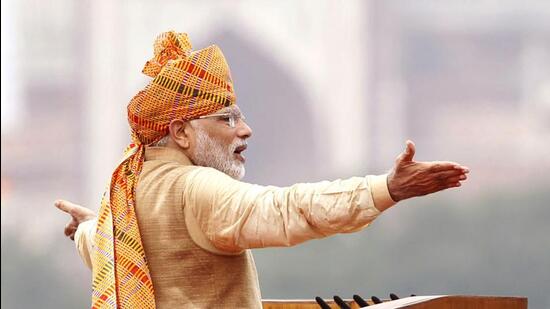
The party’s defence that the release of the convicted men by the Gujarat government was based on the unanimous recommendation of the Jail Advisory Committee (JAC) to grant them remission on grounds of good behaviour is incongruous to its own views on women’s safety and earlier stand of seeking capital punishment for convicted criminals. It also appears inappropriate as the release came within hours of Prime Minister Narendra Modi’s Independence Day address, where he exhorted to put an end to a culture of disrespecting women.
Speaking from the ramparts of Red Fort, the PM said, “A distortion has crept in our conduct, and we at times insult women. Can we take a pledge to get rid of this from our behaviour and values? It is important that in speech and conduct, we do nothing that lowers the dignity of women?”
To be sure, the PM has raised the issue of women’s safety and empowerment on several occasions, including in his first Independence Day speech in 2014 when he said, “Parents ask their daughters hundreds of questions, but have any parents ever dared to ask their son as to where he is going, why he is going out, who his friends are. After all, a rapist is also somebody’s son…”
Muted response
While the release of the 11 men--convicted of a gory crime—in itself was galling, the videos that surfaced soon after of them being feted with garlands and sweets infuriated civil society and women’s rights groups. The outrage against the brazen felicitation of the convicted criminals was also met with a rather muted response from the party, barring a few individuals.
The only voices of protests that were heard from within the party were that of spokesperson Khushbu Sundar and deputy chief minister of Maharashtra, Devendra Fadnavis. A former chairperson of the National Commission for Women (NCW) and a former BJP spokesperson Lalitha Kumaramangalam was another prominent voice that flayed the decision, calling it abhorrent.
Speaking in the Maharashtra Legislative Council, Fadnavis last week condemned the felicitation of the convicts, not so much the release. He was quoted as having said, “The convicts in the 2002 Bilkis Bano case of Gujarat were released following a Supreme Court order. But it was wrong if a person accused of a crime is felicitated and there can be no justification for such an act.”
Sundar was indignant and unsparing in her criticism. Speaking to HT she said her objection to the release was determined by her gender and her responsibility as a mother. “I have two girls, and tomorrow if they ask me what I did when this (remission) was done, what answer would I have… I belong to a party, but I am also a citizen, a woman and a mother; and therefore, spoke on my own.”
She said though there have been cases of remission and clemency earlier, this should not be allowed for cases like that of “Bilkis Bano and Nirbhaya (paramedic who was raped and died)”. “It hits hard,” she said. Indeed, the government’s own guidelines for remission (for convicts to be released on the occasion of India’s 75th year of independence) said that those accused of rape should not be considered for release.
To a question on whether the party has erred by not taking a definitive stance on the issue, Sundar said, her voicing concern should not be read as a revolt. “The opposition may think I have revolted, but I have complete faith and confidence in the PM,” she said.
Opposition slays silence
The Opposition has baited the government and the party, and has been unrelenting in its criticism, stressing how two of the JAC members were from the BJP; CK Raolji and Suman Chauhan, both MLAs.
Trinamool Congress (TMC) law maker Mohua Moitra who has challenged the remission in the Supreme Court, tweeted, “This nation had better decide whether Bilkis Bano is a woman or a Muslim.”
Congress law maker Rahul Gandhi also attacked the government over the release and said it has failed to walk the talk on ensuring women’s safety. “Those who raped a five-month pregnant woman and killed her three-year-old daughter were released during ‘Azadi ka Amrit Mahotsav’. What message is being given to the women of the country by those who peddle lies about ‘Naari Shakti’?,” he tweeted.
The BJP’s response to the opposition’s jibe is the counter charge that the issue is being politicised. Vanathi Srinivasan, president of the BJP’s Mahila Morcha told HT, “The Gujarat government only followed the due process of law and the opposition is criticising it only because the BJP is in power in Gujarat. This issue cannot be given a political angle”.
To a question about the two BJP leaders being part of the joint committee Srinivasan said, “Everyone is inclined to one ideology or the other. Even judges have been known to have some ideological leanings, but nobody cast any aspersions on them. The committee was formed by the court and we have to believe them…” she said.
The Mahila Morcha’s silence on the issue has been glaring, but Srinivasan said the issue was not taken up since it was a “judicial process.”
“At the Mahila Morcha we have a mechanism to raise our voice against injustice against women both within the party and outside. In this case, since we feel a legal process has been followed, there was no discussion with the senior leadership on the issue,” she said.
To be sure, that has not stopped the party of the morcha before.
Impact on women voters
The BJP’s explanation notwithstanding, the party’s silence on the issue can be interpreted as irresoluteness. Since it came to power at the centre in 2014, the BJP’s subsequent victories at the hustings, be it the 2019 general election or a bunch of state elections, have been largely attributed to the support extended by beneficiaries of its welfare schemes and women, in addition to that of the party’s traditional support base. Voter preference polls by private pollsters as well as in-house psephologists of the party indicate that the PM’s “image” as a doer and his rise from a modest background coupled with the social schemes that put women at the forefront have worked for the BJP, giving it the necessary edge over the competitors. The government’s endeavour to offer easy access to affordable housing, amenities such as water, power and cooking gas saw voters in the rural areas favour the BJP over other parties.
Consequently, following the PM’s instruction, the party now pivots its campaigns around issues that resonate with women. Take for instance, the 2021 assembly elections in Uttar Pradesh where the party managed to sidestep all allegations of administrative lapses that came to fore during the state’s handling of two separate cases of rape in Unnao and Hathras. Not only did the cases not have a fallout for the government, but the BJP also managed to spin a narrative that the state government’s muscular policy and zero tolerance towards crime had made the state safer for women.
In such a scenario does the Gujarat fiasco not threaten to undo the headway made by the party in eliciting women’s support?
“There is a bit of discomfort about the release ahead of the Gujarat elections. It is an issue that will give the opposition ammunition and disappoint women… the government and the party needs to relook at this,” said a senior BJP leader on condition of anonymity.
Kumaramangalam too blamed the government and the judiciary for the release and said there should be no relief for rapists and murderers irrespective of caste or community “because rape is rape and a perpetrator is a perpetrator.”
“It is a very wrong decision and now both the judiciary and the government are passing the buck. The state government took a decision, which was the most expedient for them and the whole system let the poor woman down,” the former NCW chairperson said.
On the political impact the decision is likely to have she said, “Some people are also referring to the remission as a political message, but it is not a wise political decision. Women are now voting in greater numbers and even if they stay silent now, they will ponder over this decision. Eventually, it will have an impact, as it will set a precedent that puts all women at risk.”
The remission is now being looked into by the Supreme Court which has issued notice to the convicts, the Gujarat government, and the Centre. It is still not clear whether the Gujarat government sought the permission of the Centre, as it ought to have since the case was investigated by the Central Bureau of Investigation, and whether the permission was given.
Protests and fears
On Saturday, protests against the release of the convicted criminals were held across the country and questions were raised about the government’s stance on the issue. Some see the release as a provocation aimed at polarizing the electorate ahead of elections, while others questioned the morality of the decision and the precedents it will set.
Ayesha Kidwai, a professor at JNU’s Centre for Linguistics, School of Language, and Culture Studies said the Supreme Court in its several guidelines laid down on remission has said that in considering grant of remission one has to look at the impact on society and the message that it delivers. “The government of India had included in its guidelines that rapists and murderers were not eligible for remission, because these are heinous crimes. It should be noted that remission does not overturn the conviction, and presumably the message should not be given that society condones these crimes or considers or has a merciful attitude to perpetrators,” she said.
Referring to the collective sense of anguish that women feel at the decision, she said it goes far beyond a reflection on the party and the PM. “…It says that as a society we are fine with rapists being set free before they serve their sentence. We feel that there is a message being sent to women in general; through Hathras and Unnao, victims were told if you are raped, you cannot get a human burial and if you survive, attempts will be made on your life. The Bilkis Bano case is another such message—if you fight and your voice is heard by the judiciary, you are still never safe because your rapists will be set free.”
 ABOUT THE AUTHORSmriti Kak Ramachandran
Smriti covers an intersection of politics and governance. Having spent over a decade in journalism, she combines old fashioned leg work with modern story telling tools.


