
 E-Paper



Bofors kickbacks scandal revisited
The ₹64 cr Bofors bribery scandal is back in the news because of Chitra Subramaniam’s new book BoforsGate and CBI’s judicial request to the US for information

 Prefer HTon Google


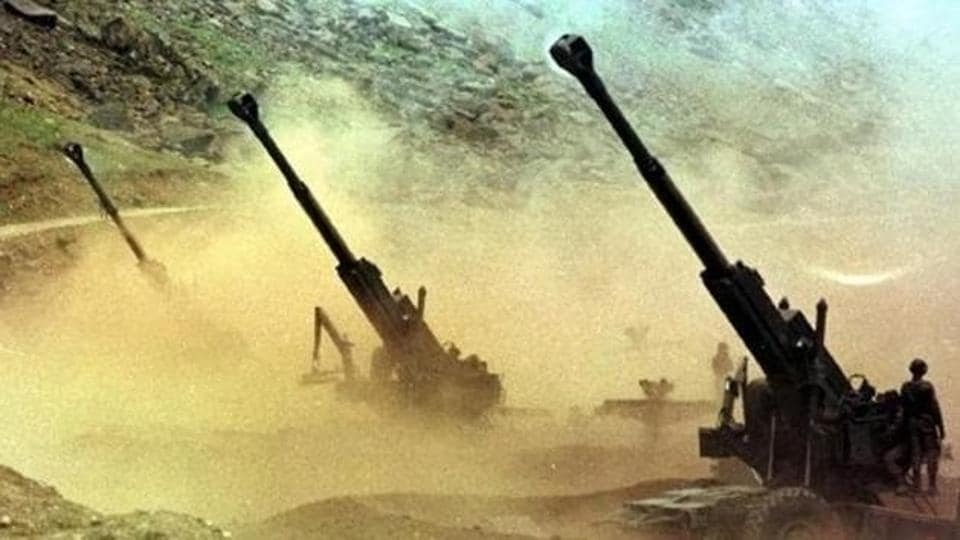
New Delhi: The Bofors kickbacks scandal of the 1980s, which saw then premier Rajiv Gandhi and others being accused of receiving payoffs from arms manufacturer AB Bofors in connection with the supply of 155 mm howitzers, is back in the news because of a new book and a judicial request to the US for information on the case.
The Central Bureau of Investigation (CBI) has sent a letter rogatory or judicial request to the US seeking information and evidence from private investigator Michael Hershman, who has expressed willingness to share fresh information about the alleged ₹64-crore Bofors bribery scandal, which first came to light nearly 39 years ago.
A new book BoforsGate, written by journalist Chitra Subramaniam, claims senior Indian bureaucrats “tutored” Bofors officials during a “secret meeting” in 1987 on “how to absolve then Prime Minister Rajiv Gandhi of all blame”. The claim is based on an agreed-upon summary of the secret meeting between “Bofors’ top dogs and India’s top bureaucrats” provided by Sten Lindström, aka Sting’ in the book, the Swedish police official who conducted the investigation into the allegations.
Also Read: CBI sends judicial request to US for fresh info on Bofors scandal
About a year after the Indian government and Swedish armaments company AB Bofors signed a $15-billion contract for more than 400 155 mm field howitzer guns on March 24, 1986, Swedish Radio reported on April 16, 1987 that the firm allegedly paid kickbacks to top Indian politicians and key defence officials to secure the deal.
This was denied by Rajiv Gandhi but the matter shook up India’s political establishment a little more than two years after he became prime minister on the back of a huge groundswell of support for the Congress party in the December 1984 general election following the assassination of his mother Indira Gandhi.
Media reports in the late 1980s, based on official documents from Sweden, had alleged that payments made by Bofors to its foreign agents for the howitzer deal were commission payments and not “winding-up charges” to compensate the agents whose contracts were terminated at the Indian government’s request. These reports alleged that the three foreign agents were paid ₹64 crore as commissions for the ₹1,700-crore contract.
A Joint Parliamentary Committee was set up to probe the allegations in August 1987 and submitted its report two years later. By November 1989, Rajiv Gandhi and the Congress party were voted out of power in a general election as the opposition made the Bofors scandal the main issue in the polls.
Even as the case was being investigated, Rajiv Gandhi was assassinated by a Tamil Tiger suicide bomber on May 21, 1991, at Sriperumbudur in Tamil Nadu while campaigning for a general election.
Also Read: Sweden stopped Bofors probe to save Rajiv Gandhi from embarrassment: CIA files
Six years later, Swiss banks released some 500 documents after four years of legal wrangles and these were handed over to Indian authorities in Berne in January 1997. At around the same time, the CBI set up a special investigation team for the case.
The CBI filed a case in 1997 against a number of people, including Ottavio Quattrocchi, an Italian businessman who represented the petrochemicals firm Snamprogetti and was allegedly a middleman in the scandal, former Bofors agent Win Chadha, defence secretary SK Bhatnagar, former Bofors chief Martin Ardbo and the Bofors company itself. Rajiv Gandhi’s name figured as “an accused not sent for trial” as he had been assassinated.
The CBI also sent official communications to Malaysia and the United Arab Emirates seeking the arrest of Quattrocchi and Chadha.
In September 2000, British businessmen brothers, Shrichand, Gopichand and Prakash Hinduja, who too were accused of involvement in the scandal, issued a statement saying the funds received by them from Bofors had no connection with the Indian gun deal. Though the CBI filed a supplementary chargesheet naming the Hinduja brothers as accused in October 2000, the Delhi high court dismissed the allegations against them in May 2005.
In December 2000, Quattrocchi was arrested in Malaysia and was granted bail while being asked to remain in the country. In 2001 former defence secretary Bhatnagar died of cancer, while Chadha died of a heart attack.
Also Read: CBI to look into Fairfax detective Michael Hershman’s Bofors allegations
In February 2004, the Delhi high court cleared Rajiv Gandhi of involvement in the scandal. Though Quattrocchi was again detained in February 2007 in Argentina on the basis of an Interpol lookout notice, he was subsequently released. In September 2009, the government informed the Supreme Court of its decision to withdraw the case against Quattrocchi, who died of a heart attack in Milan in July 2013.
While Bofors was at the heart of the scandal, senior Indian Army officials have always contended that the howitzers themselves were very good weapons. However, with the Indian government blacklisting Bofors in 1987 and preventing the firm from doing business in India, New Delhi never exercised an option to manufacture the howitzers in the country after a transfer of technology.
The Bofors howitzers had their moment of glory when they played a critical role in the 1999 Kargil war with Pakistan and were used extensively to target well-entrenched enemy troops who had occupied strategic heights along the Line of Control (LoC) in Jammu and Kashmir. The barrages by the Bofors guns paved the way for the infantry to advance and recapture many heights.
Also Read: Bofors scandal to DD Kisan: Controversies surrounding Big B
The Bofors scandal also delayed the Indian Army’s plans to modernise its artillery formations. In May 2017, India received its first new artillery guns, almost 30 years after the Bofors scandal unfolded in the late 1980s. The M777s that were inducted in 2017 were part of a $750-million contract with the US for 145 ultra-light howitzers. The contract was signed in November 2016.
Chitra Subramaniam’s new book claims the secret meetings between Indian officials and Bofors representatives were aimed at absolving Rajiv Gandhi of all blame. These meetings were held in the defence ministry in New Delhi during September 15-17, 1987, five months after Swedish Radio’s revelations. The book states the Bofors delegation was led by Per Ove Morberg and Lars Gohlin, and the Indian team comprised SK Bhatnagar, PK Kartha, Gopi Arora and NN Vohra, who were assisted by K Banerji, then joint secretary in the defence ministry.
Also Read: ‘Deep Throat’ in Bofors scam breaks cover
The CBI’s new judicial request to the US comes 14 years after agency closed the Bofors probe in 2011, and seven years after it approached a Delhi court in 2018 about reopening the case in light of Hershman’s interview with a TV channel.
Hershman alleged the Congress party derailed the investigation into the scandal and expressed his willingness to share details with the CBI when he visited India in 2017 for a private detectives’ conference. Officials said US authorities sought more time when the CBI wrote to them in November and December 2023, May 2024 and August 2024 through Interpol. This prompted the CBI to opt for sending a letter rogatory or a formal request for information.
AB Bofors itself no longer exists in its former avatar and part of the former Swedish armaments manufacturer is currently owned by British arms manufacturer BAE Systems. In 1999, Saab AB purchased Celsius Group, the then parent company of Bofors and United Defense Industries (UDI) of the US acquired Bofors Weapons Systems, the firm’s heavy weapons division, in September 2000 while Saab retained the missile division. BAE Systems acquired UDI and its Bofors subsidiary in 2005 and BAE Systems Bofors is now a unit of the Swedish subdivision BAE Systems AB.


