E-Paper



‘Breakdown of the rule of law’: SC slams UP Police
The CJI also called out the quality of investigation and the filing of charge sheets that are often devoid of any substantive material

 Prefer HTon Google


New Delhi: The Supreme Court on Monday came down heavily on the Uttar Pradesh Police for its repeated practice of converting civil disputes into criminal cases, saying such misuse of criminal law machinery to force monetary recoveries is tantamount to a “complete breakdown of the rule of law.”
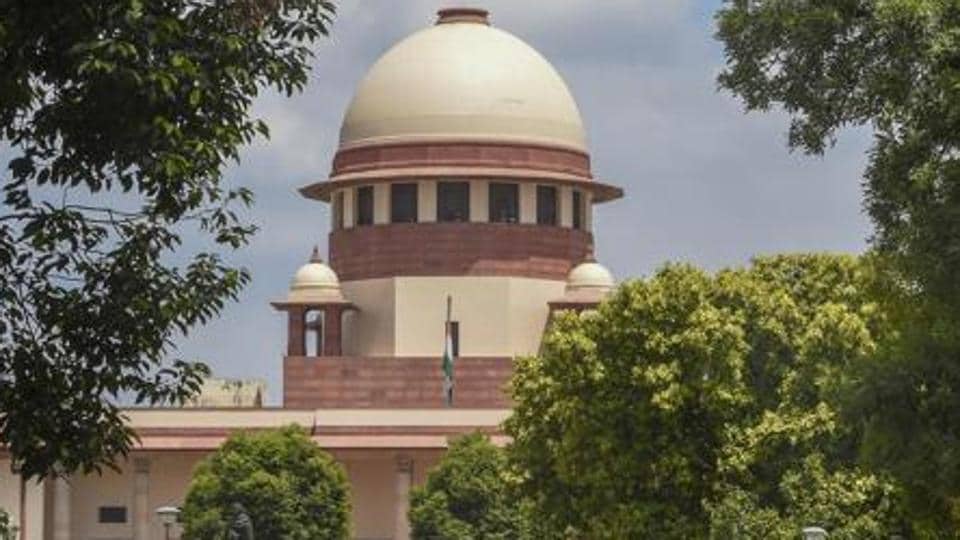
A bench headed by Chief Justice of India Sanjiv Khanna and comprising justices Sanjay Kumar and KV Viswanathan passed sharp remarks during the hearing of a case from Noida, where a first information report (FIR) was registered over a monetary transaction and culminated in a charge sheet and a summoning order by the trial court.
“This is a breakdown of the rule of law. It’s not acceptable at all. Police cannot convert civil cases into criminal cases for recovery of money. How can UP Police keep doing this despite clear directions of this court? Does the state have a rule of law or not?” the bench asked.
Staying the proceedings before the trial court, the bench ordered that the director general of police (DGP), the station house officer (SHO) and the investigating officer (IO) concerned must file affidavits within two weeks, explaining the reasons for registering a criminal case in a matter that was essentially civil in nature.
“The summoning order and the charge sheet filed is contrary to the judgment of this court in Sharif Ahmad Vs State of UP (2024). We will require the DGP, SHO and IO of the concerned police station to explain why they have not complied with the previous judgment of this court,” said the bench.
Senior counsel Garima Prashad, appearing for UP, submitted that the DGP would bring on record the steps taken so far to comply with the court’s earlier directives. However, the bench remained unconvinced, indicating it would consider imposing costs on the police department if this pattern of misuse persisted.
“Civil cases cannot be converted into criminal cases just to force someone to part with money. Does the state have civil laws and procedures or does everything have to be converted to criminal cases?” the court asked pointedly.
The CJI also called out the quality of investigation and the filing of charge sheets that are often devoid of any substantive material: “We are directing the IO to file his affidavit to explain how did he file a charge sheet in a case like this? And what’s this charge sheet? Just a reproduction of the FIR? Will you invoke criminal charges just to force someone to pay back? Since when did giving or taking back money become a matter of criminal trials?”
“This is not an isolated instance. We will start imposing costs on the police department in the state for each such case that comes before this court,” warned the bench, exasperated at the continued disregard of its precedents.
The court’s ire stemmed from its 2024 decision in the Sharif Ahmed case, in which it had laid down clear parameters for distinguishing civil disputes from cognizable criminal offences and had castigated the practice of filing vague and incomplete charge sheets.
In that judgment, a bench of justices Sanjiv Khanna and SVN Bhatti observed that a charge sheet under Section 173(2) of the Code of Criminal Procedure (CrPC) must refer to material and evidence sufficient to establish a prima facie case for taking cognisance and trial. The court had ruled that mere reproduction of the complainant’s allegations in the FIR, without examining the evidence or independently verifying facts, is insufficient and invalid.
The ruling had also held that normal commercial transactions, including failure to refund money or execute agreements, do not automatically amount to criminal breach of trust (Section 406 IPC) unless entrustment is clearly established. The offence of cheating (Section 420 IPC) must involve dishonest or fraudulent inducement at the inception of the contract, and not merely a later failure to perform contractual obligations. Similarly, criminal intimidation (Section 506 IPC) cannot be invoked without concrete proof of intent to cause alarm or threaten, and such intent must be substantiated with material evidence, it had added.