
 E-Paper



Bru will return – but to a Mizoram tiger sanctuary where there are no big cats left
No tigers spotted in Dampa, but officials say human settlement there ruled out.


The ongoing ninth phase of repatriating thousands of members of the Bru community from refugee camps in Tripura back to Mizoram, which the ethnic group had fled 22 years ago, has been marked by reluctance to leave, sit-out protests and even deaths. Now the Bru have voiced a demand which may well ensure a satisfactory end to the face-off: collective repatriation to Mizoram’s Dampa, a thickly wooded region spread across 500 sq kilometers that the Bru say was their original home.
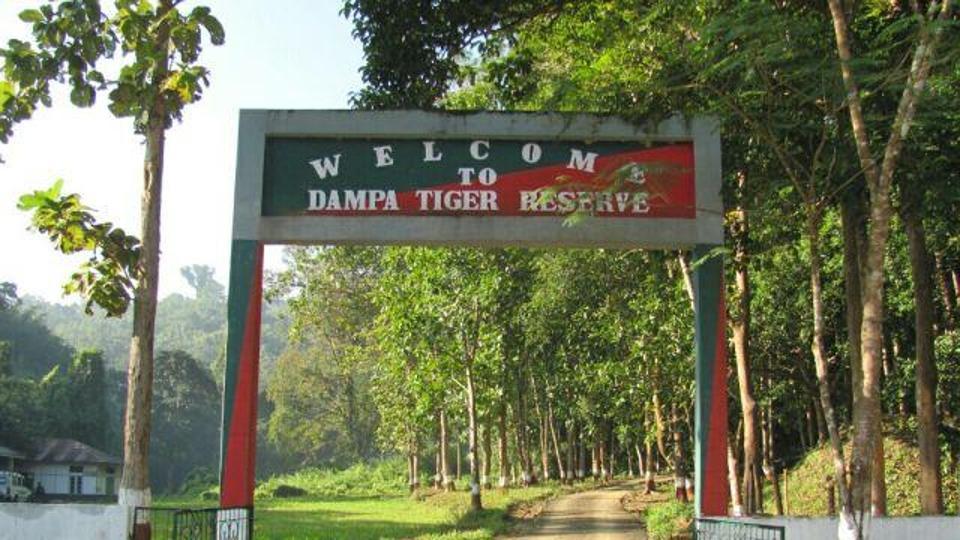
There’s just one catch: Dampa, was first declared a wildlife sanctuary in 1985 and in 1994, a tiger reserve under the purview of Project Tiger.
Quoting none less than Prime Minister Narendra Modi himself, Bruno Msha, secretary of the Mizoram Bru Displaced People’s Forum (MBDPF) along with other Bru groups claimed at a press conference in Agartala on Thursday, that even PM Modi had remarked on the absence of tigers in Dampa during a speech last year. A Government of Press release dated July 29 does quote the PM as noting a decline in tigers in Mizoram, but makes no special mention of the Dampa reserve.
Mizoram’s chief conservator of forests, Lalthangliana Murray, told HT that there is a ‘question mark’ over the presence of tigers in Dampa. “As per our latest information, we have neither seen any tigers nor were any captured on our camera,” Murray said.
A 2019 report titled ‘Status of Tigers, Co-Predators and Prey in India” compiled by the Dehra Dun-based Wildlife Institute of India along with the National Tiger Conservation Authority, too, confirms that tigers were not recorded in Dampa and two other reserves and that all three had ‘poor tiger status in earlier assessments as well.”
Still, an official of Mizoram’s home department, who did not wish to be named, insisted that the Bru must go back to the villages they had originally fled, when ethnic disturbances erupted in 1997 and where the Bru are now fearful to return to, without adequate state security.
“Our roadmap is clear. Both the Supreme Court (SC) and the Centre have agreed to it. The Brus will be settled at their villages of origin. How can human settlements be allowed inside a tiger reserve?”, the official told HT.
Palm and teak plantations are rapidly shrinking the forest cover at Dampa and poaching by insurgents and hunters, too, has been reported. Still, MBDPF Secretary Bruno Msha had other compelling arguments in favour of a return of the Bru to Dampa.
“So many inter-district marriages took place over these past 22 years in the Tripura camps that entire families would be split up if they were compelled to each return to their original villages,” he said.”Also and since we are traditionally forest-dwellers, moving to Dampa would make us self-sufficient since we could draw resources from the forest.”
However, the Bru groups said that were willing to be settled elsewhere in India too, given adequate compensation, state security and an assurance that the community –which has swelled in the camps – is allowed to stay together.
More than 37,000 Bru on the run from ethnic clashes had arrived in Tripura in 1997. Nearly 5000 Bru refugees were repatriated to Mizoram in eight phases since 2009. Last year, Bru groups like the MBDPF, signed a pact with the state governments of Mizoram, Tripura and the Centre to determine a post-repatriation monetary package which includes a house for each family, and other conditions for their return. Since then, more than 600 families have returned to Mizoram.
The Center stopped rations and cash doles for the Bru on October 1, just 2 days before the ninth phase of repatriation - which will end on Nov 30 - was due to begin. However many refused to return and sparked off a fresh crisis. As food supplies dried up, the Bru blocked a prominent market in protest and also claimed that six persons died in the camps due to starvation. Local administration put the casualty figure at four and officials who did not wish to be named, ruled out starvation as the cause of death.
There are nearly 4000 Bru families still lodged at six relief camps in Tripura.
Earlier this week, royal scion and former chief of Tripura’s oppositional Congress, Pradyote Kishore Deb Burman wrote to union home minister Amit Shah, requesting re-settlement of all the Bru families in Tripura itself, claiming they were part of the erstwhile princely state. Just a day later, Tripura chief minister, Biplab Kumar Deb of the ruling BJP, also wrote to Shah, requesting him to restrict that re-settlement in Tripura to “not more than 400-500 Bru families”.


