E-Paper



‘Strategic imperative’: India hikes defence budget by 15% to ₹7.85 lakh crore
Budget 2026: The defence ministry said a quantum jump in the modernisation budget is a strategic imperative in the current geo-political scenario

 Prefer HTon Google


India on Sunday hiked its defence spending by more than 15% in the backdrop of Operation Sindoor, setting aside ₹7.85 lakh crore for the critical sector in the Union Budget for 2026-27, including a capital outlay of ₹2.19 lakh crore to boost the capabilities of the armed forces with new weapons and systems including fighter planes, transport aircraft, helicopters, warships, submarines, artillery guns, smart weapons, missiles, rockets and a variety of unmanned systems.
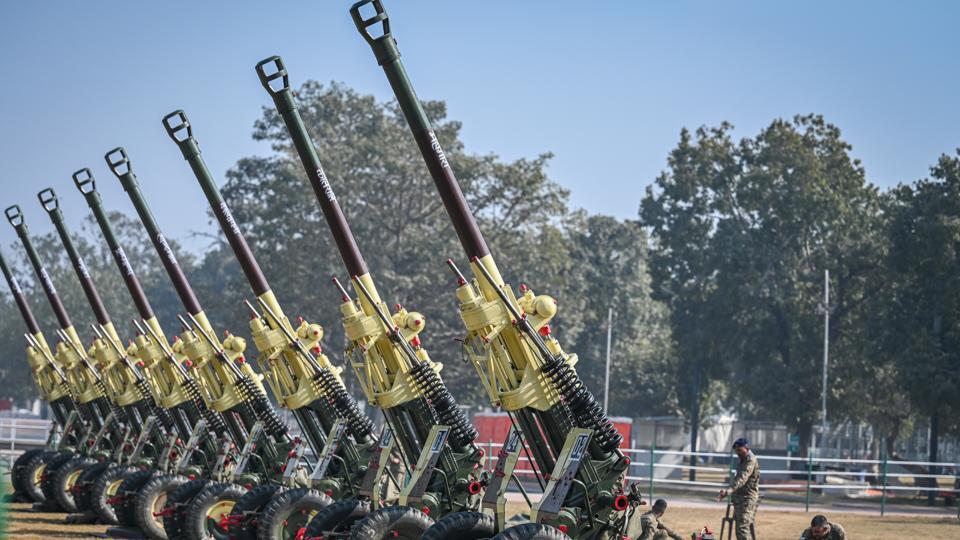
The enhanced allocation, the defence ministry said, will cater to the increased military requirements following Operation Sindoor, the four-day military confrontation between India and Pakistan in early May, following the April 22 Pahalgam terror attack in which 26 people were killed.
The capital outlay for defence services for the coming fiscal is almost 22% higher than what it was in the budget estimates ( ₹1.8 lakh crore) for the financial year 2025-26, and 17.61% more than the revised estimates ( ₹1.86 lakh crore), the budget documents show. This means India spent an additional ₹6,454 crore on new military hardware this year, mostly related to Operation Sindoor.
“Coming after the historic success of Operation Sindoor, this budget has further strengthened our resolve to make the country’s defence system even more robust,” defence minister Rajnath Singh said.
The overall defence spending is 15.18% more than that in the budget estimates ( ₹6.81 lakh crore) for the financial year 2025-26, and 7.12% higher than the revised estimates ( ₹7.32 lakh crore).
The most important aspect of the budget, he said, is its thrust on the modernisation of our three services. “As a result of this increase, our military capability will become even more powerful. The budget strengthens the balance between security, development, and self-reliance,” he added.
The allocation for 2026-27 includes a revenue expenditure of ₹3.65 lakh crore, a pension outlay of ₹1.71 lakh crore and an allocation of ₹28,554 crore for civil organisations under the defence ministry. It accounts for 1.99% of the country’s projected gross domestic product (GDP) for 2026-27.
To be sure, finance minister Nirmala Sitharaman did not touch upon the defence allocation in her budget speech.
A significant portion of the capital expenditure -- almost ₹63,734 crore -- has been earmarked for aircraft and aeroengines at a time when the Indian Air Force is looking at buying 114 French-origin Rafale jets to bolster its combat fleet. Jet engines for the light combat aircraft (LCA Mk-1A) will also contribute to the outgo.
“In the current geo-political scenario, a quantum jump in the modernisation budget is a strategic imperative. The upcoming capital acquisition projects will equip the armed forces with next-generation fighter aircraft, smart and lethal weapons, ships, submarines, unmanned aerial vehicles, and specialist vehicles,” the defence ministry said.
The defence budget accounts for 14.67% of the overall government expenditure, the highest among ministries.
In addition to the modernisation of the armed forces and financing their regular requirements, the increased allocation will also cater to the financial needs arising from the emergency procurement of arms and ammunition in the aftermath of Operation Sindoor, the defence ministry said in a statement.
The budget has earmarked ₹1.39 lakh crore for buying weapons and equipment from domestic sources to boost self-reliance in the defence manufacturing sector, up from ₹1.11 lakh crore in 2025-26. The allocation for the Agnipath scheme under the revenue head has been increased from ₹9,414 crore to ₹15,173 crore. The allocation for the Defence Research and Development Organisation (DRDO) has been increased from ₹26,816 crore to ₹29,100 crore, with ₹17,250 crore earmarked for capital expenditure.
In her speech, Sitharaman proposed exemption of basic customs duty on raw materials imported for manufacturing parts of aircraft to be used in maintenance, repair or overhaul requirements by defence sector units.
The budget will also provide a push to the development of border infrastructure to boost military mobility and logistics support for deployed forces in forward areas. The allocation to Border Roads Organisation under the capital head has been hiked from ₹7,146 crore to ₹7,394 crore. “It will cater to many strategically significant projects such as tunnels, bridges and airfields, and promote regional development and tourism, along with providing last-mile connectivity in the border areas,” the defence ministry said.
The increase in defence budget signals a renewed thrust on modernisation, capability ramp‑up and deeper self‑reliance across the defence ecosystem, said Gaurav Mehndiratta, partner and head, aerospace and defence, KPMG India. “While the budget delivers a strong capability-focused push, it also underscores the need for continued dialogue around innovation-led enablers such as R&D and space,” he added.