
 E-Paper



Covid-19 update: Bustle, chaos as lockdown 3.0 begins
Be it in Delhi or Kolkata, Bengaluru or Jaipur, and be it in the poshest locales or lower middle-class colonies or slums, it was in front of liquor shops that people queued up for kilometres.

 Prefer HTon Google


A degree of chaos and confusion prevailed on the first day of India’s lockdown 3.0 — this is the third extension of the national lockdown to slow the spread of the coronavirus pandemic, but with substantial relaxations in restrictions — with several citizens violating social distancing norms and authorities struggling to enforce a complex set of regulations across the country on Monday.
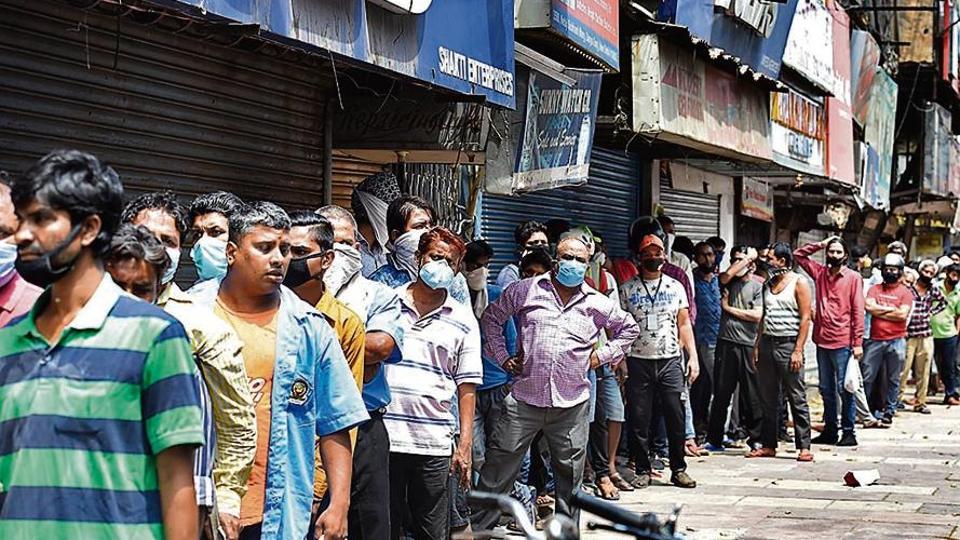
The most visible symbol of India’s partial opening up — and the challenges that come with it — were licensed liquor shops, which were allowed to resume operations after 40 days.
Be it in Delhi or Kolkata, Bengaluru or Jaipur, and be it in the poshest locales or lower middle-class colonies or slums, it was in front of liquor shops that people queued up for kilometres, jostling with each other, often not wearing masks, violating social distancing protocols, and in many cases, leading the police personnel to use force to disperse crowds or authorities to shut down shops.
In Delhi, alarmed by the reports of these violations, chief minister Arvind Kejriwal — who had only on Sunday asked for the lockdown to be entirely lifted — warned that strict measures, including more restrictions and sealing, would be introduced if the trend persisted. Experts, however, pointed out that the government should have anticipated the challenge, and in the case of liquor shops, either not enforced stringent restrictions in the first place, or allowed a more widespread reopening to ensure adequate supply.
Monday also saw greater traffic movement than during the last 40 days as more shops and offices opened for business, but this was coupled with confusion in enforcing norms — with local authorities in different states struggling to distinguish between activities and individuals permitted to be out and those who needed to stay home.
One big relaxation that kicked in was the decision to allow self-employed people, including domestic help, plumbers, and electricians, to work. But resident welfare associations were divided on the issue. In the Capital, while many neighbourhoods allowed workers to come in, others advised caution. Sudha Sinha, president of Federation of CGHS Dwarka limited, said, “We have requested residents in all societies to wait till May 17. There is no harm in waiting for a while, especially when cases are increasing every day.”
In other cities in the country, officials reported higher traffic on roads a large number of industries resumed operations. Still, a large population still worked from home, and the traffic was not close to normal. Some rush was also reported at local markets, where shops selling non-essentials such as stationery and clothes opened.
But a big challenge was in implementing the guidelines. An official in Delhi said, “To be able to know who is within the 33% of a private office workforce and therefore is allowed to go to work is difficult. To be able to explain to people what activities are still not allowed when they think it may all have opened up is difficult. We will have to communicate better, and citizens will have to be more responsible.”
Around 150 liquor shops opened in Delhi on Monday to loud cheers and applause. But this lasted only briefly as the jostling for space began. The crowd represented all classes, coming in SUVs and sedans, but also on motorcycles and rickshaws. In places such as Ashram, Govindpuri and Vasant Vihar, the queue was more than a kilometre long while people flouted social distancing norms. In places such as the Lajpat Nagar flyover near Srinivaswpuri, the queue of buyers also caused a traffic jam, prompting police to lathi-charge the crowd.
Delhi police officials said that by around 3pm, almost 90% of the shops were shut. Joint commissioner of police(eastern range) Alok Kumar said, “We did not resort to lathi charge but to used mild force to disperse the crowd. The few shops that were open today shut shop on their own. We will follow the government’s order and will ensure that people are disciplined while standing on the queue.”
While many blamed citizens for being irresponsible, policy experts said the government should have been more careful. Shakti Sinha, a retired bureaucrat who has served as secretary in the Delhi government, said, “The government should have anticipated demand; planned better; allowed more shops to open up; provided for home delivery options and recognised that it will be difficult to control crowds.”
Former Delhi chief secretary, Rakesh Mehra, said that even though liquor shops are a major source of revenue for the state governments, opening only limited number of shops resulted in crowding in these stores.
“I don’t know what prompted the government to open some shops while keeping the rest closed. Alcohol is not like your regular non-essential commodities where people think that they would only go out to buy when shops near their houses open. Limiting supply will only lead to crowding, panic buying and chaos,” Mehra said.
In the rest of the country too, the most challenging situation for authorities was in liquor shops.
In West Bengal, the police had to wield batons and chase away customers at many shops, including one located in the Kalighat area. By 12pm, most of the shops downed shutters again. Later, the excise department allowed online sale and home delivery. In UP, 23,000 liquor shops opened — but social distance norms were frequently violated. In Karnataka, long queues could be seen outside liquor outlets much before the official opening time of 9am. In some places, people “reserved” their spot since Sunday night by leaving slippers, bags and other personal items. In Mumbai, select liquor shop owners said they will deploy bouncers from Tuesday to control crowds.


