
 E-Paper



CAG flags fiscal burden due to Karnataka government’s guarantee schemes
The auditor’s analysis linked the implementation of these guarantees to a sharp increase in expenditure

 Prefer HTon Google


The Comptroller and Auditor General of India (CAG) has raised concerns over Karnataka’s financial health, pointing to the burden created by the state government’s five guarantee schemes. The audit, tabled in the Legislative Assembly this week, shows that these programmes accounted for 15 % of the state’s revenue expenditure in 2023-24, forcing an increase in borrowings and reducing investments in long-term infrastructure projects.
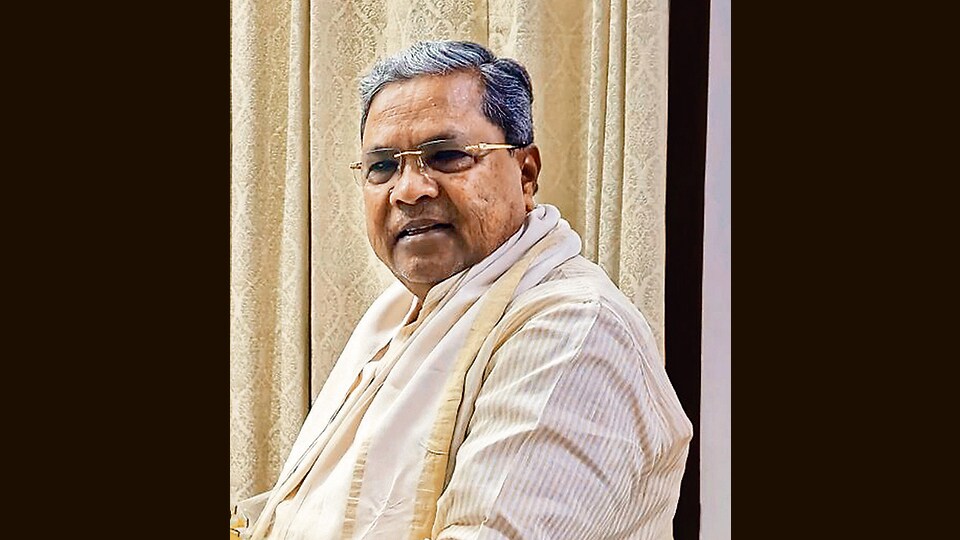
The schemes — Gruha Lakshmi, Gruha Jyothi, Anna Bhagya, Shakti, and Yuva Nidhi — were allocated ₹36,537.96 crore for the financial year, with almost the entire amount utilised. Gruha Lakshmi, which provides ₹2,000 per month to women heads of families, was the largest in terms of expenditure at ₹16,964 crore. Gruha Jyothi, a free power scheme, cost ₹8,900 crore, while Anna Bhagya, which supplies free rice, accounted for ₹7,344.68 crore. The Shakti scheme, providing free travel for women, required ₹3,200 crore, and the Yuva Nidhi scholarship scheme cost ₹88.88 crore.
The auditor’s analysis linked the implementation of these guarantees to a sharp increase in expenditure. The state’s overall spending grew by 12.54 % compared to the previous year, while revenue growth stood at just 1.86%. This mismatch pushed the state back into a revenue deficit of ₹9,271 crore, despite a recovery from Covid-era economic slowdown in 2022-23.
“Implementation of the schemes resulted in the increase in growth of expenditure (12.54 % from the previous year) which was the contributing factor of Revenue Deficit of ₹9,271 crore. Consequently, fiscal deficit of the state also increased from ₹46,623 crore in 2022-23 to ₹65,522 crore in 2023-24,” the report said.
To manage the shortfall, the state government relied heavily on borrowings. Net market loans rose to ₹63,000 crore in 2023-24, which was ₹37,000 crore higher than the previous year. The CAG warned that such a steep increase in debt would place “a massive repayment burden in the near future” and aggravate the state’s financial strain.
One of the most striking findings was the impact of the guarantees on capital expenditure. The auditor noted that funds available for infrastructure fell by ₹5,229 crore compared to the previous year. As a result, incomplete projects surged by 68%, an outcome the CAG described as detrimental to Karnataka’s growth prospects. “This compression in gross capital formation may prove to be detrimental to future growth prospects,” it said.
The long-term projections outlined in the report also painted a worrying picture. Under the Medium-Term Fiscal Plan for 2024-28, Karnataka expects a revenue deficit of ₹27,354 crore, with overall borrowings likely to climb to ₹1.05 lakh crore. The auditor cautioned that unless the government rationalises its subsidy and welfare commitments, the state’s resources will continue to come under pressure.
At the same time, the finance department defended the decision to implement the guarantees. During the Exit Conference held in January 2025, officials acknowledged the fiscal stress but argued that the schemes had “boosted the local economy, reduced economic disparities and supported human capital development.”
The report has triggered a political storm, with the opposition seizing on the findings to attack the Congress-led government. Leader of Opposition R Ashoka said the CAG’s assessment confirmed Karnataka’s “financial decline” under chief minister Siddaramaiah.
“The Karnataka government, for short-term political gains, is sacrificing the future of Karnataka. If this system continues, Karnataka will be trapped in irrecoverable debt and economic bankruptcy, with guaranteed stagnation in development,” Ashoka remarked.
He highlighted the jump in fiscal deficit as evidence of mismanagement. “The fiscal deficit, which stood at ₹46,623 crore in 2022–23, has risen to ₹65,522 crore in 2023–24. This growing deficit is proof of how unscientific guarantee schemes are pushing Karnataka towards bankruptcy,” he said.
Ashoka further pointed out that the reduction in infrastructure spending has already slowed down development. “Today’s guarantee schemes are guarantees of future darkness, the CAG has warned,” he added.
He also criticised Siddaramaiah’s reputation as an “economic expert,” saying the chief minister’s policies were damaging the state’s long-term prospects. “This is the working style of the self-proclaimed economist Siddaramaiah – the so-called ‘Karnataka Model’ of the government. Remember, history does not record how many budgets someone presented, but how much those budgets contributed to the state’s development and long-term growth,” Ashoka added.


