
 E-Paper



Can online money gaming be completely banned? SC asks Govt
The Supreme Court is examining a petition for a complete ban on online gaming and betting, citing concerns over gambling disguised as e-sports.

 Prefer HTon Google


The Supreme Court has sought to know from the Union government whether online gaming and betting platforms can be completely banned, as it agreed to examine a public interest litigation (PIL) alleging that gambling and betting websites are thriving under the guise of social and e-sports games.
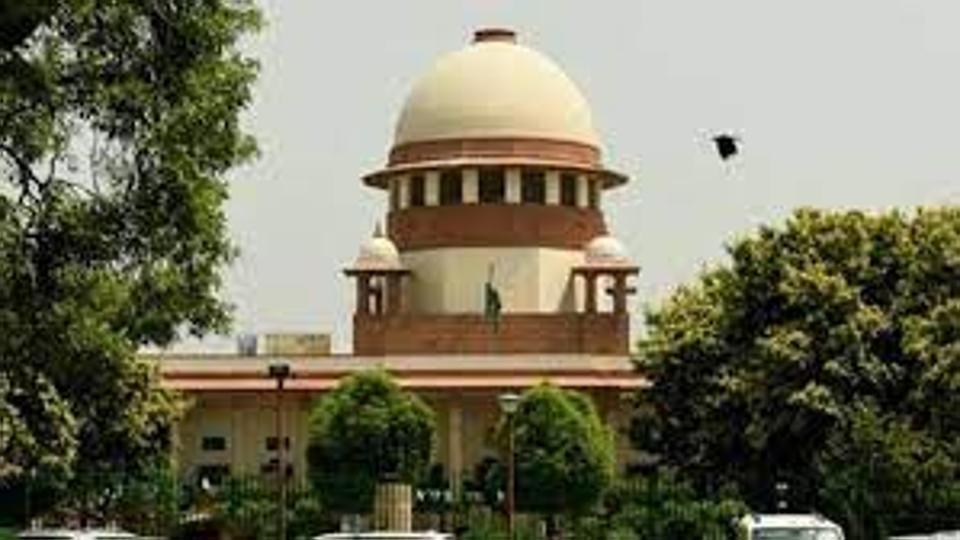
A bench of justices JB Pardiwala and KV Viswanathan asked the Centre to assist the court on the issue, requesting the counsel for the petitioner organisation, Centre for Accountability and Systemic Change (CASC), to share the complete case file with VC Bharathi, the panel counsel for the Union government, and directed the matter to be listed after two weeks.
“We request Mr Bharathi to look into the petition and assist us on the next date of hearing,” the bench said in its brief order.
Advocates Virag Gupta and Rupali Panwar appeared for CASC, a public policy think tank that seeks directions for a nationwide prohibition on online gambling and betting platforms, many of which, it claimed, continue to operate in the garb of “social” or “e-sports” gaming apps.
The plea, filed through advocate Vishal Arun Mishra, has also asked the court to clarify the scope of the newly enacted Promotion and Regulation of Online Gaming Act, 2025, and to direct the government to harmoniously interpret it with state laws that prohibit gambling and betting.
The October 17 proceedings marked the Supreme Court’s first step in directly examining whether the Centre can impose a complete ban on online betting and gambling platforms, even as it is seized of a bunch of petitions relating to the constitutional validity of the 2025 law. The outcome could define the future of India’s fast-growing but controversial online gaming industry, which sits at the intersection of technology, entertainment and regulation.
In its plea, CASC has urged the top court to order the blocking of unlawful betting and gambling websites under Section 69A of the IT Act, and to direct the Reserve Bank of India (RBI), the National Payments Corporation of India (NPCI) and other UPI platforms to stop processing transactions related to unregistered or offshore gaming companies.
In addition, CASC seeks recovery of over ₹2 lakh crore in unpaid taxes from offshore gaming operators through investigations by the Enforcement Directorate (ED), Central Bureau of Investigation (CBI) and Interpol. It further asks the court to ensure that the data of children collected by gaming companies is protected and that only licensed apps are listed on Apple and Google’s app stores.
The petitioner contended that the unchecked expansion of online money games had become a “national crisis”, causing severe financial losses, addiction, mental health issues and suicides. It claimed that the proliferation of real-money gaming platforms, often endorsed by top cricketers and film stars, was fuelling cyber frauds and money laundering, with algorithms designed to mislead players.
“Betting and gambling are regarded as unlawful activities in most Indian states. Around half of India’s population -- more than 65 crore people, are playing such games, generating an annual business of over ₹1.8 lakh crore for these platforms,” the PIL contended.
The petition emphasised that the Promotion and Regulation of Online Gaming Act, 2025, enacted by Parliament in August, recognises the devastating social and economic impact of online betting and was passed “to ensure societal welfare and prevent the serious evil creeping into society.”
The Act provides a comprehensive national framework distinguishing permissible e-sports and casual gaming from real-money wagering. It bans online real-money games and related advertising, prescribing penalties of up to three years’ imprisonment and fines up to ₹1 crore for service providers, and two years and ₹50 lakh for those promoting or advertising such platforms.
Last month, the same bench of justices Pardiwala and Viswanathan transferred to itself all petitions pending before various high courts challenging the constitutional validity of the new law. The Centre had argued that since the legislation had already received the President’s assent, its enforcement was a “constitutional function” beyond judicial restraint.
The Union government, represented by Solicitor General Tushar Mehta, told the apex court on September 8 that at least three high courts , Karnataka, Delhi and Madhya Pradesh, were hearing similar challenges, and that a centralised adjudication was necessary to prevent conflicting rulings.


