
 E-Paper



Can’t let popular politics play out in grant of quota, says SC
Allowing the states to select only some castes from the list of the reserved categories for the full quota advantages, it said, would lead to a “dangerous trend in popular appeasement”

 Prefer HTon Google


New Delhi Subclassification within the Scheduled Castes (SCs) and Scheduled Tribes (STs) for the purposes of preferential reservation cannot become a tool of “popular politics”, said a seven-judge bench in the Supreme Court on Thursday, adding that states cannot choose to completely deny quota benefits to any caste or tribe designated under their SC/ST lists.
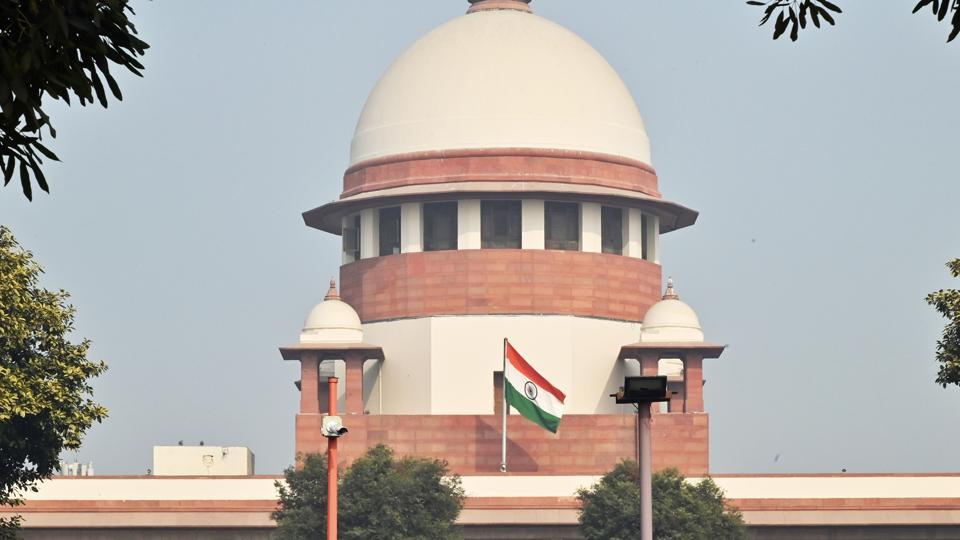
While reserving its judgment in a clutch of petitions on the permissibility of subclassification within the SC/ST bracket, the Constitution bench headed by Chief Justice of India (CJI) Dhananjaya Y Chandrachud observed that the court would lay down a set of guidelines if it were to eventually rule in favour of subclassification.
“Suppose a state says that out of 86 (castes), we are identifying only seven. Can you leave out others who are similarly circumstanced? Can the states do that? Normally under-inclusiveness is allowed as a principle and the state does not need to deal with everybody to deal with somebody. But we don’t think that principle can apply here,” said the bench, which also included justices BR Gavai, Vikram Nath, Bela M Trivedi, Pankaj Mithal, Manoj Misra and Satish Chandra Sharma.
Allowing the states to select only some castes from the list of the reserved categories for the full quota advantages, it said, would lead to a “dangerous trend in popular appeasement”.
“By conferring benefits on the most backward, you cannot ensure that some who are most backward are only given while others are left out. Otherwise, this becomes a very dangerous trend in popular appeasement. Some state governments will pick a few castes, other state governments will pick some others...The idea is not to allow popular politics to play out in the grant of reservation,” said the bench.
The court added that while it will be open for the castes being deprived of preferential treatment within the SC/ST category to assail a decision of the state government if subclassification is permitted, states will have to justify their decision based on empirical evidence regarding the extent of backwardness.
At the same time, the bench acknowledged the concerns raised by some of the parties in the case that subclassification will become a tool of political approximation instead of affirmative action.
“Undoubtedly, there is some substance in what you all are pointing out to us, and we will have to tailor it by laying down some criteria,” the bench said on Thursday as it heard a group of private parties that opposed subclassification on the ground that after certain castes have been earmarked as SC/STs, there cannot be any inter se discrimination between them in the grant of quota benefits.
The bench reserved its verdict in the case after day-long hearings spanning three days during which the Union government and states, including Punjab, Tamil Nadu and Telangana, supported subclassification.
On Wednesday, the Union government told the court that while it is committed to the policy of reservation for marginalised communities as a measure of affirmative action, subclassification within SC/STs will ensure the “trickle-down effect” of quota benefits. Backing the idea of earmarking most backward categories within SC/STs, the Centre said it would enable the states to frame appropriate policies on subclassification and rationalisation of reserved seats.
In making their point for subclassification, the Centre and states have demanded a review of the 2004 judgment by a five-judge bench in EV Chinnaiah Vs State of Andhra Pradesh, which held that subclassification was not permissible because SC/STs form homogenous classes.
Over the last three days, the bench heard several senior counsel, including attorney general R Venkataramani, solicitor general Tushar Mehta (both for Centre), Gurminder Singh (Punjab’s advocate general), Shekhar Naphade (for Tamil Nadu) and Sidharth Luthra (for Telangana), who supported subclassification. The counsel argued that subclassification will assist the states in benefitting “the weakest of the weak” among SC/STs and that preferential treatment of marginalised groups further substantive equality over formal equality.
The matter was referred to the larger bench by a five-judge bench in 2020, observing that the 2004 judgment in the Chinnaiah case may require reconsideration.
The 2004 judgment by the apex court had become the basis for the Punjab & Haryana high court to quash a 1975 notification of the Punjab Government, dividing its existing 25% reservation for SCs into two categories. Half of these seats were to be offered to Balmikis and Mazhabi Sikhs while the rest were for the remaining groups within the SC category. This notification was nixed by the high court in 2006.
Later, the Punjab government passed the Punjab Scheduled Caste and Backward Classes (Reservation in Services) Act, 2006. It introduced “first preference” reservation for the Balmikis and Mazhabi Sikhs, laying down that 50% of reserved seats would be offered first to these two communities before all other SC groups. But in 2010, the high court struck down this provision of the act based on the decision in the Chinnaiah case, leading to an appeal by the state government in the top court.
Finally, in 2020, a five-judge bench referred the matter to a larger bench, noting that the 2004 judgment by the coordinate bench requires to be revisited.



