
 E-Paper



CBSE paper QR led to a song, but not just any song: It's a 1987 dance hit that sparked ‘Rickrolling’
QR code is meant to be security feature “to verify the genuineness" of the paper in case of security-related suspicion, says CBSE, confirming there's no breach

 Prefer HTon Google


It must've started with one curious student scanning the QR code on the CBSE Class 12 mathematics question paper, wondering what it's there for. Soon, social media was filled with videos of students landing on a YouTube video that had nothing to do with the paper or even math at all — it had someone dancing and singing, “Never gonna give you up.”
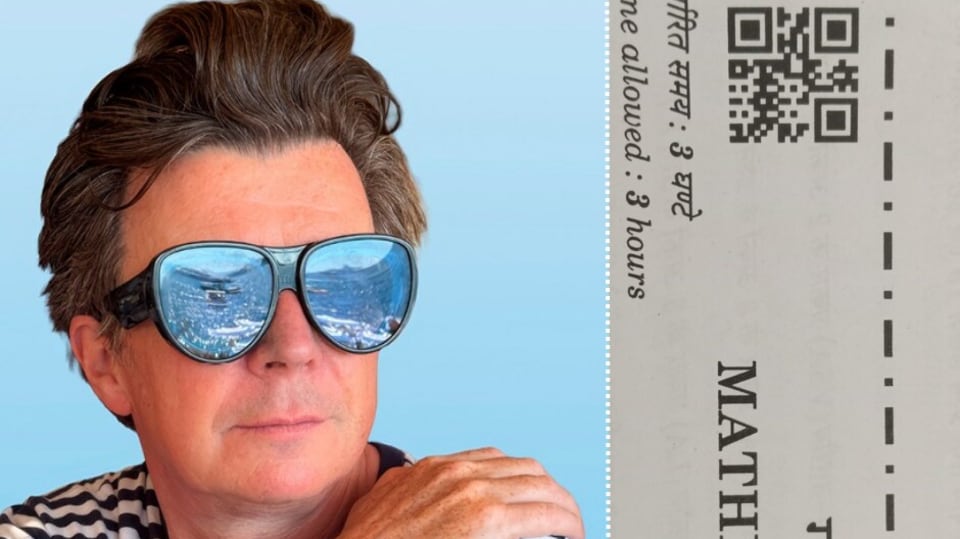
Meme culture has a name for it: “Rickroll”. We'll come to that.
First, to be sure, the Central Board of Secondary Education has clarified the QR code is meant to be security feature “to verify the genuineness of the question paper in case of suspected security breach”; and that it was not meant to lead to the song video. The board has confirmed that “the question papers are genuine” and their security “remains uncompromised”.
The Class 12 mathematics exam was held on March 9 from 10:30 am to 1:30 pm.
“The matter has been viewed seriously and necessary steps are being taken by the Board to ensure that such issues are not repeated in future,” said Sanyam Bhardwaj, CBSE's controller of exams.
Now for the “Rickroll”. It's a popular online prank whereby someone is tricked into clicking a link that leads to the music video.
And that video is always this one: Rick Astley's 1987 hit song ‘Never gonna give you up’. There's no set theory to how this meme originated around 2010, when social media exploded, but it remains a common online prank, most commonly on TikTok.
The song isn't just any song anyway. It is a chart-topping dance-pop hit of its time.
Released in 1987, the single by the English singer-songwriter Astley reached top of the charts in 25 countries and won awards, before becoming timeless with the "Rickroll" meme. It passed a billion YouTube views in 2021, and as of March 10, 2026, had 1.7 billion.
This was Rick Astley's debut song, earning the ‘British Single of the Year’ BRIT Award. Astley was nominated for a Grammy for Best New Artist.
Two decades on, “Rickrolling” was born. The song was written and produced by the team Stock-Aitken-Waterman, who became hitmakers for artists like Kylie Minogue, Dead or Alive, and others.
It's found renewed interest in India after the CBSE question-paper fiasco, rather late as TikTok remains banned in the country for about six years now.
Rick Astley, who is now 60, has been asked about the “Rickrolling” phenomenon, which he has termed "really weird" but embraced. “It was something difficult for me to get my head around at first. Let's face it, that video is from a long time ago. I look like I'm 11 years old and wearing my dad's overcoat,” he told Fox News in 2020.
“I wouldn't say I've been accidentally Rickrolled, but I've certainly been Rickrolled. Most of my friends and colleagues and people I know say have you seen this one, have you seen this one, I've seen them all, I have seen them all,” he told Newsweek.


