
 E-Paper



Centre asks CJI Lalit to recommend successor
Apart from CJI UU Lalit, the collegium currently comprises justices Chandrachud, Sanjay Kishan Kaul, SA Nazeer, and KM Joseph.

 Prefer HTon Google


The Union law ministry on Friday requested Chief Justice of India (CJI) Uday Umesh Lalit to name his successor to take the helm after he retires on November 8.
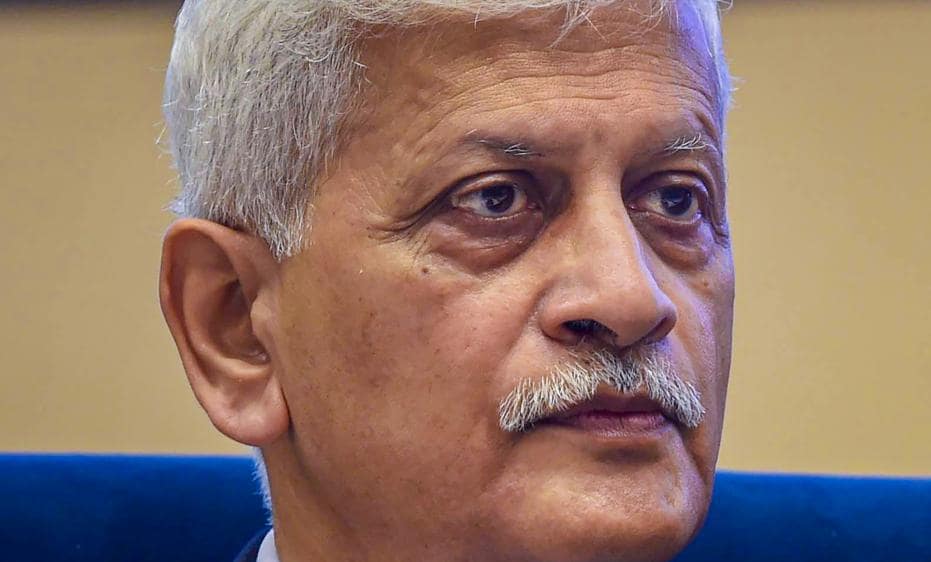
As a matter of convention, the law ministry writes to the CJI a little over a month before the latter’s retirement, seeking the name of the successor. The incumbent then writes back, sending the recommendation to the ministry between 28 and 30 days before his retirement. Customarily, the senior most judge of the Supreme Court is appointed the CJI.
Justice Lalit is set to demit office on November 8 following a tenure of 74 days as the CJI.
Justice Dhananjaya Y Chandrachud, who is the most senior judge in the top court, is set to take over as the 50th CJI on November 9. He will have a term of two years as the head of the judiciary in India, and will retire on November 10, 2024.
In the Second Judges Case in 1993, the top court held that the appointment to the office of CJI should be of the most senior judge of the Supreme Court “considered fit to hold the office”. Subsequently, a memorandum of procedure (MoP) was framed to guide appointment and transfers of judges in the constitutional courts. This drew from the 1993 verdict to state that appointment to the office of CJI should be of the most senior judge of the Supreme Court considered fit to hold the office
The customary missive from the law ministry, however, has cast a shadow over the four names proposed by justice Lalit a week ago for their appointment as Supreme Court judges.
As reported by HT on October 4, justice Lalit had on October 1 sought written consent of his fellow judges in the collegium for the appointment of four new judges in the top court.
The names recommended by justice Lalit to the four other members of the collegium were Punjab & Haryana high court chief justice Ravi Shankar Jha, Patna high court chief justice Sanjay Karol, Manipur high court chief justice PV Sanjay Kumar, and senior advocate KV Viswanathan.
The unprecedented move was set in motion by the CJI since the last meeting of the collegium, scheduled for September 30, could not take place due to the unavailability of one of the judges. The court broke for the Dussehra vacation the next day and will now reopen only on October 10.
Apart from CJI Lalit, the collegium currently comprises justices Chandrachud, Sanjay Kishan Kaul, SA Nazeer, and KM Joseph.
After justice Lalit wrote to his fellow judges in the collegium for their written consent, two judges raised the questions over the process resorted to by the CJI, arguing that appointments to the top court should not be done by circulating the names of the potential candidates. According to people aware of the matter, the two judges underlined the significance of in-person deliberations before recommending names. One judge, however, gave his consent to the proposal. It is not clear if CJI Lalit has called for a fresh meeting of the collegium.
While there is no specific bar on an outgoing CJI to hold a collegium meeting even after naming the successor, successive CJIs have found it difficult to bring the collegium members together in making recommendations after the government sparks off the process of appointing the next CJI.
Justice Lalit’s predecessor, former CJI NV Ramana, also experience quiet opposition from the collegium members in August when he pushed for a few recommendations with less than a month to go for his retirement. In the recent past, former CJIs SA Bobde, Dipak Misra, JS Khehar and TS Thakur also made unsuccessful attempts to develop a consensus of the collegium members for appointing some judges in the Supreme Court at the fag end of their tenures.
At present, the top court is short of five judges out of its sanctioned strength of 34. On September 26, the justice Lalit-headed collegium made one recommendation for appointment to the top court. Bombay high court chief justice Dipankar Dutta’s name was proposed for elevation but the government is still to clear his name.
The Centre has, till date, also not approved another collegium resolution of September 28, when names of three high court judges for elevation as chief justices of the Orissa, Karnataka and Jammu & Kashmir high courts were recommended, besides the transfer of two high court chief justices and three judges.



