E-Paper



Centre eyes umbrella scheme to boost food security missions
The government is also likely to tamper-proof the proposed scheme to prevent tweaking by states that could disrupt delivery channels and divert subsidised grains for the poor, people familiar with the development said.

 Prefer HTon Google


The Union government may further strengthen its food security programmes under an umbrella scheme and tamper-proof it to prevent tweaking by states that could disrupt delivery channels and divert subsidised grains for the poor, people familiar with the development said.
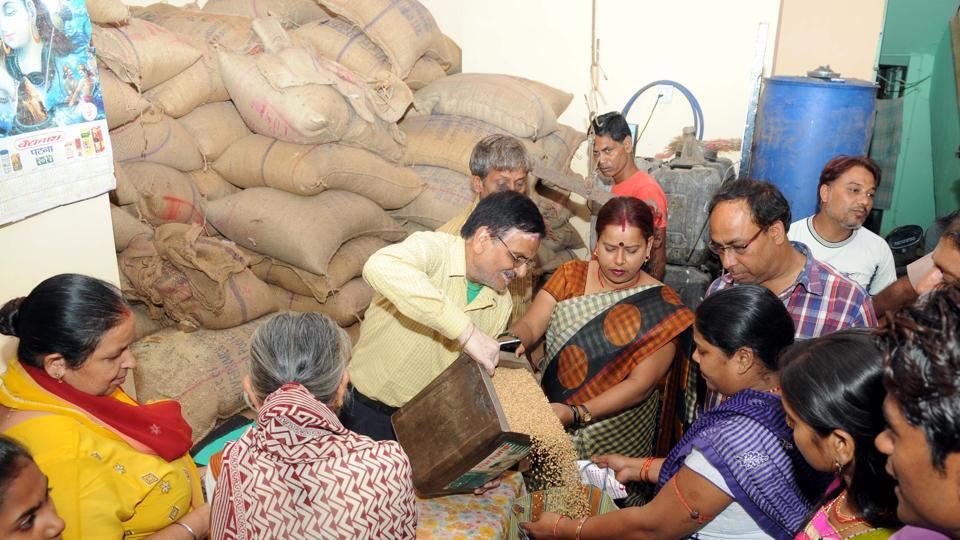
The Centre’s food security schemes, such as the National Food Security Act (NFSA) and the 5kg free dry rations to 800 million poor every month under the Pradhan Mantri Garib Kalyan Anna Yojana (PMGKAY) since April 2020, have saved millions of lives hit by the Covid-19 pandemic and soaring inflation.
It is now reviewing such schemes to see how they could be further strengthened, the people said, requesting anonymity. India’s retail inflation rose to an eight-year high at 7.8% in April on surging food and fuel prices.
“Proposals under consideration may also include further extension of PMGKAY, besides plugging any loophole that could be misused by states to usurp the Centre’s scheme through minor tweaking for political gains as that could lead to leakage of subsidies and diversion of grains to unscrupulous elements,” one of them said.
The matter is still being discussed with various arms of the government and agencies such as Food Corporation of India, and a final decision will be taken by the competent authority before a proposal is prepared for the cabinet, he said.
Explaining the broad purpose behind the move, a second person said that the Narendra Modi government’s food security schemes, particularly the distribution of free rations to 800 million beneficiaries of NFSA since April 2020 at a cost of ₹3.40 crore ( ₹2.60 crore already spent in past five phases and another ₹80,000 crore to be spent in the ongoing sixth phase that will end on September 30, 2022),have been appreciated globally.
“It not only saved lives of migrant workers, but acted as a catalyst during the two waves of the Covid pandemic,” he said. “It is now working as a shield for the poor against rising inflation.”
Many policymakers are of the opinion that the emergency scheme be extended by another six months, up to March 31, 2023, to cushion the poor from high inflation, which has risen sharply due to a spike in fuel and food prices due to the Ukraine war, he added.
Periodic reviews of the welfare schemes are routine, especially in the light of stakeholders’ feedback and a recent judicial verdict, the first person said. “The review is also aimed at removing fake beneficiaries and check states from renaming and restructuring it for political gains,” he said.
The Delhi High Court last month set aside Delhi government’s doorstep delivery of ration scheme called the Mukhymantri Ghar Ghar Ration Yojana, stating that the Centre’s grain cannot be used for this scheme. HT reported it on May 19.
Spokespersons of the ministry of consumers affairs, food and public distribution, the Prime Minister’s Office, Food Corporation and the principal director general of Press Information Bureau did not respond to emailed queries. A finance ministry official directed HT to contact the department of food and public distribution (DFPD) on the matter. DFPD, an arm of the ministry of consumer affairs, food and public distribution, did not respond to queries despite repeated reminders.
“The Centre is concerned that states’ undue interference with the central scheme (NFSA) would disrupt its architecture, which could have adverse consequence for genuine beneficiaries and lakhs of fair price shops. NFSA and PMGKAY are lifelines for the poor in difficult times and cannot be altered by states. Hence the review,” the first person said.
“India is better placed than many other nations despite the global inflation surge because the Union government is extending huge food and fertiliser subsidies to protect the poor and vulnerable,” chief economic adviser V Anantha Nageswaran said on May 31.
PMGKAY is the largest food security programme in the world. It was first launched in April 2020 to shield about 800 million poor from the impact of the Covid-19 pandemic. The scheme was initially meant for only three months but has been extended six times till September 30, with a possibility to extend it for the seventh time, the two people cited above said.
The government has spent ₹2.60 lakh crore under five phases of the scheme and another ₹80,000 crore is expected to be spent in the extended sixth phase. The emergency scheme provides an additional 5kg of free ration per person per month to beneficiaries, in addition to her usual quota of subsidised foodgrains under the NFSA.
The NFSA is available in all states and union territories. It ensures subsidized foodgrains to the poor under two categories – households covered under Antyodaya Anna Yojana (AAY) and Priority households. The monthly entitlement of foodgrains under NFSA is 5kg per person for eligible households under the priority category and 35kg per family for AAY households.