
 E-Paper



Centre says new IT rules deal with unlawful content, don’t stifle free speech
The Centre explained the delay claiming it had to frame a “consistent defence” on the matter given the several cases filed in different high courts across the country challenging the IT rules


The Union ministry of information and broadcasting (MIB) and the ministry of electronics and information technology (MeitY) have filed two counter-affidavits before the Madras high court defending the constitutional validity of the Information Technology (Intermediary Guidelines and Digital Media Ethics Code) Rules, 2021 or IT Rules.
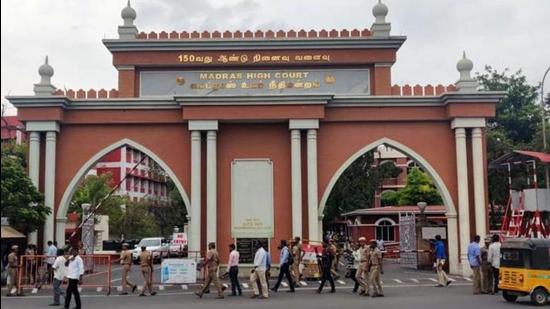
This is in response to two different petitions challenging the IT rules filed in HC by Carnatic vocalist and Ramon Magsaysay awardee T M Krishna, and Digital News Publishers Association (DNPA), made up of 13 media outlets, along with journalist Mukund Padmanabhan.
The Madras high court had disapproved of the delay in filing the counter affidavits by the Centre and given it an extension. On August 25, the MeitY filed the counter stating it was delayed since the Centre had to frame a “consistent defence” on the matter given the several cases challenging IT rules filed in different high courts across the country. In some cases, Part II, relating to “intermediary due diligence”, had been challenged while in others, Part III, relating to “Digital Media and Code of Ethics” had been questioned, it said.
Presently there are a total of 19 writ petitions pending across high courts and each emanate out of a unique set of circumstances, the MEITY submitted. But all cases commonly seek to declare the IT Rules 2021 ultra vires the Constitution and the IT Act, 2000, the ministry noted. “Therefore, there was an overbearing need for the Union to present a consistent, uniform stand before all high courts,” MeitY stated.
MeitY defended the new rules while the MIB filed a separate 115-page counter-affidavit on August 26, seeking to dismiss the petitions.
The petition by the information technology ministry said the new rules have no chilling effect on speech and expression as it does not impose any penalties on users who post content in contravention of the IT Rules. The only ramification is the removal of such content or the termination of user’s access by the intermediary, which may be challenged by the user under the grievance redressal mechanism specifically set out in the IT Rules or by way of judicial review, the affidavit read. “In the absence of additional civil or criminal liability, mere removal of content or blocking of access of users vis a vis information which is in any case unlawful will not tantamount to creating a chilling effect on speech and expression,” it said.
Speaking of safeguards against abuse, the affidavit added that content can be removed only if it is unlawful and following a court order and after being notified by the authorised agency. “No other executive other than the appropriate government or its agency is empowered to issue an order for removal of content,” it assured.
It said that the IT Rules 2021 were meant to empower ordinary digital users of any intermediary platform to seek accountability given the misuse of social media and spread of fake news. It spoke of the necessity to eliminate child pornography and rape on digital platforms. The counter stated that a framework was necessary to deal with viral messages that had led to riots, mob lynching and sexual abuse of children in the past. The new rules, it said, focused on the online safety of women and children, to report cases such as revenge porn and violation of privacy. It further added that the rules were formed after public consultation.
Expanding on this, the ministry of information and broadcasting submitted that it’s well within the scope of the Information Technology Act (IT Act), 2000 and the Constitution.
The Madras HC’s first bench of chief justice Sanjib Banerjee and justice P D Audikesavalu posted the next hearing in the case for September 14.


