
 E-Paper



Centre to form new agency for security of ports
The central government has announced the formation of a dedicated agency for the security of ports and vessels, on the lines of the Bureau of Civil Aviation (BCAS), said an official statement on Friday

 Prefer HTon Google


The central government has announced the formation of a dedicated agency for the security of ports and vessels, on the lines of the Bureau of Civil Aviation (BCAS), said an official statement on Friday.
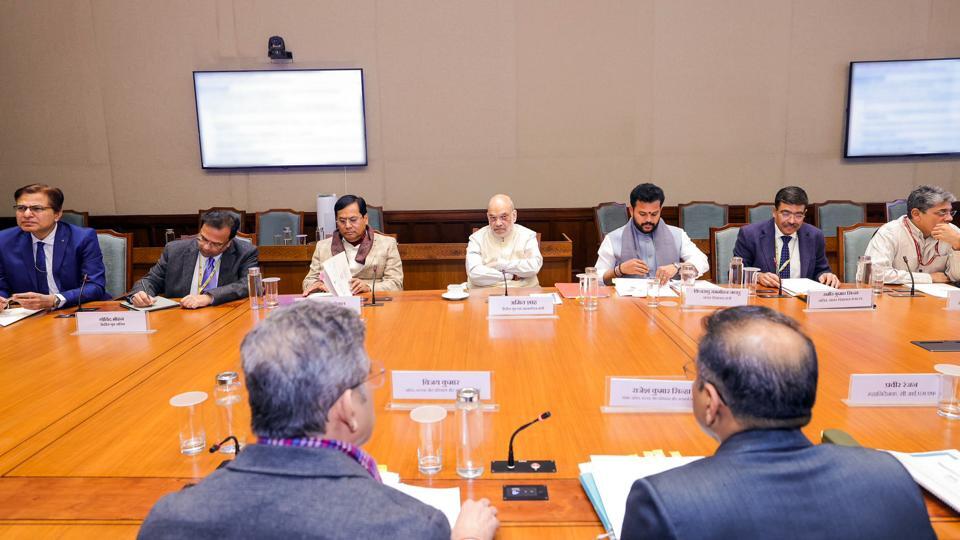
The decision to constitute the agency, named as Bureau of Port Security (BoPS), was taken in a meeting convened by Union home minister Amit Shah on Friday.
Officials aware of the matter said the issue of ports and coastal security was one of the main topics during the recently held annual conference of director generals-inspector generals in Chhattisgarh’s Raipur. Prime Minister Narendra Modi had also held a specific session with a handful of police chiefs on the issue of ports and coastal security and the ways to strengthen it.
“The BoPS will be headed by an IPS officer, similar to the BCAS. At the meeting on Friday morning, home minister Shah, emphasised the need to establish a robust port security framework across the country. The home minister told officials that security measures should be implemented in a graded and risk-based manner, taking into account vulnerabilities, trade potential, location, and other relevant parameters,” the home ministry said in a statement.
Sharing more details about the new agency, a spokesperson of the home ministry said: “The BoPS shall be constituted as a statutory body under the provisions of Section 13 of the newly promulgated Merchant Shipping Act, 2025. The Bureau, headed by a director general, shall function under the aegis of the ministry of ports, shipping and waterways (MoPSW) and shall be responsible for regulatory and oversight functions relating to the security of ships and port facilities. The Bureau is being modelled on the lines of the Bureau of Civil Aviation Security (BCAS). The BoPS shall be headed by an IPS officer (Pay Level-15). During the transition period of one year, the director general of shipping (DGS/DGMA) shall function as the director general, BoPS. The BoPS will ensure timely analysis, collection and exchange of security-related information, with a special focus on cyber security, including a dedicated division to safeguard port IT infrastructure from digital threats.”
Last month, the Centre had designated CISF as the recognised security organisation (RSO) for port facilities and assigned the task of undertaking security assessment and preparations of security plans for post. While 13 major ports are currently under CISF cover, the force will soon manage security at the 67 additional major ports. The force will majorly manage screening of cargo, access control and other security details. India has at least 200 small and major ports though only around 65 are engaged in cargo operations. The security at other ports, currently not under CISF cover, is being managed by state police and private agencies. In the absence of a standard security template, the CISF, which is now the designated RSO, will prepare a uniform port facility security plan, officials in CISF said, adding that the government has in the last one year approved CISF’s proposal to increase sanctioned strength.
People aware of the development said that over the last one year, intelligence agencies have also received inputs of terror attacks and hijacking in India’s waterway vehicles.
“Similar to the airline sector, anti-hijacking terror and mock drills on boats, cruise liners and ships are being conducted regularly by National Security Guards(NSG). This was a rarity in earlier years but in the last one year, almost a dozen such drills have been conducted. The issue of vulnerable ports, drugs smuggled via ports and possible terror attacks along with the setting up of this new body is all connected,” a second official aware of the matter said.


