E-Paper



Centre withdraws draft heritage bylaws for Odisha’s Jagannath temple
The minister said that the proposals have been withdrawn with immediate effect.


The Centre on Monday announced that it was withdrawing the draft heritage bylaws for Shri Jagannath Temple, Odisha, issued by the National Monuments Authority (NMA).
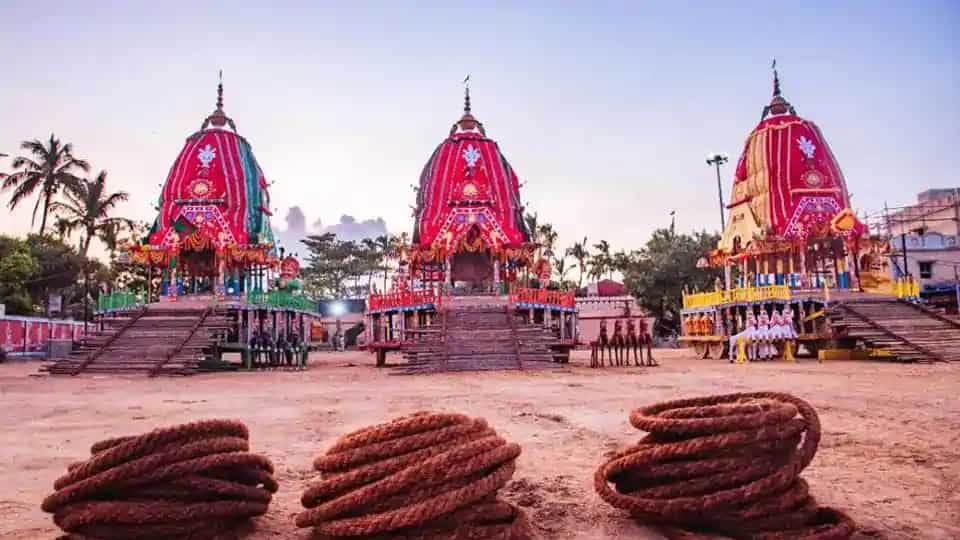
The announcement was made after Union minister of culture and tourism Prahlad Singh Patel met delegations of the Bharatiya Janata Party, led by Dharmendra Pradhan, and the Biju Janata Dal, led by Pinaki Mishra, in New Delhi separately demanding its withdrawal.
"The bylaws were issued without the knowledge of the chairman of the National Monuments Authority. Any further work on this will be done after consultation with all stakeholders," Patel told the MPs of both the parties.
The minister said that the proposals have been withdrawn with immediate effect.
Earlier on Monday morning, chief minister Naveen Patnaik made a quick visit to the 12th century Jagannath temple in Puri where he opposed the draft bylaws.
"Nobody can stop the good works of the Lord Jagannath. I thank the people who have sacrificed their lands for the temple. Their sacrifices will not go waste,” said Patnaik after offering prayers.
On Sunday, a controversy erupted after it Odisha officials found out about the proposed heritage bylaws for Jagannath temple, Ananta Basudeva temple and another structure. While the BJD called it an "insult to Lord Jagannath", the Sri Jagannath Temple administration requested for withdrawal of the draft notification “to protect the interest of the Lords, sevaks and devotees at large".
“Recently, the state government acquired lands and properties for strengthening safety and security of the centuries old shrine for the project of Sri Jagannath Heritage Corridor that will provide pilgrims with facilities such as drinking water, toilets, cloak rooms and Queue Management System. These properties have been acquired by the state Government through negotiations and most of the people have come forward to contribute their lands and properties for the purpose of this project. Any regulation which has the potential to restrict development of facilities and amenities on lands voluntarily contributed by devotees of the Lord will hurt their sentiments,” Dr krishan Kumar, chief administrator of the temple administration wrote in his letter.
Similarly, the endowment commissioner of Odisha made a similar request for Ananta Basudeva temple.
Last month, the National Monuments Authority of Union culture ministry had come out with draft bylaw for the 12th century temple proposing the 100 metre area around the temple as ‘prohibited area’ under Ancient Monuments and Archaeological Sites and Remains (Amendment and Validation) Act, 2010 where no new construction of any kind, either by government or private agencies, would be permitted.
It proposed a further 200 metre area as a ‘regulated area’ where construction is not prohibited, but has to be approved by the NMA.
The NMA's proposed notification restricting any construction within 100 metre radius of the protected monument would have adversely affected the Naveen Patnaik government's beautification plans around the two iconic temples in Puri and Bhubaneswar. In Puri, the state government has a ₹3500 crore project lined up for development of the city as a world heritage city while in Bhubaneswar it has lined up ₹700 crore plan for beautification of the area around Lingaraj temple.
The Ancient Monuments and Archaeological Sites and Remains (Amendment and Validation) Act 2010 mandates that monument-specific heritage bylaws be prepared to regulate construction activity near ASI-protected monuments. As heritage bylaws, no permission for construction activities should have been granted in protected, prohibited and regulated areas in which case there would have been no danger to the preservation of Indian cultural Heritage.
The government in 2010 formed the National Monuments Authority under the Ancient Monuments and Archaeological Sites and Remains (Amendment and Validation) Act, 2010, whose primary role was to prepare heritage byelaws for ASI listed structures. The draft heritage bylaws need to be approved by Parliament.